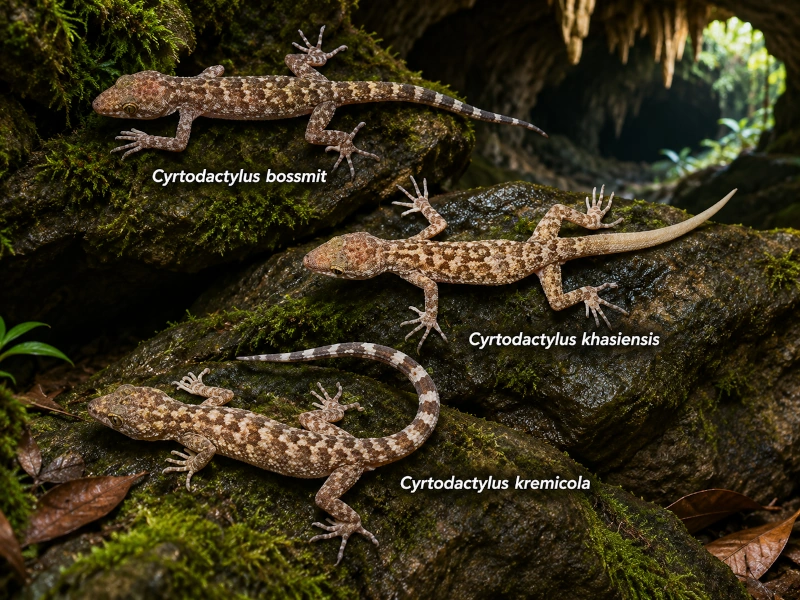
Indian researchers have discovered and scientifically described two new species of bent-toed geckos inhabiting the limestone caves of Meghalaya’s Khasi and Jaintia Hills. Named Cyrtodactylus bossmit and Cyrtodactylus kremicola, the newly identified reptiles highlight the remarkable biological diversity of northeastern India’s limestone ecosystems. The findings were published in the international scientific journal Taprobanica on 25 November 2026, bringing the number of recognised bent-toed gecko species in Meghalaya to nine.
The research was undertaken by scientists associated with Assam Don Bosco University, Cotton University and the biodiversity conservation organisation Help Earth. The research team comprised Cynthia Mylliem Umlong, Manmath Bharali, Arup K. Hazarika, Holiness Warjri, Madhurima Das and Jayaditya Purkayastha. Their investigation combined genetic analysis with detailed anatomical examinations to establish the identity of the two previously unrecognised species.
Bossmit Bent-Toed Gecko: Celebrating Meghalaya’s Cultural Heritage
The first species, Cyrtodactylus bossmit, was documented at Maw Tynghiang Cave in the South West Khasi Hills district, with additional records from other locations across the Khasi Hills. Commonly known as the Bossmit bent-toed gecko, the reptile takes its name from Shillong’s traditional wooden buses, popularly known as Bossmit. The naming honours a distinctive element of Meghalaya’s cultural heritage and the historical role of these vehicles in connecting communities across the hills.
By incorporating local cultural terminology into scientific nomenclature, the researchers have established a connection between biodiversity documentation and regional identity. Such naming practices acknowledge the cultural landscapes within which wildlife exists while encouraging greater public interest in scientific discoveries. The Bossmit bent-toed gecko consequently represents both a biological discovery and a tribute to Meghalaya’s living heritage.
Krem Bent-Toed Gecko: A Discovery from the Jaintia Hills
The second species, Cyrtodactylus kremicola, was discovered in a limestone cave in the West Jaintia Hills district. Its scientific name combines the Khasi word Krem, meaning cave, with the Latin word cola, meaning inhabitant. Commonly known as the Krem bent-toed gecko, the species derives its identity from its habitat while acknowledging the indigenous language of the region.
The discovery draws attention to the biological importance of Meghalaya’s extensive limestone cave systems. These environments offer opportunities for investigating how reptiles and other organisms adapt to specialised ecological conditions. Further exploration could improve scientific understanding of the relationship between geological formations, habitat isolation and species diversification.
Genetic Analysis Resolves a Long-Standing Taxonomic Question
An important aspect of the study was the reassessment of the Khasi bent-toed gecko, Cyrtodactylus khasiensis, which was originally described in 1870. Several gecko populations previously assigned to this species were found to represent distinct evolutionary lineages. The researchers established a genetically validated reference for Cyrtodactylus khasiensis and reassigned certain previously misidentified populations to the newly described species.
The study employed integrative taxonomy, combining anatomical observations with molecular analysis of the mitochondrial NADH dehydrogenase subunit 2 (ND2) gene. Differences in body dimensions, scale arrangements, pore counts and dorsal patterns helped distinguish the newly identified species from related geckos. This combination of physical and genetic evidence provides a stronger scientific basis for recognising species that may appear superficially similar.
Meghalaya’s Limestone Caves and Biological Micro-Endemism
The discoveries reinforce the importance of the Khasi–Jaintia Hills as a centre of micro-endemism within the Indo-Burma biodiversity hotspot. Micro-endemism refers to the occurrence of species within exceptionally restricted geographical areas, often associated with specialised habitats or geographical isolation. Documenting such species is particularly important because their survival may depend upon the ecological integrity of relatively small landscapes.
Limestone caves and their surrounding ecosystems represent valuable natural laboratories for studying evolutionary processes. Their geological complexity and varied environmental conditions can contribute to biological diversification over extended periods. Protecting these habitats requires an understanding of their ecological significance alongside their geological, cultural and economic importance.
Strengthening India’s Biodiversity Research and Conservation
The formal recognition of two additional gecko species demonstrates the importance of sustained field research, molecular biology and taxonomic expertise in documenting India’s natural heritage. Scientific identification provides the foundation for subsequent investigations into species distribution, population characteristics and conservation requirements. However, additional research will be necessary to establish the population status and conservation needs of the newly described geckos.
Meghalaya’s expanding record of reptile diversity also highlights the need to preserve limestone caves and adjoining natural habitats through informed conservation planning. Continued collaboration between universities, biodiversity researchers, conservation organisations and local communities can strengthen efforts to document and safeguard these ecosystems. The integration of traditional ecological knowledge with contemporary scientific methods offers further opportunities for understanding northeastern India’s biodiversity.
The discovery of the Bossmit and Krem bent-toed geckos represents another important contribution by Indian researchers to global biodiversity science. By combining rigorous scientific investigation with recognition of indigenous cultural heritage, the research establishes a meaningful connection between biological conservation and regional identity. These discoveries reaffirm the importance of Meghalaya’s natural landscapes and the potential for further scientific exploration across India’s biodiversity-rich northeastern region.
References
Umlong, C. M., Bharali, M., Hazarika, A. K., Warjri, H., Das, M. and Purkayastha, J. (2026). Two New Limestone Cave-Dwelling Gecko Species (Reptilia: Gekkonidae: Cyrtodactylus) from Meghalaya, India, with Comments on C. khasiensis (Jerdon, 1870). Taprobanica, Volume 15, Number 2, pp. 466–483.
DOI: 10.47605/tapro.v15i2.446.
Publication date: 25 November 2026.
You may also like
-
Endangered Ganges River Dolphin Sighted in Arunachal Pradesh’s Siang River System
-
Great Nicobar Records 889 Leatherback Turtle Nests During 2025–26 Nesting Season
-
Rare Daurian Starling Returns to Kerala’s Punchakkari Wetlands
-
Indian Scientists Identify Seven Potential Humpback Whale Hotspots
-
Pathanamthitta Biodiversity Survey Records Barn Swallow and 130 Bird Species
