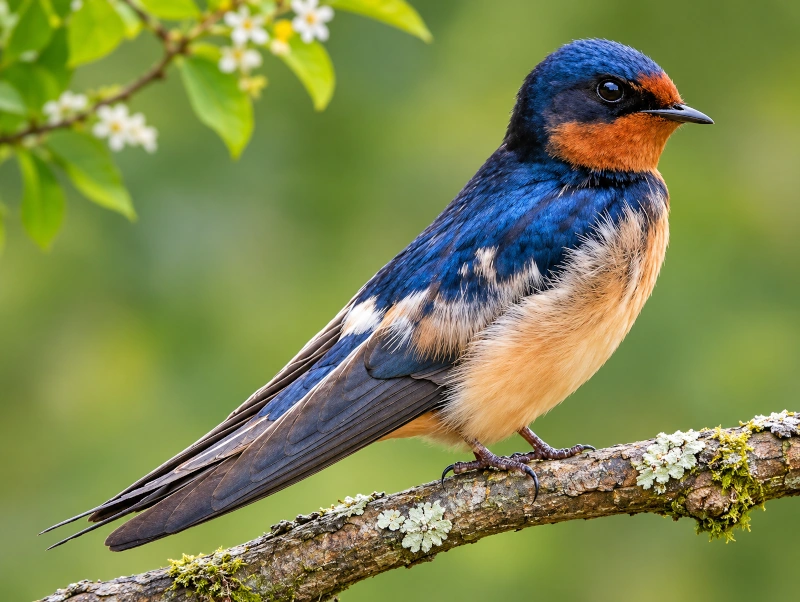
A biodiversity survey conducted in Kallooppara Grama Panchayat in Kerala’s Pathanamthitta district has documented 130 bird species, including the migratory barn swallow (Hirundo rustica). The survey, reported on 23 November 2026, was undertaken as part of the preparation of the local People’s Biodiversity Register (PBR). The findings highlight the ecological importance of the region’s wetlands, paddy fields and agricultural landscapes in supporting resident and migratory bird populations.
Barn Swallow Among Winter Migratory Visitors
The barn swallow is a widely distributed migratory bird distinguished by its deeply forked tail, streamlined body, dark blue upperparts and reddish throat. An accomplished aerial insectivore, the species feeds predominantly on flying insects and frequently forages over agricultural fields, wetlands and open landscapes.
Its presence in Kallooppara’s paddy fields coincides with the winter migration season, during which Kerala’s wetlands provide feeding and resting habitats for migratory birds. Agricultural landscapes with abundant insect populations and accessible water resources provide favourable conditions for these seasonal visitors.
Survey Highlights Kallooppara’s Avian Diversity
A seven-member team led by experienced birdwatcher Tony Antony conducted the survey across several wetland and agricultural habitats, including Cheriyapadam, Kuncharam, Ambattu Bhagam, Thuruthikkad and Cherumatha. Among the notable observations were congregations of Asian openbills, ground-nesting lapwings, pied harriers and several species of wagtails.
The team also documented numerous waterbirds, including sandpipers, painted storks, ibises, herons and egrets. Observations of resident birds alongside seasonal visitors demonstrate the importance of maintaining diverse habitats within agricultural and rural landscapes.
Ecological Importance of Paddy Fields and Wetlands
Paddy fields and associated wetlands provide valuable habitats for birds by supporting insects, aquatic organisms and other food resources. These landscapes serve as feeding grounds for numerous resident species and migratory birds, particularly during seasonal movements across the Indian subcontinent.
Maintaining healthy agricultural ecosystems can contribute to both biodiversity conservation and sustainable farming. Insectivorous birds such as barn swallows provide natural ecological services by consuming insects, while wetland birds form an important part of aquatic food networks.
Documenting Biodiversity Through Community Participation
The survey forms part of the preparation of Kallooppara’s People’s Biodiversity Register, an initiative designed to document local biological resources and ecological knowledge. Such registers provide valuable baseline information for conservation planning, habitat management and monitoring changes in local biodiversity.
The participation of birdwatchers, local government representatives and Biodiversity Management Committee members demonstrates the importance of community involvement in documenting natural heritage. Further surveys are planned to develop a more comprehensive understanding of the panchayat’s bird diversity.
Strengthening Grassroots Conservation in Kerala
The documentation of 130 bird species in Kallooppara highlights the biodiversity conservation potential of Kerala’s agricultural landscapes and local wetlands. Systematic monitoring through community-led initiatives can help identify ecologically significant habitats and strengthen conservation awareness among local residents.
Continued collaboration between birdwatchers, biodiversity institutions, farmers and local authorities offers a promising foundation for protecting these ecosystems. Kallooppara’s biodiversity survey demonstrates how grassroots scientific documentation can contribute to preserving Kerala’s rich natural heritage.
References
- Onmanorama — Barn Swallow Spotted in Pathanamthitta for the First Time, 23 November 2026.
- Kerala State Biodiversity Board — People’s Biodiversity Registers and Biodiversity Management Committees.
- Water Birds of Major Wetlands of Pathanamthitta District — A Report of Asian Waterbird Census 2026.
You may also like
-
Captive-Bred Indian Vulture Travels 10,767 Km, Makes First Recorded Appearance in Latur
-
The Sacred Groves of India: Traditional Protection and Modern Biodiversity Conservation
-
New Micro-Moth Species Discovered in Assam After Nearly a Century
-
Botswana-Born Cheetah Gives Birth to Four Cubs in Wild, India’s Cheetah Population Reaches 62
-
Gauhati University Scientists Rediscover Rare Flowering Shrub in Assam After 204 Years
