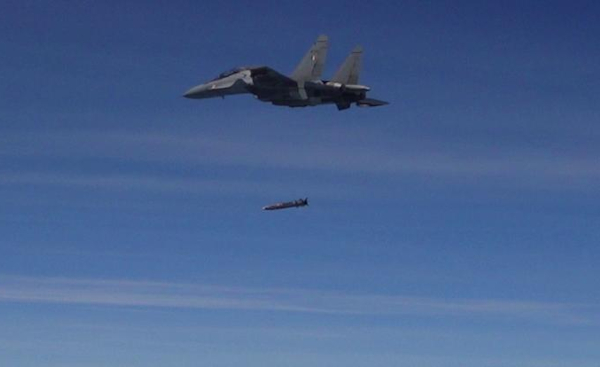
India’s indigenous RudraM-II air-to-surface missile programme is progressing towards the production stage, with Adani Defence & Aerospace participating in efforts to establish manufacturing capabilities for the Defence Research and Development Organisation (DRDO)-developed weapon system. Reports published on November 16, 2026, indicate that the company is preparing for expanded production and examining opportunities for the missile’s eventual introduction into international defence markets.
The RudraM-II programme has already achieved significant milestones through successful flight trials conducted by DRDO and the Indian Air Force. The missile is designed for air-to-surface operations, including precision engagement of ground-based targets and missions involving the suppression and destruction of enemy air defence systems.
Adani Defence & Aerospace had earlier confirmed its involvement in the programme through an official announcement issued on July 5, 2026. The company identified RudraM-II among several indigenous missile systems progressing from development trials towards serial production as part of its investment in domestic missile manufacturing infrastructure.
The latest reports suggest further progress in manufacturing preparations, although full-scale production clearance, operational induction and export authorisation have not been independently confirmed by the Ministry of Defence.
DRDO Successfully Conducts RudraM-II Flight Trials
The RudraM-II missile was successfully flight-tested by DRDO from an Indian Air Force Su-30MKI fighter aircraft off the Odisha coast on May 29, 2024. According to the Ministry of Defence, the trial met all designated objectives and validated the missile’s propulsion system, control systems and guidance algorithms.
The missile’s performance was monitored using electro-optical systems, radar installations and telemetry stations associated with the Integrated Test Range at Chandipur. The successful test demonstrated the functioning of several critical subsystems under flight conditions.
Further progress was recorded on June 2, 2026, when DRDO and the Indian Air Force conducted additional successful flight tests of RudraM-II from an airborne platform.
The Ministry of Defence stated that the tests were undertaken under extreme release conditions and involved critical flight trajectories intended to validate the performance of the missile’s subsystems.
Following release from the aircraft, the missiles followed their designated trajectories and accurately engaged predefined targets. Flight data collected through the Integrated Test Range confirmed that the trial objectives had been achieved.
These successful tests established important technical milestones in the development of the indigenous weapon system.
Indigenous Development Led by Research Centre Imarat
RudraM-II has been developed under the leadership of Research Centre Imarat (RCI), Hyderabad, which serves as the nodal DRDO laboratory for the programme.
The development effort involves several other DRDO establishments, including the Defence Research and Development Laboratory, High Energy Materials Research Laboratory, Armament Research and Development Establishment and Integrated Test Range.
The programme also involves development-cum-production partners and Indian defence industries contributing to the manufacturing, integration and testing of various missile subsystems.
Hindustan Aeronautics Limited, the Regional Centre for Military Airworthiness and the Missile System Quality Assurance Agency have also contributed to the programme.
This collaborative development structure reflects India’s approach to building indigenous missile capabilities through cooperation between government research laboratories, public sector organisations and private defence manufacturers.
The participation of industrial partners is important for translating laboratory-developed technologies and successfully tested prototypes into weapon systems suitable for eventual series production.
RudraM-II Designed for Precision Air-to-Surface Missions
RudraM-II is an indigenously developed, solid-propelled air-launched missile designed to engage a variety of ground-based targets.
The missile is associated with Suppression of Enemy Air Defences (SEAD) and Destruction of Enemy Air Defences (DEAD) missions, which are important components of modern air warfare.
SEAD operations seek to reduce the effectiveness of hostile air defence systems, including surveillance radars, targeting radars and associated military infrastructure. DEAD operations involve the physical destruction of such systems to degrade an adversary’s ability to detect, track and engage aircraft.
These missions are particularly important during operations involving advanced surface-to-air missile systems and integrated air defence networks.
The RudraM-II programme is intended to provide the Indian Air Force with an indigenous precision-strike capability for engaging targets at significant distances.
According to defence industry reporting published on November 16, the missile has an estimated range of approximately 300 kilometres and a reported maximum speed of Mach 5.5.
The same reports describe a payload capacity of approximately 200 kilograms.
These performance figures have appeared in defence industry reporting, although the Ministry of Defence’s official flight-test announcements did not disclose the complete operational specifications of the missile.
Guidance Technology for Air Defence Suppression
RudraM-II incorporates guidance technologies intended to support precision engagement of designated targets.
DRDO’s published technical documentation identifies a passive homing head and millimetre-wave active radar seeker for the missile’s anti-radiation role. The documentation also describes the use of an imaging infrared seeker for ground attack applications.
Passive homing technology enables a missile to detect electromagnetic emissions from sources such as radar installations. This capability is particularly relevant to anti-radiation missions, where the objective may involve locating and engaging radar-associated targets.
Millimetre-wave radar and imaging infrared guidance technologies provide additional methods of detecting and identifying targets under specified operating conditions.
The integration of different guidance approaches is important for missile systems intended to operate against diverse ground-based targets.
Reports concerning the latest RudraM-II configuration indicate that the missile is being developed with capabilities intended to address radar shutdown and other countermeasures employed by air defence systems.
However, the detailed performance of these capabilities, including their effectiveness under different operational conditions, has not been publicly established through comprehensive official technical disclosures.
Adani Defence Establishes ₹2,500 Crore Missile Manufacturing Ecosystem
Adani Defence & Aerospace announced on July 5, 2026, that it had commenced development of a ₹2,500 crore missile manufacturing project at Shivpuri in Madhya Pradesh.
The company described the project as a major private-sector missile manufacturing ecosystem incorporating facilities for composite propellant production and trinitrotoluene manufacturing at a single location.
The project is intended to strengthen domestic manufacturing capabilities for advanced missiles and precision-guided weapons.
According to Adani Defence, the proposed facility will support India’s defence requirements while developing manufacturing capabilities for international customers, subject to applicable approvals
You may also like
-
TechEra Engineering Secures Indian Air Force Order for Electrical Coolanol Unit
-
Mission Sudarshan Chakra Report Ready for Further Examination
-
Cochin Shipyard Signs MoU with Netherlands’ Damen Shipyards for Future Shipbuilding Projects
-
Russian University and Drone Manufacturer Plan UAV Technology Transfer and Production in India
-
India’s AMCA Stealth Fighter Programme Enters Bid Evaluation Stage as Three Industry Groups Compete
