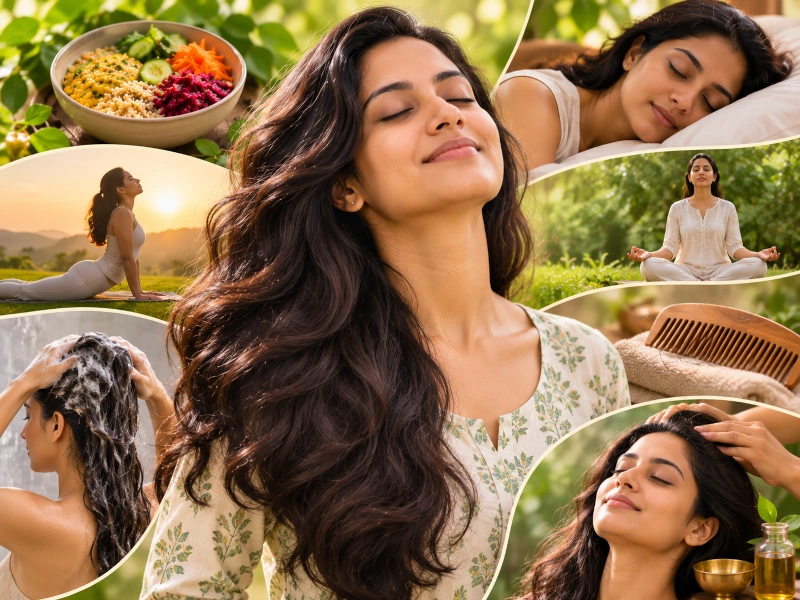
Understanding Hair Health Through Ayurveda
Healthy hair is often associated with physical well-being, personal appearance and confidence. However, maintaining strong and healthy hair involves much more than applying oils, using herbal preparations or following elaborate cosmetic routines. Hair growth and scalp health are influenced by several factors, including nutrition, genetics, hormonal activity, age, stress, sleep, medical conditions and everyday hair-care practices. Understanding these influences is essential because different forms of hair loss and hair damage require different approaches to prevention and treatment.
Modern lifestyles have introduced additional challenges to maintaining hair health. Irregular meals, inadequate sleep, demanding work schedules, restrictive dieting, frequent heat styling and the use of unsuitable hair products can contribute to hair damage or aggravate certain forms of hair loss. Environmental conditions such as humidity, pollution and excessive sunlight may also influence the condition of the hair shaft and scalp. These factors often operate together, making it important to examine the broader daily routine rather than concentrate exclusively on the appearance of the hair.
Ayurveda approaches hair health through an understanding of bodily nourishment, digestion, daily routines and the balance of the Doṣas. Classical Ayurvedic literature discusses hair, or Keśa, in relation to tissue metabolism and the traditional processes governing the formation and maintenance of bodily structures. The system also recognises conditions associated with hair fall, premature greying and changes in scalp health. Traditional Ayurvedic practices frequently include Śiro Abhyanga, or head massage with oil, along with dietary recommendations and herbal preparations.
However, Ayurveda’s wider philosophy extends beyond individual treatments to emphasise regular sleep, suitable nourishment, moderate physical activity and consistency in daily habits. The central Ayurvedic approach to maintaining healthy hair is to support overall physical well-being through appropriate nutrition, regular routines, adequate rest and gentle personal care rather than depend exclusively upon oils or herbal remedies.
The Ayurvedic Understanding of Hair and the Three Doṣas
Ayurveda explains several aspects of hair and scalp health through the traditional concepts of Vāta, Pitta and Kapha. Each Doṣa is associated with particular qualities and functions that contribute to the classical understanding of bodily processes. Vāta is associated with dryness, roughness, lightness and movement, while Pitta is associated with heat, transformation and metabolic activity. Kapha is traditionally linked with stability, heaviness, softness and lubrication.
Within this framework, aggravated Vāta may be associated with dry, brittle or rough hair, while Pitta is frequently considered in traditional discussions of premature greying and certain scalp complaints. Kapha-related qualities may be associated with relatively oily hair and scalp conditions. Ayurvedic practitioners may therefore recommend different dietary and lifestyle measures according to the individual’s constitution and the nature of the symptoms.
Classical Ayurvedic literature also discusses hair in relation to Asthi Dhātu, the traditional tissue category associated with bones. In several Ayurvedic explanations, hair is described as a Mala, or secondary by-product, associated with the metabolism of Asthi Dhātu. This relationship reflects the classical Ayurvedic understanding of tissue nourishment and should not be interpreted as a direct anatomical or physiological connection established by modern medical science.
Modern dermatology explains hair growth through the activity of hair follicles, the hair-growth cycle, hormonal influences, genetics, nutritional status and immune function. These mechanisms are distinct from Ayurvedic Doṣa theory, although both approaches recognise that changes in the condition of hair may reflect different underlying circumstances. The practical relevance of the Ayurvedic perspective lies in encouraging individuals to recognise differences in hair and scalp characteristics and adopt appropriate daily care rather than assume that one treatment will suit everyone.
Understanding the Natural Hair-Growth Cycle
Hair growth follows a biological cycle involving several distinct phases. The anagen phase represents active hair growth, while the catagen phase is a short transitional period. The telogen phase is a resting stage, after which shedding occurs and another growth cycle may begin. Different hair follicles are at different stages of this cycle at any given time, which explains why some hair shedding occurs naturally even in individuals with healthy scalps.
The American Academy of Dermatology explains that losing approximately 50–100 hairs per day can fall within the normal range, although individual shedding patterns vary. Hair shedding may become more noticeable during washing, combing or after several days without brushing. People with longer hair may also perceive shedding as more substantial because individual strands are easier to notice.
However, sudden excessive shedding, progressive thinning, widening of the hair parting or the appearance of bald patches may indicate an underlying problem. Several conditions can disrupt the normal hair-growth cycle, including illness, nutritional deficiencies, hormonal changes and certain medications. Hair loss may also occur because of inherited conditions or autoimmune disorders that require specific medical treatment.
Understanding the natural hair-growth cycle helps distinguish ordinary shedding from potentially significant hair loss and prevents unnecessary reliance upon products advertised as immediate hair-growth solutions. Ayurvedic lifestyle recommendations can support general well-being, but they cannot independently establish the cause of abnormal hair loss.
Āhāra: The Importance of Food for Healthy Hair
Ayurveda regards Āhāra, or food, as one of the principal foundations of health. Classical Ayurvedic guidance emphasises appropriate food quality, quantity, preparation and timing, recognising nourishment as essential to maintaining bodily strength and tissue function. Within this traditional framework, the condition of hair is considered in relation to the nourishment of the body’s tissues rather than treated exclusively as a superficial cosmetic concern.
Modern nutritional science similarly recognises that hair follicles require adequate energy, protein, vitamins and minerals to maintain normal growth. Hair is composed primarily of keratin, a structural protein produced by specialised cells within the hair follicle. Adequate dietary protein is therefore important for normal hair formation and the maintenance of body tissues. Indian diets can provide protein through pulses, lentils, beans, milk, curd, paneer, nuts, seeds, eggs, fish and other suitable foods.
Iron is another important nutrient because iron deficiency can contribute to certain forms of hair shedding. Green leafy vegetables, pulses, beans, meat and other suitable foods can contribute to dietary iron intake, although absorption varies according to the food source and the composition of the meal. Zinc and several vitamins also participate in normal cellular processes relevant to hair-follicle function, but supplementation is most useful when an actual deficiency has been identified.
A balanced diet containing vegetables, fruits, whole grains, adequate protein and suitable sources of healthy fats provides a practical nutritional foundation for normal hair growth. Traditional Ayurvedic dietary principles can be incorporated into such a pattern, provided that individual nutritional requirements are met. The most important principle is to maintain sufficient energy, protein and essential micronutrients rather than depend upon individual foods promoted as remedies for hair loss.
Agni and the Traditional Concept of Nourishment
Agni occupies a central position in Ayurvedic explanations of digestion and metabolism. Classical Ayurvedic theory regards properly functioning Agni as important for the transformation of food and nourishment of bodily tissues. Traditional dietary recommendations consequently emphasise regular meals, suitable food quantities and attention to digestive comfort. Irregular eating patterns, excessive consumption and unsuitable food choices are traditionally considered factors that may disturb bodily balance.
Within this framework, Ayurvedic practitioners may consider digestive habits when evaluating changes in hair and scalp health. Modern medical science also recognises the importance of nutrient absorption and metabolic function in maintaining healthy hair growth. Certain gastrointestinal disorders can interfere with nutrient absorption and may contribute to deficiencies associated with hair shedding.
However, the classical Ayurvedic concept of Agni is not identical to any specific modern digestive mechanism, and hair loss should not automatically be attributed to poor digestion. The practical value of the Ayurvedic approach lies in encouraging regular, nutritionally adequate meals and avoiding eating habits that compromise general health.
Healthy hair growth requires adequate nourishment, and maintaining regular food habits is more useful than attempting to correct every hair problem through specialised digestive remedies.
The Effects of Crash Dieting and Rapid Weight Loss
Restrictive dieting has become increasingly common among people seeking rapid changes in body weight. Some individuals substantially reduce food intake, eliminate entire food groups or follow highly restrictive eating programmes without professional supervision. Such practices can reduce the availability of energy, protein and essential nutrients required for normal physiological functioning, including the maintenance of hair follicles.
Rapid weight loss and significant nutritional restriction may trigger excessive hair shedding, including a condition known as telogen effluvium. In this condition, a larger proportion of hair follicles enters the resting phase, leading to increased shedding after a delay. Hair shedding associated with a major physical or nutritional stressor may become noticeable several months after the triggering event, sometimes causing individuals to overlook the connection with earlier dietary changes.
Ayurveda traditionally discourages excessive practices and places importance on moderation in food intake. Its broader approach to nourishment can therefore be applied to the risks associated with extreme dieting. Maintaining a healthy body weight should involve balanced nutrition and sustainable physical activity rather than severe calorie restriction.
The important lesson is that hair health can be compromised when weight-management practices deprive the body of essential nutrients. Sustainable eating habits are preferable to extreme diets promising rapid results.
Nidrā: The Role of Sleep in Hair Health
Ayurveda identifies Nidrā, or sleep, as one of the fundamental supports of health. Classical Ayurvedic guidance considers adequate sleep important for maintaining bodily strength, mental well-being and normal physiological functioning. Sleep is therefore regarded as part of the wider foundation of health rather than merely a period of inactivity.
Modern research recognises that sleep influences numerous biological processes, including hormonal regulation, immune activity and the body’s response to stress. Hair-follicle biology is influenced by several hormonal and metabolic pathways, although scientific evidence has not established that a particular number of hours of sleep directly prevents common forms of hair loss. Inadequate sleep may nevertheless contribute to stress, fatigue and other disturbances affecting overall well-being.
Modern working habits frequently involve irregular sleeping schedules, late-night smartphone use and insufficient recovery time. These practices can make it difficult to maintain consistent rest, particularly among students, working professionals and people employed in shifts. Most adults generally benefit from approximately seven to nine hours of sleep, although individual requirements vary.
Establishing a regular bedtime, reducing unnecessary late-night screen use and maintaining a comfortable sleeping environment can support healthier sleep patterns. The Ayurvedic emphasis on Nidrā remains relevant because adequate sleep forms part of a balanced lifestyle that supports general physical and mental health, even though it is not a guaranteed treatment for hair loss.
Stress, Mental Well-Being and Hair Shedding
Stress is an important factor in understanding certain forms of hair shedding. Significant physical or psychological stress can disrupt the normal hair-growth cycle and contribute to telogen effluvium. Major illness, surgery, childbirth, severe emotional distress and other substantial stressors may be followed by increased shedding. Stress can also aggravate certain scalp conditions or contribute to behaviours such as repetitive hair pulling.
Ayurveda traditionally considers mental and physical well-being closely interconnected. Its broader lifestyle recommendations encourage regular routines, appropriate rest, meditation and practices intended to maintain emotional balance. Gentle yoga, breathing exercises, walking and mindfulness practices may help individuals manage stress and improve their general well-being.
However, stress should not be assumed to be the cause of all hair loss. Genetic conditions, autoimmune disorders, infections and hormonal changes can produce hair loss independently of emotional stress. Persistent symptoms therefore require proper assessment rather than reliance upon relaxation practices alone.
Stress management can support overall well-being and may be relevant to some forms of excessive shedding, but persistent hair loss requires evaluation of its specific medical causes.
Dinacharya: Establishing a Healthy Hair-Care Routine
Dinacharya, the Ayurvedic concept of a disciplined daily routine, provides a useful foundation for maintaining personal hygiene and physical well-being. Classical Ayurvedic guidance describes regular waking, cleansing, physical activity, bathing, nourishment and sleep as components of daily health maintenance. For hair health, these principles can be adapted into a simple routine that considers the condition of the scalp, hair texture, environmental exposure and individual needs.
Hair should be washed according to how quickly the scalp becomes oily or dirty. Individuals with oily scalps may require more frequent washing, while people with dry, curly or textured hair may benefit from a different schedule. The American Academy of Dermatology recommends selecting hair-care products according to hair type and cleansing the scalp gently to remove accumulated oil, sweat, dead skin and styling products.
Conditioner can help reduce friction, improve manageability and limit breakage, particularly in dry or textured hair. Drying should also be gentle because vigorous rubbing with towels can damage the hair shaft, while excessive use of heated styling equipment can increase brittleness.
Daily hair care should not be unnecessarily complicated. Individuals often achieve better results through consistent cleansing, appropriate conditioning and careful handling than by frequently changing products or applying numerous preparations without understanding their suitability.
The most effective hair-care routine is one that maintains scalp cleanliness, reduces unnecessary mechanical damage and remains suitable for the individual’s hair type.
Śiro Abhyanga: The Traditional Practice of Head Massage
Śiro Abhyanga, or oil massage of the head, occupies an important place in Ayurvedic personal care. Classical Ayurvedic texts describe head massage as a practice associated with physical comfort, relaxation and the management of certain conditions traditionally linked with Vāta. Sesame oil and coconut oil are commonly used in traditional Indian hair-care practices, while specialised medicated oils may be selected according to Ayurvedic recommendations.
Gentle scalp massage may provide relaxation and help distribute a suitable oil preparation through the hair. Some oils can reduce friction and improve the condition of the hair shaft, particularly when used appropriately on dry hair. Coconut oil, for example, has been studied for its ability to reduce protein loss from hair fibres under certain conditions.
However, evidence that routine scalp massage or oil application can reliably stimulate new hair growth remains limited. Oils cannot be assumed to reverse hereditary hair loss, autoimmune alopecia or hair shedding caused by nutritional deficiencies. Excessive oil application may also be unsuitable for individuals with certain scalp conditions, including seborrhoeic dermatitis or folliculitis.
People who enjoy traditional oil massage should select preparations that do not irritate the scalp and avoid vigorous rubbing or scratching. The practical value of Śiro Abhyanga lies primarily in its traditional role as a gentle self-care practice that may improve comfort and hair manageability rather than as a proven cure for hair loss.
Washing Habits and the Importance of Scalp Hygiene
A healthy scalp provides the environment in which hair follicles function. Maintaining scalp hygiene is therefore an important component of everyday hair care. Sweat, sebum, dead skin cells and styling products can accumulate on the scalp, and unsuitable cleansing practices may contribute to itching, irritation or excessive buildup.
Washing frequency should be determined by scalp condition rather than a fixed universal rule. People with oily scalps may require frequent shampooing, while individuals with dry hair may benefit from less frequent washing combined with suitable conditioning. Shampoo should generally be applied to the scalp and massaged gently rather than rubbed aggressively along the entire hair shaft.
The lather can then be rinsed through the hair, removing accumulated dirt without excessive friction. Conditioner is particularly useful for reducing tangling and improving hair manageability. People with long, dry or curly hair may benefit from applying conditioner primarily to the lengths and ends, while those with particularly dry hair may require additional conditioning according to their needs.
Very hot water and harsh cleansing products may contribute to dryness and irritation in susceptible individuals. Maintaining a clean and comfortable scalp is more important than following rigid rules that prescribe the same washing schedule or hair-care products for everyone.
Preventing Hair Damage from Tight Hairstyles
Hairstyling habits can significantly influence hair breakage and certain forms of hair loss. Tightly pulled ponytails, buns, braids and hair extensions may place repeated tension on the hair follicles. Over time, this pulling can contribute to traction alopecia, a form of hair loss caused by sustained mechanical stress.
The condition often affects the hairline and areas subjected to repeated tension. The American Academy of Dermatology warns that prolonged traction can eventually result in permanent hair loss if the damaging hairstyle continues. People who regularly tie their hair tightly for work, exercise or convenience should therefore consider varying their hairstyles and reducing unnecessary tension.
Loose braids, comfortable hair ties and styles that do not pull continuously on the scalp may help reduce damage. Hair should also be handled carefully while detangling, particularly when wet or chemically treated, because excessive pulling can increase breakage.
Ayurveda’s broader emphasis on avoiding excessive physical strain can be applied to these everyday habits. Hair should be styled in ways that minimise repeated pulling, friction and breakage. A hairstyle that consistently causes scalp pain or tension is too tight.
Heat Styling, Chemical Treatments and Hair Strength
Modern hair-care routines frequently involve blow dryers, straighteners, curling irons, colouring products and chemical treatments. Although these practices can change the appearance and texture of hair, excessive or inappropriate use may damage the hair shaft. High temperatures can weaken hair fibres, while repeated chemical processing may increase dryness, brittleness and breakage.
Individuals who regularly use heated styling equipment should reduce the frequency of exposure and select lower temperature settings when appropriate. Allowing hair to dry partially before styling and using suitable conditioning products may also help reduce damage. Chemical treatments should be performed according to product instructions, and individuals experiencing irritation or breakage should reconsider the products being used.
Hair dye allergies can occasionally cause significant scalp reactions. A person who develops redness, swelling or intense itching after a product application should seek medical advice. Repeated exposure to a product that has already caused a reaction may lead to further problems.
Protecting the hair shaft from repeated heat and chemical damage is an important aspect of maintaining healthy-looking hair, independent of whether traditional oils or herbal products are used.
Understanding Dandruff and Scalp Conditions
Dandruff is a common scalp complaint characterised by visible flakes and sometimes itching. Although dry skin can contribute to flaking, dandruff is frequently associated with seborrhoeic dermatitis and the activity of Malassezia yeasts on the scalp. The condition may occur in people with oily or dry hair and does not necessarily indicate poor hygiene.
Ayurvedic traditions describe several scalp conditions under broader categories of hair and skin disorders. However, these traditional classifications should not be used as substitutes for dermatological diagnosis. Mild dandruff may respond to suitable anti-dandruff shampoos containing ingredients such as ketoconazole, selenium sulfide or other established treatments.
Persistent redness, thick scaling, pain or significant hair loss may indicate another scalp disorder requiring medical evaluation. Conditions such as psoriasis, fungal infections and inflammatory scalp diseases can resemble ordinary dandruff but may require different treatment.
Applying large quantities of oil or homemade herbal preparations can aggravate some scalp conditions. The most effective approach is to identify the cause of scalp irritation and use suitable treatment rather than assume that all flaking results from dryness or requires oil application.
Seasonal Hair Care and Ritucharya
Ritucharya, the Ayurvedic concept of adapting lifestyle habits according to seasonal conditions, provides a useful perspective on hair care. Temperature, humidity, sunlight and environmental exposure can influence the condition of the scalp and hair, making seasonal adjustments practical for many individuals.
During hot and humid weather, sweating and increased oil production may make more frequent cleansing necessary for some people. During the monsoon season, repeated exposure to rain and prolonged dampness may contribute to discomfort or make hair difficult to manage. Keeping the scalp clean and drying hair gently can help maintain hygiene.
In cooler or drier weather, reduced environmental humidity may increase the tendency towards dry or brittle hair. Conditioning products and gentler washing habits may be useful during these periods. Sun exposure can also affect the hair shaft, particularly when hair is chemically treated or already damaged. Wearing suitable head coverings during prolonged outdoor exposure may provide additional protection.
The practical relevance of Ritucharya lies in adapting cleansing, conditioning and protective habits to environmental conditions rather than maintaining an identical routine throughout the year.
Hair Health Among Working Professionals
Working professionals frequently encounter demanding schedules, irregular meals, stress and insufficient sleep. These lifestyle factors may influence general well-being and, in some circumstances, contribute to excessive hair shedding. People working in offices may also spend long periods in air-conditioned environments, while those commuting regularly may encounter dust, humidity and environmental pollution.
A manageable hair-care routine should therefore prioritise regular meals, suitable washing habits and adequate rest. Individuals with long hair may find loose hairstyles more comfortable during extended working hours. Those who wear helmets or protective headgear should maintain appropriate hygiene and avoid unnecessarily tight arrangements that cause persistent friction or pressure.
Stress management, physical activity and sufficient sleep can complement everyday scalp care. However, hair loss that progresses despite improvements in lifestyle should be evaluated for medical causes.
The most useful approach for working professionals is to establish a sustainable routine that protects hair from avoidable damage while supporting the body’s broader nutritional and physical requirements.
Hair Health During Adolescence and Early Adulthood
Adolescence and early adulthood involve hormonal changes that may influence scalp oil production and hair characteristics. Some individuals experience increased scalp oiliness or dandruff during this period, while others may begin noticing genetically influenced hair thinning.
Students and young professionals may also adopt frequent colouring, straightening or tightly pulled hairstyles that increase hair damage. Regular cleansing, appropriate conditioning and gentle styling can help maintain the appearance and manageability of hair.
Persistent hair loss in younger individuals should not automatically be attributed to stress, poor diet or excessive shampooing. Genetic hair loss, alopecia areata, scalp infections and other medical conditions may begin during adolescence or early adulthood.
Early assessment can be important because certain forms of hair loss respond better to treatment when recognised promptly. Healthy hair habits established early in life can reduce avoidable damage, while timely diagnosis helps distinguish cosmetic concerns from medical conditions requiring treatment.
Hair Changes During Ageing
Hair naturally changes with age. The growth cycle may alter, hair density may decrease and individual strands may become finer. Greying occurs primarily because of changes in pigment production within hair follicles, and genetics plays a major role in determining when these changes begin.
Ayurveda traditionally discusses premature greying under the concept of Pālitya and considers it within the broader framework of Doṣa-related disturbances. However, modern research has not established that common forms of age-related greying can be reliably reversed through oil massage, dietary changes or herbal preparations.
Maintaining adequate nutrition, gentle hair care and appropriate scalp hygiene can nevertheless support hair condition during ageing. Older adults may also experience hair thinning associated with hormonal changes, medical conditions or medications, making professional evaluation important when shedding is persistent or progressive.
The objective of hair care during ageing is to preserve scalp comfort, reduce avoidable breakage and maintain healthy hair through suitable daily habits and appropriate medical attention.
Recognising When Hair Loss Requires Medical Attention
Hair loss can arise from several different medical conditions, and identifying the underlying cause is essential for selecting appropriate treatment. Androgenetic alopecia, commonly called hereditary pattern hair loss, is associated with genetic and hormonal influences. Alopecia areata is an autoimmune condition that can produce sharply defined patches of hair loss, while telogen effluvium involves excessive shedding that may follow illness, childbirth, significant stress, rapid weight loss or other physiological disturbances.
Scalp infections, thyroid disorders, iron deficiency and certain medications can also contribute to hair loss. Individuals experiencing sudden shedding, rapidly expanding bald patches, persistent scalp inflammation or progressive thinning should consult a qualified dermatologist. Pain, scarring, pustules or significant redness of the scalp require particular attention because some inflammatory hair-loss disorders can permanently damage hair follicles.
Laboratory investigations may be recommended when symptoms suggest nutritional, hormonal or other underlying abnormalities. Herbal supplements and traditional Ayurvedic medicines should not be used without considering their safety, quality and possible interactions with prescribed treatments. Some Ayurvedic medicinal preparations have been found to contain potentially harmful heavy metals, and products marketed as natural are not necessarily safe.
The safest approach is to identify the cause of abnormal hair loss and incorporate appropriate lifestyle measures alongside evidence-based medical care.
Developing an Ayurvedic-Inspired Daily Routine for Hair Health
A practical daily routine for hair health can begin with consistent waking hours, appropriate physical activity and a balanced breakfast. Meals throughout the day should provide adequate energy, protein, vegetables, fruits, whole grains and other essential nutrients. Individuals should avoid unnecessarily restrictive diets and pay attention to changes in health that may influence hair growth.
Hair should be washed according to scalp condition and individual requirements rather than a rigid schedule. Gentle shampooing and appropriate conditioning can help maintain cleanliness while reducing dryness and breakage. Those who enjoy traditional oil massage may incorporate mild Śiro Abhyanga using a suitable preparation, provided the scalp is healthy and the oil does not cause irritation.
Hair should be handled carefully while wet, and tangles should be removed gently according to hair texture. Tight hairstyles, excessive heat and repeated chemical treatments should be minimised when they cause damage. Seasonal conditions can also guide adjustments in washing frequency, conditioning and protection from environmental exposure.
Regular exercise and stress-management practices can support overall well-being, while sufficient sleep remains an important component of a balanced daily routine. Individuals experiencing persistent shedding should seek professional evaluation rather than repeatedly changing oils, shampoos or herbal preparations.
The strength of this approach lies in consistency. Simple habits involving nourishment, scalp hygiene, gentle styling, adequate rest and appropriate medical attention provide a more reliable foundation for hair care than complicated routines or promises of rapid hair growth.
Ayurveda’s Enduring Approach to Hair Health
Ayurveda’s approach to hair health reflects its broader philosophy of maintaining physical well-being through regular nourishment, balanced activity, appropriate personal care and sufficient rest. Its traditional concepts of Āhāra, Agni, Dinacharya, Ritucharya, Śiro Abhyanga and Nidrā encourage individuals to consider the influence of daily habits upon the condition of the body.
Modern dermatology provides important evidence concerning the hair-growth cycle, nutritional deficiencies, scalp disorders, hormonal influences and the effects of mechanical and chemical hair damage. These perspectives can be brought together through a practical approach that preserves suitable traditional self-care habits while recognising the importance of scientific evidence and professional medical treatment.
Healthy hair does not depend exclusively upon the number of oils, herbal powders or cosmetic products used. It also depends upon the condition of the scalp, adequate nourishment, gentle handling and the absence of untreated medical conditions affecting hair growth.
The enduring lesson is that healthy hair begins with healthy daily habits. Balanced food, appropriate sleep, regular exercise, gentle cleansing, suitable styling and timely medical care collectively provide the foundation for maintaining strong and healthy-looking hair.
By integrating Ayurveda’s preventive philosophy with modern understanding of hair and scalp biology, individuals can develop sustainable routines that support hair comfort, appearance and long-term well-being.
You may also like
-
Government Awards Ayush Quality Mark Certificates to Hospitals and Manufacturers to Strengthen Quality Standards
-
Ayurveda and Skin Health: The Role of Food, Sleep and Routine
-
Ayurveda for Eye Health in the Digital Age
-
Glenmark’s Innovation Arm Submits US FDA Application for Experimental Cancer Immunotherapy ISB 2301
-
India Records Nearly 80% Decline in Malaria Cases and Deaths Over a Decade
