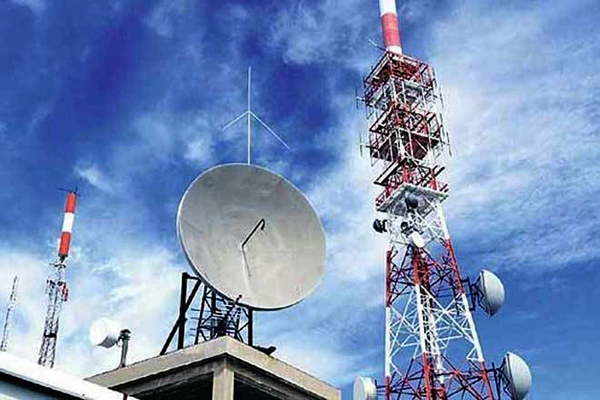
India has achieved a major milestone in expanding rural telecommunications infrastructure, with the number of villages lacking 4G connectivity declining by nearly 75 per cent over the past four years. According to the Department of Telecommunications (DoT), the number of villages without 4G services has fallen from 45,180 in 2022 to 11,372 in 2026, reflecting sustained efforts to extend digital connectivity to remote and underserved regions.
The Ministry of Communications, in an official statement issued on 11 November 2026, attributed the progress to the implementation of the 4G Saturation Project, expansion of Bharat Sanchar Nigam Limited’s (BSNL) mobile network and continued investments by private telecommunications service providers. The initiative forms part of the government’s broader objective of ensuring reliable digital connectivity across rural India and reducing disparities in access to communication services.
4G Saturation Project Expands Rural Connectivity
The Department of Telecommunications launched the 4G Saturation Project to extend mobile broadband services to villages that had remained outside existing telecommunications networks. The project was designed to provide 4G connectivity to 24,680 previously unconnected villages, particularly in geographically difficult and commercially underserved locations.
The initiative focuses on extending telecommunications infrastructure to rural communities where conventional network expansion has been constrained by difficult terrain, scattered settlements and limited commercial viability. By supporting network deployment in such areas, the project seeks to ensure that residents can access essential mobile communication services and participate in India’s expanding digital economy.
Private telecommunications operators have also contributed to the improvement in nationwide 4G coverage through their network expansion programmes. The combined efforts of public and private service providers have helped reduce the number of villages without access to fourth-generation mobile networks.
BSNL Commissions 18,291 Rural 4G Sites
BSNL has emerged as an important implementing agency in India’s rural telecommunications expansion. Under the 4G Saturation Project, the public sector telecommunications company has commissioned 18,291 mobile network sites, providing connectivity to communities that previously lacked reliable 4G services.
The operational performance of these sites demonstrates growing demand for mobile data services in rural India. During October 2026, BSNL’s commissioned 4G saturation sites recorded a maximum of 10,21,048 active users in a single day, highlighting the increasing adoption of mobile broadband services in previously underserved locations.
According to the Department of Telecommunications, users connected through these sites consumed more than 1.86 crore GB of data during October 2026. The total data consumption reached 18,659,170 GB, representing an average monthly usage of approximately 18.3 GB per user.
The network recorded an average of approximately 56 active users per site, reflecting the dispersed population patterns of remote rural communities. Unlike densely populated urban telecommunications networks, rural infrastructure frequently serves smaller settlements spread across large geographical areas, making network expansion more challenging.
The substantial volume of data traffic demonstrates that rural connectivity initiatives are not merely extending network coverage but are also supporting the growing use of digital services among communities that previously had limited access to mobile broadband.
Government Sanctions 26,000 Additional Mobile Network Sites
To address the remaining connectivity gaps, the Union Government has sanctioned an additional 26,000 mobile network sites for the next phase of telecommunications infrastructure expansion.
The proposed deployment will focus on extending coverage to villages and settlements that continue to face connectivity limitations, particularly in remote, tribal and aspirational regions. These areas frequently present infrastructure challenges because of difficult geographical conditions, high installation costs and the dispersed distribution of habitations.
The Department of Telecommunications is coordinating with BSNL and other telecommunications service providers to identify suitable locations, improve network availability and accelerate infrastructure deployment.
The expansion strategy also includes greater utilisation of existing telecommunications infrastructure and the development of network-sharing arrangements. Such measures are intended to improve the efficiency of rural network deployment while reducing duplication of infrastructure in areas where establishing new telecommunications facilities can be particularly expensive.
Digital Connectivity Strengthens Rural Development
The expansion of 4G connectivity has implications beyond conventional mobile communication services. Reliable mobile broadband infrastructure can improve access to digital governance platforms, educational resources, healthcare services, financial transactions and other essential facilities in rural communities.
Improved connectivity enables residents of remote villages to access government services through digital platforms, reducing the need to travel long distances for administrative procedures. It can also support digital payments, banking services and access to information relevant to agricultural activities and rural livelihoods.
In education, mobile broadband connectivity can improve access to online learning platforms, digital educational materials and remote academic support. Similarly, telecommunications infrastructure can facilitate the use of telemedicine services and digital health platforms in areas where access to specialised medical facilities remains limited.
The Department of Telecommunications considers these developments important for achieving inclusive digital growth and ensuring that rural communities can participate more effectively in India’s expanding technology-driven economy.
Addressing the Remaining Connectivity Challenges
Despite the significant progress achieved since 2022, providing universal 4G connectivity remains a major infrastructure objective. The remaining 11,372 villages without 4G coverage are likely to require continued investment and targeted interventions, particularly where geographical and logistical conditions make telecommunications deployment difficult.
Mountainous regions, remote tribal settlements and sparsely populated areas present challenges involving infrastructure transportation, electricity availability, network maintenance and the financial viability of telecommunications operations.
To address these constraints, the Department of Telecommunications plans to prioritise uncovered villages through additional network deployments, infrastructure sharing and closer coordination with telecommunications service providers.
The government’s strategy combines the expansion of physical telecommunications infrastructure with more efficient utilisation of existing network resources, with the objective of extending reliable mobile connectivity to the remaining underserved communities.
Advancing India’s Vision of Universal Digital Connectivity
The reduction in villages without 4G connectivity from 45,180 in 2022 to 11,372 in 2026 represents substantial progress in India’s efforts to bridge the rural digital divide. The expansion of BSNL’s 4G infrastructure, combined with investments by private telecommunications operators, has extended mobile broadband services to communities that previously remained beyond the reach of modern digital networks.
With an additional 26,000 mobile network sites sanctioned, the government is preparing to address the remaining gaps in rural telecommunications coverage. The next phase will be particularly important for geographically isolated villages where conventional commercial network expansion has been limited.
The Department of Telecommunications has reaffirmed its commitment to achieving comprehensive rural connectivity, ensuring that reliable mobile communication services become accessible across the country. The continued expansion of 4G infrastructure is expected to strengthen digital inclusion and support India’s long-term objective of making essential digital services available to every village.
You may also like
-
Cabinet Extends MUDRA Credit Guarantee Scheme Until 2031 with ₹5,000 Crore Corpus
-
Philippines Seeks Customised BrahMos Missile Systems as India Negotiates Potential $800 Million Defence Deal
-
Moody’s Raises India’s GDP Growth Forecast to 7%, Cites Strong Consumption and Investment Momentum
-
Indian SpaceTech Startup Grahaa Space Develops Indigenous Earth-Observation Satellite Constellation
-
Tamil Nadu Startup Thazhal Develops Satellite and Drone-Based Infrastructure Monitoring Technology
