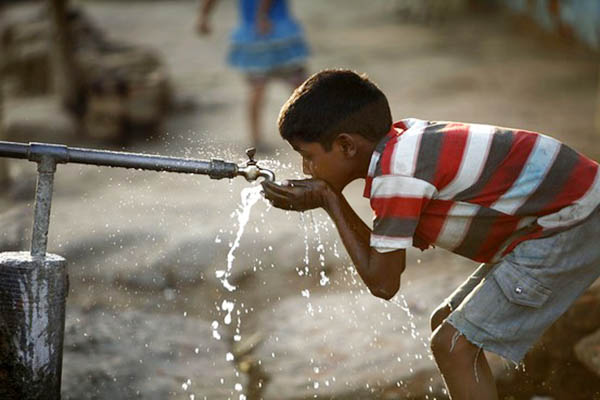
India’s achievements in drinking water access, river rejuvenation, sanitation and dam safety have received international recognition, with a senior World Bank official describing the country’s water management initiatives as a model for developing nations. Saroj Kumar Jha, Global Director for Water at the World Bank Group, highlighted India’s progress in addressing complex water challenges and emphasised the potential for other countries to learn from its experience.
Speaking during a virtual press briefing ahead of the 2026 United Nations Water Conference, Jha praised the Jal Jeevan Mission, Namami Gange Programme and Swachh Bharat Mission as examples of large-scale initiatives delivering improvements in water supply, sanitation and environmental management. He observed that India’s experience offers practical lessons for developing countries seeking to expand essential services while strengthening the sustainability of their water resources.
Jal Jeevan Mission Brings Improved Drinking Water Access to 800 Million People
The Jal Jeevan Mission emerged as one of the major achievements highlighted by the World Bank official. According to Jha, India’s efforts have improved drinking water access for approximately 800 million people in less than seven years, demonstrating the scale at which essential public infrastructure can be developed and expanded.
The Jal Jeevan Mission, launched in August 2019, aims to provide functional household tap connections to rural households, ensuring access to adequate quantities of drinking water of prescribed quality on a regular and long-term basis. The initiative has involved the development of piped water supply infrastructure, local water distribution networks and community-based water management mechanisms.
Jha described the scale of India’s drinking water expansion as unprecedented and highlighted the importance of moving beyond infrastructure creation towards ensuring the long-term sustainability of water supply systems.
The mission’s evolving priorities include operation and maintenance, reliable service delivery and the continued functioning of water infrastructure. These elements are essential for ensuring that newly established drinking water systems provide lasting benefits to communities.
The World Bank official also noted that developing countries are examining India’s experience as a potential model for expanding drinking water access through government leadership, public participation and adequate financing.
Namami Gange Programme Receives International Recognition
India’s Namami Gange Programme was another major initiative highlighted during the briefing. Jha praised the programme’s efforts to reduce pollution in the Ganga and improve the ecological health of one of India’s most important river systems.
Launched in 2014, the Namami Gange Programme is an integrated river conservation initiative aimed at pollution abatement, river rejuvenation and the protection of the Ganga’s ecological functions. Its activities include sewage treatment infrastructure, industrial pollution control, river surface cleaning, biodiversity conservation and community participation.
The World Bank has supported the National Mission for Clean Ganga through financing arrangements intended to strengthen river basin management and improve pollution-control infrastructure.
Jha described the programme as having achieved considerable success in reducing pollution and improving river health, while emphasising the broader importance of rivers to human settlements, livelihoods and cultural traditions.
The recognition reflects growing international interest in approaches that combine wastewater treatment, institutional coordination, environmental protection and public participation in river conservation.
India’s experience with the Namami Gange Programme is particularly relevant to developing countries facing similar challenges involving urbanisation, wastewater discharge and the degradation of freshwater ecosystems.
Swachh Bharat Mission Inspires Sanitation Initiatives Abroad
The World Bank official also highlighted the international influence of the Swachh Bharat Mission, India’s nationwide sanitation initiative launched in October 2014.
The programme has focused on expanding sanitation infrastructure, eliminating open defecation, improving waste management practices and encouraging behavioural changes related to hygiene and public cleanliness.
Jha cited Nigeria’s Clean Nigeria campaign as an example of an international initiative influenced by India’s sanitation programme. The reference illustrates how national public health and sanitation campaigns can provide lessons for countries confronting similar development challenges.
An important feature of the Swachh Bharat Mission has been its emphasis on combining infrastructure development with public awareness, community participation and institutional implementation.
These elements have attracted attention from countries seeking to improve sanitation access while encouraging sustained behavioural changes.
According to Jha, countries across the Global South are increasingly examining India’s approaches to sanitation and drinking water management, particularly the role of strong government leadership, adequate financing and public participation.
World Bank Supports India’s Dam Safety and Resilience Programmes
India’s efforts to strengthen dam safety and water infrastructure resilience also received recognition during the briefing.
Jha stated that World Bank financing has supported efforts to improve the resilience of nearly 900 dams in India. He also highlighted the establishment of centres of excellence intended to strengthen domestic technical expertise in dam safety and management.
India operates an extensive network of dams that support irrigation, drinking water supply, hydropower generation and flood management. Maintaining the structural integrity and operational reliability of these facilities is essential for protecting downstream communities and sustaining important economic activities.
The World Bank has supported India’s dam rehabilitation initiatives through programmes designed to improve infrastructure safety, strengthen monitoring systems and develop institutional capabilities.
These initiatives address challenges associated with ageing infrastructure, changing hydrological conditions and the need for more effective dam operation and maintenance.
The development of specialised technical institutions and professional expertise is also important for ensuring that dam safety practices continue to evolve alongside improvements in engineering, monitoring and risk assessment.
The World Bank official’s reference to nearly 900 dams concerns the wider scope of resilience efforts supported through financing arrangements and should not be interpreted as confirmation that rehabilitation work has been completed on every dam.
Urban Water Management and Municipal Financing Draw Praise
India’s initiatives to strengthen urban water management were also recognised during the discussion, particularly efforts to improve the financial capacity of municipal institutions responsible for water supply and related infrastructure.
Jha highlighted approaches that encourage creditworthy municipalities to access capital markets for financing infrastructure development and improving public services.
Urban water management presents increasingly complex challenges as cities expand and demand rises for reliable drinking water, wastewater treatment and efficient distribution networks.
Municipal financing mechanisms can provide additional resources for infrastructure investment, particularly when local institutions possess the financial capacity and governance arrangements required to access external funding.
The World Bank official’s observations reflect the importance of combining infrastructure development with institutional reforms and sustainable financing arrangements.
Strengthening municipal financial capacity can support the long-term operation of water infrastructure while enabling cities to respond more effectively to changing population and environmental pressures.
India Encouraged to Share Its Water Management Experience Globally
The World Bank official encouraged India to use the forthcoming United Nations Water Conference as an opportunity to share its experiences with other developing countries.
Jha noted that India’s programmes offer practical lessons in addressing challenges that many nations are still attempting to overcome. These include expanding drinking water infrastructure, improving sanitation, reducing river pollution and strengthening the safety of critical water infrastructure.
He also acknowledged that India continues to face water management challenges and that further improvements remain necessary.
Nevertheless, he emphasised the progress achieved through initiatives implemented at both the central and state government levels.
The international interest in India’s programmes highlights the growing importance of exchanging implementation experience between developing countries. Sharing institutional practices, financing approaches and community participation models can help other nations adapt successful initiatives to their own geographical and economic circumstances.
India Expected to Participate in UN Water Conference in Abu Dhabi
The 2026 United Nations Water Conference is scheduled to take place in Abu Dhabi, United Arab Emirates, from 8 to 10 December 2026. Co-hosted by the United Arab Emirates and Senegal, the conference aims to accelerate progress towards Sustainable Development Goal 6, which focuses on ensuring the availability and sustainable management of water and sanitation for all.
The conference will bring together governments, international organisations, financial institutions, researchers and other stakeholders to discuss practical approaches to water security, sanitation and sustainable resource management.
Stephanie Rambler, Senior Sustainable Development Officer at the United Nations Department of Economic and Social Affairs, indicated that India has been actively involved in preparations for the conference.
India is expected to send a high-level government delegation and organise a side event focusing on river cities, water security and urban resilience.
The proposed engagement will provide an opportunity to present India’s experiences in river rejuvenation, water infrastructure development and urban water management to an international audience.
The conference will also examine opportunities for international cooperation, financing and technological innovation to accelerate improvements in global water and sanitation systems.
India’s Water Management Experience Gains Global Relevance
The recognition from the World Bank reflects the increasing international relevance of India’s large-scale water and sanitation programmes.
The Jal Jeevan Mission’s expansion of drinking water access, the Namami Gange Programme’s river conservation activities, the Swachh Bharat Mission’s sanitation initiatives and investments in dam safety collectively demonstrate different aspects of the country’s approach to water management.
These programmes address interconnected challenges involving public health, environmental sustainability, infrastructure development and institutional capacity.
Their experience offers potential lessons for developing countries seeking to implement large-scale improvements in essential services while managing financial, administrative and environmental constraints.
As preparations continue for the United Nations Water Conference in December 2026, India’s water management initiatives are expected to feature in discussions on practical solutions for improving water security and sanitation.
The World Bank official’s recognition underscores the importance of India’s experience in international development cooperation and the potential for its approaches to inform water management programmes across the Global South.
You may also like
-
Government Invites Citizens Above 18 to Join Vayo SAATHI Initiative to Support Senior Citizens Across India
-
India Amends Immigration Rules, Eases Passport and Visa Requirements for Specified Foreign Nationals
-
India Reduces Prices of 120 Cancer Medicines as 70 Pharma Companies Submit Revised Rates
-
India Crosses 65 Lakh Rooftop Solar Installations Under PM Surya Ghar Yojana
-
TRAI Introduces Revised Telecom Interconnection Regulations to Modernise India’s Communication Networks
