GI Heritage of India Series | Tamil Nadu | Agricultural Products
In the dry agricultural landscapes of Ramanathapuram district in southern Tamil Nadu, a distinctive round chilli has become an important symbol of traditional farming, regional agricultural identity and rural livelihoods. Known as Ramnathapuram Mundu Chilli, this indigenous chilli variety is celebrated for its small, rounded fruits, deep red colour, characteristic pungency and suitability for traditional spice preparations. Its cultivation reflects the ingenuity of farming communities that have adapted their agricultural practices to the challenging environmental conditions of the region.
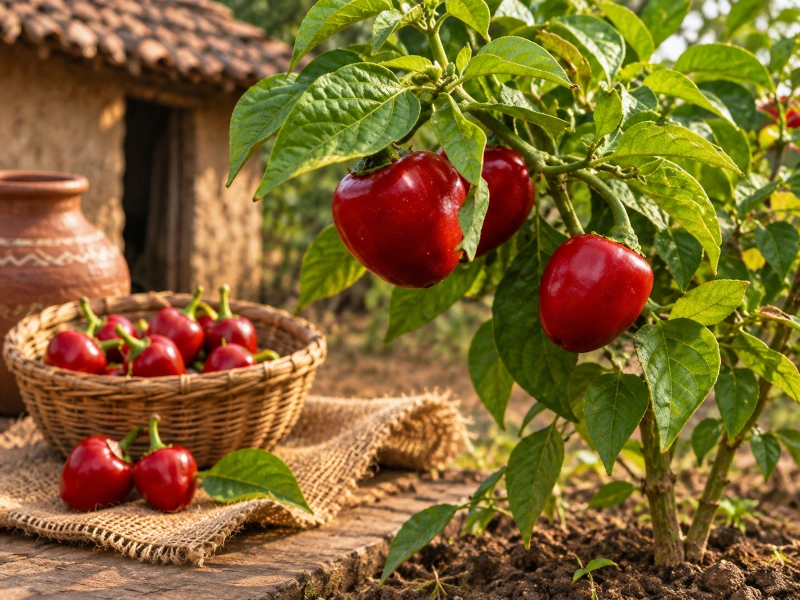
Unlike the long and slender chillies commonly cultivated across India, Mundu Chilli possesses a compact, rounded appearance that has given the variety its distinctive regional name. Locally associated with names such as Gundu Chilli and Ramnad Mundu, the crop has been cultivated by farming communities in Ramanathapuram for generations. Its characteristic appearance, flavour and colouring properties have contributed to its recognition in regional agricultural markets and traditional South Indian cuisine.
The chilli is particularly important because of its suitability for cultivation in the drought-prone agricultural environments of southern Tamil Nadu. Ramanathapuram experiences relatively low and irregular rainfall, while some farming areas are affected by soil and water salinity. Farmers have traditionally cultivated Mundu Chilli under rainfed conditions, maintaining a locally adapted agricultural variety capable of providing income under difficult growing conditions.
Recognising its distinctive agricultural characteristics and long association with Ramanathapuram, the chilli received Geographical Indication recognition on 22 February 2023. Registered under GI Application No. 720, the recognition formally established its protected geographical identity and created opportunities for strengthening its commercial reputation while preserving the traditional agricultural knowledge associated with its cultivation.
Historical Origins and Agricultural Heritage
Ramnathapuram Mundu Chilli belongs to the species Capsicum annuum L., a member of the Solanaceae family. Although chilli peppers originated in the Americas and entered the Indian subcontinent through maritime trade, their cultivation gradually spread across different agricultural regions of India. Over time, farming communities selected and preserved varieties suited to local environmental conditions, giving rise to distinctive regional chilli cultivars with different shapes, flavours, colours and levels of pungency.
In Tamil Nadu, chilli cultivation became an important component of regional farming systems and culinary traditions. Southern districts developed a strong association with dryland agriculture, where farmers cultivated crops capable of producing economic returns despite limited irrigation resources. Ramanathapuram emerged as an important chilli-growing region because its agricultural communities maintained varieties adapted to relatively dry conditions and the seasonal rainfall patterns of southeastern Tamil Nadu.
Mundu Chilli became one of the distinctive agricultural varieties associated with this environment. Traditional accounts recorded in connection with its geographical indication recognition describe cultivation in Ramanathapuram extending back more than 200 years. Although the precise date when the present cultivar became established is not independently documented, its long-standing association with the district reflects generations of local agricultural experience and crop preservation.
Over successive cultivation seasons, farmers selected planting material from chilli plants displaying desirable characteristics, including rounded fruit shape, deep red colour, characteristic flavour and suitability for local growing conditions. These practices helped maintain the variety’s identity while allowing it to remain an important part of the region’s agricultural economy. The preservation of Mundu Chilli demonstrates how traditional farming knowledge can sustain locally adapted crop varieties across generations.
Geographical Origin and Cultivation Region
Ramnathapuram Mundu Chilli is principally associated with Ramanathapuram district in southeastern Tamil Nadu, a coastal region situated between the Gulf of Mannar and the Palk Strait. The district contains extensive areas of dry agricultural land, with crop production strongly influenced by seasonal rainfall, groundwater availability and local soil conditions. Its agricultural landscape differs considerably from the wetter and more intensively irrigated farming regions found elsewhere in Tamil Nadu.
The principal Mundu Chilli cultivation areas include Mudukulathur, Kadaladi, Paramakudi, Ramanathapuram, Bogalur, Nainarkoil and Tiruppullani. These areas contain substantial stretches of rainfed agricultural land where farmers depend upon seasonal precipitation and the conservation of available soil moisture. The northeast monsoon is particularly important to agricultural production, as it supplies a significant proportion of the district’s annual rainfall.
The geographical environment contributes to the distinctive agricultural identity of Mundu Chilli. Local farmers have maintained planting material suited to relatively dry conditions, while cultivation practices have evolved in response to irregular rainfall, limited irrigation and varying soil characteristics. Some agricultural areas are also influenced by salinity, particularly where coastal conditions affect soil or groundwater quality.
Although similar rounded chilli varieties are cultivated in other parts of Tamil Nadu, Ramnathapuram Mundu Chilli derives its protected geographical identity from the production region and characteristics documented in its GI registration. The interaction between locally maintained planting material, environmental conditions and traditional farming knowledge forms an important foundation of its recognised agricultural heritage.
Distinctive Characteristics of Ramnathapuram Mundu Chilli
The most recognisable characteristic of Ramnathapuram Mundu Chilli is its distinctive rounded fruit shape. Unlike the elongated chillies commonly found in commercial agricultural markets, Mundu Chilli produces compact, relatively broad fruits that resemble small rounded berries. The local name Gundu Chilli reflects this appearance, distinguishing the variety from long-fruited chilli cultivars traditionally grown in other parts of India.
The fruits are green during their immature stages and gradually develop a deep red colour as they ripen. This characteristic pigmentation contributes to the chilli’s commercial appeal, particularly in markets where dried red chillies and chilli powders are valued for their appearance. The fruits also possess a comparatively substantial outer wall, which influences their texture, drying characteristics and suitability for processing.
Ramnathapuram Mundu Chilli is generally described as moderately pungent. Published assessments have reported pungency values of approximately 17,500 Scoville Heat Units, although actual heat levels vary according to planting material, growing conditions, fruit maturity and testing methods. Its pungency results primarily from capsaicinoids, naturally occurring compounds such as capsaicin and dihydrocapsaicin that produce the characteristic burning sensation associated with chilli peppers.
In addition to pungency, Mundu Chilli is appreciated for its characteristic flavour and red colouring properties. These qualities make the dried fruits suitable for chilli powders and spice mixtures used in traditional South Indian cooking. The combination of rounded fruit shape, attractive colour, characteristic heat and adaptation to dryland cultivation distinguishes the variety from many other regional chillies.
Traditional Cultivation Practices
Ramnathapuram Mundu Chilli cultivation is closely associated with traditional rainfed farming systems developed in response to the environmental conditions of southern Tamil Nadu. Farmers cultivate the crop in areas where agricultural production depends upon seasonal rainfall, and irrigation facilities may be limited or unevenly distributed. As a result, effective soil preparation, moisture conservation and the selection of suitable planting material are important elements of the cultivation process.
According to the Ramanathapuram District Agriculture Department, chilli cultivation takes place under both rainfed and irrigated conditions. Direct sowing is generally undertaken during September, while transplanted chilli cultivation commonly begins during the second half of November. These agricultural schedules correspond broadly with the northeast monsoon, although actual planting dates vary depending upon rainfall, soil moisture and local farming conditions.
Traditional cultivation involves preparing agricultural fields, selecting suitable seeds, undertaking direct sowing or nursery transplantation, and maintaining the crop through weeding, nutrient management and protection against pests and diseases. Farmers often depend upon planting material preserved from previous harvests, particularly when locally adapted varieties have demonstrated satisfactory performance under regional growing conditions.
Seed selection has historically contributed to maintaining the distinctive characteristics of Mundu Chilli. Farmers preserve seeds from mature fruits exhibiting desirable shape, colour and quality, allowing the variety to continue across successive cultivation seasons. These practices represent an important form of agricultural knowledge developed through practical experience.
The crop is frequently cultivated by small and marginal farmers who rely upon family labour and seasonal agricultural employment. Water availability remains a major factor influencing productivity, especially during periods of inadequate rainfall. Improved irrigation efficiency, appropriate nutrient management and scientific crop-protection practices can therefore support cultivation while helping preserve the traditional identity of the variety.
Adaptation to Drought and Saline Conditions
One of the most significant agricultural characteristics associated with Ramnathapuram Mundu Chilli is its established cultivation in the drought-prone environments of southern Tamil Nadu. Ramanathapuram district experiences irregular rainfall and recurring water scarcity, creating difficulties for agricultural production. Farmers have consequently developed cropping systems that make use of locally adapted varieties and available seasonal moisture.
Mundu Chilli has traditionally been cultivated under these conditions, particularly in rainfed fields where irrigation is limited. Its continued production demonstrates its suitability for the agricultural practices developed in the region. The variety is also associated with farming areas where varying degrees of soil and groundwater salinity influence cultivation.
However, successful cultivation in drought-prone or saline environments should not be interpreted as complete resistance to water stress or high salinity. Crop performance remains dependent upon the severity of environmental conditions, soil characteristics, rainfall distribution and agricultural management. The significance of Mundu Chilli lies in its established agricultural adaptation rather than any assumption of immunity to adverse growing conditions.
The preservation of locally adapted crops is increasingly important as agricultural institutions examine ways to strengthen farming systems under changing climatic conditions. Varieties such as Mundu Chilli provide opportunities for research into dryland agriculture, crop adaptation and resource-efficient farming practices. Their conservation also helps maintain the genetic and agricultural diversity available to future generations of farmers.
Harvesting, Drying and Traditional Processing
Ramnathapuram Mundu Chilli is harvested after the fruits have reached the desired stage of maturity and developed their characteristic red colour. Harvesting is generally undertaken manually, allowing farmers to select suitable fruits while reducing unnecessary damage to the plants and harvested produce. Careful harvesting is particularly important because the commercial value of dried chillies depends partly upon appearance, cleanliness and overall quality.
Following harvesting, the chillies are prepared for drying. Traditional processing commonly involves spreading the fruits under sunlight to reduce their moisture content before storage or marketing. Drying is an essential stage because Mundu Chilli is widely traded as a dried agricultural commodity and is frequently processed into chilli powder.
The rounded shape and relatively substantial fruit wall require careful attention during drying to ensure that sufficient moisture is removed. Inadequate drying can encourage fungal growth, deterioration and loss of commercial value. Proper handling, suitable drying surfaces and protection from unexpected rainfall are therefore important for maintaining the quality of the harvested produce.
Once drying is complete, the chillies may be graded according to colour, appearance, cleanliness and general condition. The produce is subsequently marketed as whole dried chillies or supplied to processing enterprises for grinding into powders and spice mixtures. Improved drying yards, hygienic processing facilities and moisture-controlled storage can help reduce post-harvest losses and strengthen the commercial value of the crop.
Ramnathapuram Mundu Chilli in Tamil Cuisine
Ramnathapuram Mundu Chilli is closely associated with the culinary traditions of southern Tamil Nadu, where dried red chillies form an essential component of household cooking and regional spice preparations. Its characteristic pungency, deep red colour and distinctive flavour make it suitable for a wide variety of traditional dishes.
The dried chillies may be roasted, fried or ground before being incorporated into food preparations. They are particularly suitable for chilli powders and spice mixtures used in sambar, rasam, vegetable curries and traditional South Indian masalas. Their colouring properties contribute to the appearance of prepared foods, while their pungency provides the heat associated with many regional dishes.
Mundu Chilli can also be used in meat and fish preparations, which form an important part of the culinary traditions of coastal and southern Tamil Nadu. In such dishes, the chilli may be combined with ingredients including coriander, cumin, pepper, turmeric, tamarind and other regional seasonings to produce complex flavour combinations.
In traditional household cooking, dried chillies are frequently heated in oil to release their flavour before other ingredients are added. The use of Mundu Chilli in these preparations reflects its established role as both a flavouring ingredient and a colouring component. Its culinary reputation has contributed to demand in regional agricultural markets and supported its continuing importance in the farming economy of Ramanathapuram.
Economic Importance and Rural Livelihoods
Ramnathapuram Mundu Chilli is an important agricultural commodity in the rural economy of Ramanathapuram district. Its cultivation provides income opportunities for small and marginal farmers, agricultural labourers, traders and enterprises involved in drying, grading, transportation and spice processing. The crop is particularly significant in dryland farming systems where agricultural households must balance limited water availability with the need to generate sustainable incomes.
The Government of Tamil Nadu’s District Export Action Plan identifies Ramanathapuram as one of the state’s leading chilli-producing districts. The plan reports that the district historically accounted for approximately 31 per cent of Tamil Nadu’s chilli production, with around 16,000 hectares under chilli cultivation and normal production estimated at 13,164 metric tonnes. These figures describe the district’s wider chilli sector during the period covered by the report and should not be interpreted as current annual production or exclusively GI-certified Mundu Chilli output.
A study published in January 2024 examined the economics of Mundu Chilli cultivation using agricultural information collected during 2019–20. The research estimated cultivation costs of approximately ₹84,550 per hectare and net returns of approximately ₹55,450 per hectare, with a benefit-cost ratio of 1.65. These historical estimates demonstrate the crop’s income-generating potential, although actual profitability varies according to yield, rainfall, labour costs, agricultural inputs and market prices.
Despite its commercial importance, Mundu Chilli cultivation faces challenges associated with irregular rainfall, fluctuating market prices, transport costs and inadequate post-harvest infrastructure. Farmers may also encounter difficulties arising from limited storage facilities and dependence upon intermediaries in agricultural marketing. The development of organised producer groups, improved drying facilities and transparent marketing arrangements can help strengthen the economic benefits available to cultivating households.
The Role of Farmer Producer Organisations
The Geographical Indication recognition of Ramnathapuram Mundu Chilli was secured through the initiative of Ramnad Mundu Chilli Producer Company Limited, which represents an organised effort to protect the identity of the traditional chilli and strengthen its market recognition. The company’s registration initiative brought together historical, agricultural and geographical documentation supporting the relationship between the product and its established cultivation region.
The application process required evidence concerning the chilli’s distinctive characteristics, traditional production practices and geographical association. This information was examined under India’s Geographical Indications of Goods (Registration and Protection) Act, 1999, which provides legal protection for products whose qualities, reputation or other characteristics are attributable to their geographical origin.
Producer organisations play an important role in agricultural GI registration because individual farmers may lack the resources required to undertake legal documentation, technical examination and institutional coordination independently. Collective representation allows producers to establish a common identity for their agricultural products and provides a platform for developing organised marketing and quality-control arrangements.
The registration of Ramnathapuram Mundu Chilli also creates opportunities for eligible producers to obtain authorised-user status under the GI framework. Such participation can support product authenticity and help farmers benefit from the reputation associated with the protected geographical indication. The long-term success of registration will depend upon ensuring that local cultivators have meaningful access to these opportunities.
Commercial Potential and Value Addition
Ramnathapuram Mundu Chilli possesses considerable commercial potential because of its distinctive rounded shape, deep red colour and suitability for dried chilli processing. Its principal commercial applications include dried whole chillies, chilli powder, traditional spice mixtures, curry masalas and other processed food products. These applications provide opportunities to extend the value of the crop beyond the sale of unprocessed agricultural produce.
The development of quality-controlled processing facilities can improve product consistency and strengthen confidence among commercial buyers. Proper drying, hygienic handling, grading and suitable packaging are particularly important for maintaining the colour, flavour and storage quality of dried chillies. These improvements can help producers supply products that meet the expectations of larger domestic markets.
The Government of Tamil Nadu’s District Export Action Plan identifies Mundu Chilli as an agricultural product with export potential. The plan highlights the importance of improving drying facilities, storage infrastructure, market information and transportation arrangements. Ramanathapuram’s connections with commercial centres in southern Tamil Nadu, including Thoothukudi, provide opportunities for developing wider trading networks.
Geographical Indication recognition offers an additional foundation for speciality branding by distinguishing genuine Ramnathapuram Mundu Chilli from similar rounded chilli varieties produced elsewhere. However, GI-based marketing requires appropriate traceability, quality assurance and compliance with the authorised-user framework. The combination of producer organisation, improved processing and protected geographical identity can help strengthen the crop’s commercial position while ensuring that its traditional agricultural character is preserved.
GI Tag Journey of Ramnathapuram Mundu Chilli
The Geographical Indication recognition of Ramnathapuram Mundu Chilli represents an important milestone in protecting Tamil Nadu’s traditional agricultural heritage. Cultivated for generations in the dry farming environments of Ramanathapuram, the chilli developed a distinctive identity through its rounded fruit shape, deep red colour, characteristic pungency and association with rainfed agriculture. Its registration reflects the importance of recognising agricultural products whose reputations have developed through the interaction of geographical conditions and traditional farming knowledge.
The formal registration process began on 16 November 2020, when Ramnad Mundu Chilli Producer Company Limited filed GI Application No. 720 under Class 31. Following administrative examination, the submission of supporting documents and publication in the Geographical Indications Journal, the chilli received Certificate No. 441 on 22 February 2023. The registration established formal protection for its geographical identity and provided an institutional foundation for strengthening its commercial reputation.
Historical and GI Registration Milestones
| Year / Date | Milestone | Historical and Agricultural Significance |
|---|---|---|
| Historical period | Introduction and establishment of chilli cultivation in southern India. | Chilli peppers became integrated into regional agriculture and culinary traditions following their introduction through maritime trade. |
| More than 200 years ago, according to traditional accounts | Mundu Chilli cultivation became established in Ramanathapuram. | Farming communities maintained a distinctive round chilli variety suited to local agricultural conditions. |
| Generations of traditional cultivation | Preservation of Mundu Chilli through local farming practices. | Farmers maintained planting material and cultivated the chilli under dryland conditions, preserving its characteristic shape, colour and flavour. |
| Traditional agricultural development | Mundu Chilli became an important commercial crop in Ramanathapuram. | Its rounded fruits, red colour and suitability for dried chilli processing contributed to its regional reputation. |
| Modern agricultural development | Ramanathapuram emerged as a major chilli-producing district of Tamil Nadu. | Chilli cultivation contributed to rural livelihoods and the development of regional agricultural trade. |
| 16 November 2020 | GI Application No. 720 filed by Ramnad Mundu Chilli Producer Company Limited. | The application initiated formal geographical protection under Class 31. |
| 14 December 2020 | Formality Check Report issued by the GI Registry. | The application underwent preliminary administrative examination. |
| 11 March 2021 | Applicant submitted its response to the Formality Check Report. | Additional documentation was provided to support the application. |
| 19 March 2021 | Additional affidavit and geographical map submitted. | Supporting materials were supplied to establish the crop’s geographical association. |
| 16 June 2022 | Examination report issued by the GI Registry. | The application underwent substantive examination concerning the product and supporting evidence. |
| 9–15 September 2022 | Applicant submitted responses to the examination report. | Clarifications and further documentation were provided during registration. |
| 21 October 2022 | Publication in Geographical Indications Journal No. 165. | Official publication marked an important stage towards registration. |
| 22 February 2023 | GI Certificate No. 441 issued for Ramnathapuram Mundu Chilli. | The chilli received formal recognition of its protected geographical identity. |
| 2023 | GI recognition received wider attention among farming communities and agricultural markets. | Recognition created opportunities for product differentiation and organised marketing. |
| January 2024 | Agricultural research documented the economics of Mundu Chilli cultivation. | The study provided evidence of the crop’s importance to farming households in Ramanathapuram. |
| 15 November 2030 | Current GI registration validity date. | Registration remains valid until this date, subject to further renewal. |
The registration timeline demonstrates the importance of organised producer participation in obtaining legal protection for traditional agricultural products. Ramnad Mundu Chilli Producer Company Limited played a central role in securing recognition, while the examination process documented the crop’s established geographical identity and agricultural significance. The registration also acknowledged the contribution of farming communities that have maintained the variety under the challenging environmental conditions of Ramanathapuram.
The recognition provides opportunities to strengthen the commercial position of Ramnathapuram Mundu Chilli through improved quality control, producer organisation and GI-based marketing. By connecting the crop’s traditional agricultural identity with modern legal protection, the GI framework offers a foundation for preserving regional crop diversity while supporting economic opportunities for local farmers and agricultural enterprises.
GI Details at a Glance
| Particular | Details |
|---|---|
| Geographical Indication | Ramnathapuram Mundu Chilli |
| State | Tamil Nadu |
| District of Origin | Ramanathapuram |
| Other Names | Ramnad Mundu Chilli, Mundu Chilli, Gundu Chilli, Round Chilli |
| Botanical Name | Capsicum annuum L. |
| Botanical Family | Solanaceae |
| Product Category | Agricultural |
| GI Class | 31 |
| GI Application Number | 720 |
| Application Filing Date | 16 November 2020 |
| Registered Proprietor | Ramnad Mundu Chilli Producer Company Limited |
| Registered Proprietor’s Address | 1002, Selvanayagapuram, Mudukulathur Taluk, Ramanathapuram District – 623704, Tamil Nadu |
| Geographical Area Recorded by Registry | Tamil Nadu |
| Traditional Cultivation Region | Ramanathapuram district |
| Principal Cultivation Blocks | Kadaladi, Mudukulathur, Paramakudi, Ramanathapuram, Bogalur, Nainarkoil and Tiruppullani |
| GI Journal Number | 165 |
| GI Journal Publication Date | 21 October 2022 |
| GI Certificate Number | 441 |
| GI Certificate Date | 22 February 2023 |
| Registration Valid Until | 15 November 2030 |
| Current GI Status | Registered |
| Plant Type | Herbaceous chilli plant |
| Fruit Shape | Small, rounded to cherry-shaped |
| Fruit Colour | Green when immature, developing deep red coloration upon maturity |
| Fruit Surface | Relatively smooth and glossy |
| Fruit Wall | Comparatively thick |
| Pungency | Approximately 17,500 SHU in published assessments; actual values vary |
| Principal Pungent Compounds | Capsaicin and dihydrocapsaicin |
| Characteristic Flavour | Moderate pungency with a distinctive chilli aroma |
| Traditional Cultivation System | Primarily rainfed dryland cultivation |
| Environmental Adaptation | Cultivated in drought-prone environments and areas with varying soil salinity |
| Principal Direct Sowing Period | September |
| Principal Transplanting Period | Second half of November |
| Traditional Harvesting Method | Manual harvesting of mature fruits |
| Traditional Processing | Sun-drying, grading and grinding |
| Traditional Culinary Uses | Chilli powders, curry preparations, spice mixtures and South Indian masalas |
| Commercial Applications | Dried whole chillies, chilli powder, processed spices and speciality food products |
The registration details are based on the official records of the Geographical Indications Registry, Intellectual Property India. The cultivation information, agricultural characteristics and production background are supported by publications of the Government of Tamil Nadu, including the Ramanathapuram District Agriculture Department and the District Export Action Plan. These records establish the crop’s importance within the regional agricultural economy and provide the official foundation for its geographical protection.
The registered geographical identity of Ramnathapuram Mundu Chilli provides a legal framework for protecting the product’s reputation while creating opportunities for authorised producers to distinguish genuine produce from similar chilli varieties cultivated elsewhere. The continued effectiveness of this protection depends upon appropriate producer participation, quality standards and marketing arrangements that preserve the relationship between the crop and its geographical origin.
Preserving Ramnathapuram Mundu Chilli’s Agricultural Heritage
The future of Ramnathapuram Mundu Chilli depends upon preserving the locally adapted planting material and traditional agricultural knowledge that have sustained its cultivation across generations. Its importance is particularly significant in the context of dryland agriculture, where farmers face recurring challenges associated with irregular rainfall, water scarcity, soil conditions and fluctuations in agricultural input costs.
Traditional seed selection has played an important role in maintaining the distinctive characteristics of the variety. The continuation of these practices, supported by scientific seed management and crop improvement, can help preserve agricultural diversity while improving productivity and resilience. Agricultural institutions can contribute through research into drought adaptation, soil management, pest control and post-harvest processing, ensuring that traditional crop preservation is supported by advances in agricultural science.
The development of organised drying facilities, storage infrastructure and producer-led marketing networks can also help farmers obtain better economic returns while maintaining product quality. These improvements are particularly important because the value of dried chillies depends upon their appearance, moisture content, consistency and suitability for processing. Effective infrastructure can reduce losses and strengthen the ability of producers to supply larger markets.
Geographical Indication protection provides an important institutional foundation for these efforts, but its long-term benefits depend upon effective implementation and meaningful participation by farming communities. The preservation of Ramnathapuram Mundu Chilli therefore represents an opportunity to combine traditional agricultural knowledge with modern approaches to quality improvement, resource management and commercial development.
A Distinctive Symbol of Tamil Nadu’s Dryland Agricultural Heritage
Ramnathapuram Mundu Chilli represents an important part of southern Tamil Nadu’s agricultural identity. Its characteristic rounded fruits, deep red colour, moderate pungency and long association with rainfed cultivation distinguish it from many other chilli varieties grown in India. The crop also reflects the agricultural experience of communities that have sustained farming under challenging environmental conditions.
The granting of Geographical Indication recognition in February 2023 formally acknowledged the agricultural heritage preserved by farming communities in Ramanathapuram. The registration provides an opportunity to protect the crop’s established reputation while supporting the development of organised marketing, value-added processing and improved quality standards.
As demand for authentic regional agricultural products continues to develop, Mundu Chilli offers opportunities for wider commercial recognition and greater participation in speciality spice markets. Its continued cultivation will remain closely connected with the farmers who have maintained the variety and adapted their agricultural practices to the environmental conditions of the region.
Ramnathapuram Mundu Chilli is more than a distinctive round spice. It is a symbol of Tamil Nadu’s dryland farming traditions, agricultural resilience and the enduring relationship between local communities and their geographical environment.
You may also like
-
Raise Financial Services Launches Indigenous AI-Powered TradingCharts Platform
-
UPI to Remain Free for Consumers as India Strengthens Digital Payment Infrastructure
-
Numaligarh Refinery and IIT Guwahati Partner to Develop Indigenous Levulinic Acid Technology
-
Hindustan Mag and Prozeal Green Energy Plan 600-Tonne Rare-Earth Magnet Facility in Gujarat
-
Indian Traditional Artisans Record ₹2.07 Crore in Sales at India International Trade Fair
