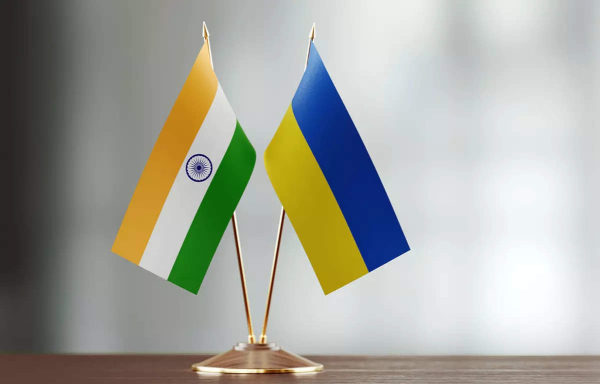
Prime Minister Narendra Modi held a telephone conversation with Ukrainian President Volodymyr Zelenskyy on 9 November 2026, reiterating India’s consistent position that the ongoing Russia–Ukraine conflict must be resolved through dialogue and diplomacy. The Prime Minister reaffirmed India’s human-centric approach to the conflict and conveyed New Delhi’s readiness to contribute to international efforts aimed at achieving a peaceful resolution.
According to an official statement issued by the Prime Minister’s Office, President Zelenskyy shared his perspective on recent developments concerning the conflict. The two leaders also discussed measures to strengthen bilateral cooperation across various sectors, reflecting India’s continuing diplomatic engagement with Ukraine alongside its efforts to support a negotiated settlement.
India Reiterates Commitment to Dialogue and Diplomacy
During the conversation, Prime Minister Modi reaffirmed India’s longstanding position that dialogue and diplomacy remain essential to resolving the conflict. He emphasised India’s human-centric approach, which places importance on the consequences of prolonged hostilities for civilian populations and the wider international community.
The Prime Minister also conveyed India’s readiness to contribute to all efforts aimed at achieving a peaceful resolution. The statement reflects New Delhi’s consistent diplomatic emphasis on peaceful engagement and its willingness to support initiatives that can help bring the conflict to an end.
India has repeatedly maintained that disputes between nations should be addressed through constructive diplomatic engagement. Its approach to the Ukraine conflict has focused on encouraging peaceful settlement while maintaining communication with the countries involved.
The latest conversation demonstrates India’s continuing engagement with Kyiv and its interest in supporting a diplomatic pathway towards peace.
President Zelenskyy Briefs Modi on Recent Developments
President Zelenskyy shared Ukraine’s perspective on recent developments related to the ongoing conflict, providing an opportunity for direct engagement between the two leaders.
The Prime Minister’s Office did not disclose the specific operational or diplomatic developments discussed by President Zelenskyy. However, the conversation provided a further channel for exchanging views on the situation and examining possibilities for a peaceful resolution.
Regular communication between national leaders is particularly important during prolonged international conflicts, as it allows governments to maintain diplomatic engagement, understand changing circumstances and exchange perspectives on potential peace initiatives.
The conversation builds upon earlier interactions between Modi and Zelenskyy, including meetings and telephone discussions during the course of the conflict.
India’s Human-Centric Approach to the Ukraine Conflict
India’s position on the Russia–Ukraine conflict has consistently emphasised the human consequences of warfare and the importance of diplomatic solutions.
During previous discussions with President Zelenskyy, Prime Minister Modi has highlighted India’s willingness to support efforts directed towards restoring peace. New Delhi has also emphasised the importance of international law, the United Nations Charter and respect for the sovereignty and territorial integrity of states.
During their telephone conversation on 4 October 2022, the Prime Minister stated that there could be no military solution to the conflict and reiterated India’s readiness to contribute to peace efforts.
India has also expressed concern about the humanitarian consequences of the conflict, including the safety of civilians and the effects of hostilities on essential infrastructure.
The latest conversation continues this established diplomatic approach, placing emphasis on dialogue, peaceful settlement and international cooperation.
Building on Modi’s Historic Visit to Ukraine in 2024
The telephone conversation follows sustained high-level diplomatic engagement between India and Ukraine, particularly after Prime Minister Modi’s historic visit to Kyiv on 23 August 2024.
The visit marked the first journey to Ukraine by an Indian Prime Minister since the establishment of diplomatic relations between the two countries in 1992.
During the visit, Modi and Zelenskyy held extensive discussions covering bilateral relations, economic cooperation and the ongoing conflict. Both leaders reaffirmed their interest in strengthening India–Ukraine relations and expanding cooperation across areas of mutual interest.
The joint statement issued following the meeting highlighted the importance of maintaining political dialogue and exploring opportunities for stronger economic, scientific, technological and cultural cooperation.
India also reiterated its position that peaceful resolution through dialogue and diplomacy should remain central to international efforts addressing the conflict.
The 2024 engagement established a stronger foundation for subsequent high-level discussions, including the latest telephone conversation.
Strengthening India–Ukraine Bilateral Cooperation
Beyond the conflict, the two leaders discussed measures to further strengthen bilateral cooperation for the mutual benefit of their countries.
India and Ukraine have maintained diplomatic relations since January 1992 and have developed cooperation in trade, agriculture, pharmaceuticals, science and technology, education and cultural exchanges.
The relationship is supported by institutional mechanisms, including the India–Ukraine Intergovernmental Commission on Trade, Economic, Scientific, Technical, Industrial and Cultural Cooperation.
During Modi’s August 2024 visit, the two countries signed four agreements covering agricultural cooperation, medical products regulation, humanitarian development assistance and cultural cooperation.
These agreements provided a framework for expanding sector-specific engagement while strengthening the institutional foundation of the bilateral relationship.
The latest telephone conversation reflects the continuing interest of both governments in maintaining economic and diplomatic cooperation despite the challenges created by the conflict.
Pharmaceuticals, Agriculture and Technology Offer Scope for Cooperation
Pharmaceuticals and agriculture are among the established areas of cooperation between India and Ukraine.
During the August 2024 bilateral discussions, both countries recognised opportunities to expand collaboration in medical products, pharmaceutical regulation and agricultural development.
An agreement between India’s Ministry of Health and Family Welfare and Ukraine’s State Service on Medicines and Drugs Control was signed to facilitate cooperation in pharmaceutical regulation. The agreement supports exchanges involving regulatory practices, medical products and associated technical expertise.
Agricultural cooperation was also strengthened through an agreement covering agriculture and the food industry, providing opportunities for joint research, technical exchanges and knowledge sharing.
The two countries have additionally identified information technology, artificial intelligence, biotechnology, new materials, green energy and other emerging sectors as potential areas for scientific and technological collaboration.
These existing frameworks provide opportunities to deepen bilateral economic engagement as India and Ukraine continue discussions on strengthening their partnership.
Humanitarian Assistance Remains an Important Dimension
India’s engagement with Ukraine has also included humanitarian assistance and support for affected communities.
During the Prime Minister’s visit in August 2024, India provided four Bharat Health Initiative for Sahyog, Hita and Maitri (BHISHM) Cubes, along with ten generator sets, to support humanitarian and medical requirements.
The BHISHM system is designed to provide portable medical assistance during emergencies and disaster situations. Its modular design enables medical equipment and essential supplies to be transported and deployed in challenging environments.
India and Ukraine also signed a memorandum of understanding establishing a framework for Indian grant assistance to High Impact Community Development Projects in Ukraine.
The agreement provides a mechanism for supporting development initiatives intended to benefit local communities.
These initiatives complement India’s broader diplomatic engagement by addressing humanitarian and developmental requirements while maintaining constructive bilateral relations.
Sustained Diplomatic Engagement for Peace
Prime Minister Modi’s latest conversation with President Zelenskyy reflects India’s continuing diplomatic engagement with Ukraine and its stated commitment to supporting a peaceful resolution of the conflict.
The discussion brought together two important dimensions of India’s approach: encouraging dialogue to end hostilities and maintaining bilateral cooperation in areas of mutual interest.
The Prime Minister’s reaffirmation of India’s human-centric approach and readiness to contribute to peace efforts is consistent with positions expressed during earlier interactions with Ukrainian leadership.
At the same time, discussions on strengthening bilateral cooperation demonstrate that India and Ukraine continue to attach importance to their broader relationship, including economic, technological and humanitarian engagement.
The 9 November conversation reinforces India’s established diplomatic position that dialogue and diplomacy provide the pathway towards resolving the conflict, while reaffirming its willingness to contribute constructively to international efforts directed towards peace.
You may also like
-
India and France Advance Strategic Cooperation in Space, Critical Technologies and Economic Security
-
India and Lebanon Hold Foreign Office Consultations, Prioritise Trade, Digital Infrastructure and Pharmaceuticals
-
INS Surat Arrives in Oman for Naseem Al Bahr 2026, Strengthening India’s Maritime Security Partnership
-
India and EU Conclude Horizon Europe Negotiations, Opening New Opportunities for Scientific Research
-
Tārā’s Diplomacy: How Wise Counsel Prevented a Political Crisis Between Allies
