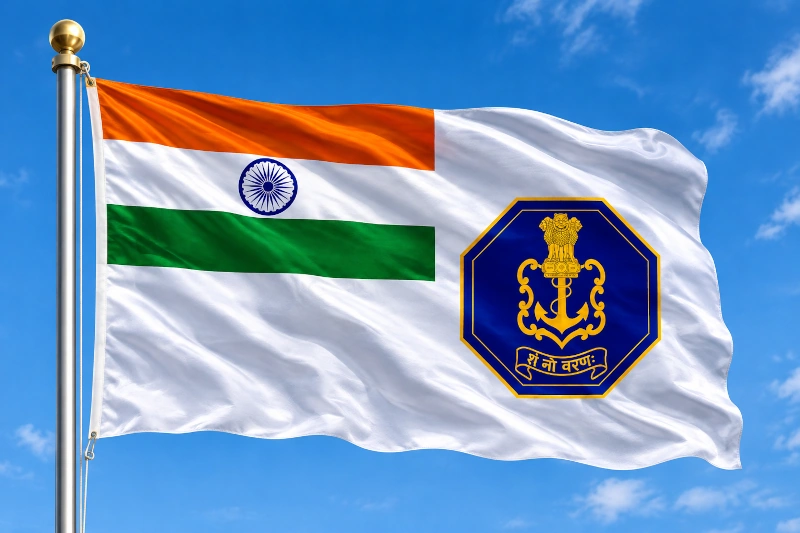
The Indian Navy is preparing to conduct the Passing Out Parade of its largest-ever batch of Agniveers at INS Chilka in Odisha on 13 November 2026. More than 3,300 trainees, comprising the ninth batch of Indian Navy Agniveers and Indian Coast Guard Naviks, will complete their initial military training, marking a significant milestone in the development of India’s next generation of maritime personnel.
According to the Ministry of Defence, the ceremony will mark the culmination of 16 weeks of intensive training designed to develop disciplined, physically fit, mentally resilient and professionally competent naval personnel. The graduating contingent will be the largest batch to pass out from INS Chilka, the Indian Navy’s premier establishment for initial recruit training.
Chief of Naval Staff to Review Passing Out Parade
Admiral Krishna Swaminathan, Chief of the Naval Staff, will serve as the Chief Guest and Reviewing Officer at the Passing Out Parade. The ceremony will be attended by senior naval officers, distinguished veterans, invited guests and family members of the graduating trainees.
The parade represents the formal completion of the recruits’ initial training and their transition towards specialised professional responsibilities within the Indian Navy and Indian Coast Guard. It also provides an opportunity to recognise the dedication, discipline and accomplishments demonstrated by the trainees throughout their training programme.
Vice Admiral Sameer Saxena, Flag Officer Commanding-in-Chief of the Southern Naval Command, will preside over the valedictory function. Awards will be presented to outstanding trainees, the champion division and the best instructor in recognition of their achievements and contributions.
Sixteen Weeks of Comprehensive Naval Training
The training programme at INS Chilka integrates academic instruction, physical conditioning, swimming, parade training, outdoor activities and field camps. The curriculum is structured to provide young recruits with the physical endurance, mental resilience and foundational professional skills required for service in a demanding maritime environment.
Beyond physical and technical preparation, the programme emphasises leadership, character development, teamwork and camaraderie. Trainees are introduced to the Indian Navy’s core values of Duty, Honour and Courage, which form the foundation of professional conduct and operational responsibility.
Swimming proficiency, physical fitness and the ability to function effectively within a team are particularly important in naval service, where personnel must operate in challenging maritime conditions. The structured training environment prepares recruits to adapt to military discipline while developing the confidence and coordination necessary for their subsequent professional training.
INS Chilka’s Role in Developing India’s Maritime Workforce
Located in Odisha, INS Chilka serves as one of the Indian Navy’s principal institutions for transforming newly recruited personnel into trained sailors. Its training infrastructure supports the systematic development of recruits through a combination of classroom instruction, physical training and practical military activities.
The graduation of more than 3,300 personnel in a single batch represents an important achievement for the establishment’s training capacity. The scale of the programme also highlights the organisational effort involved in preparing large numbers of recruits while maintaining common standards of discipline, physical fitness and professional development.
As the Indian Navy continues to operate increasingly sophisticated ships, submarines, aircraft and maritime surveillance systems, the development of capable and adaptable personnel remains an essential component of its operational preparedness. Initial training institutions such as INS Chilka provide the foundation upon which specialised maritime skills and professional expertise are subsequently developed.
Recognition of Outstanding Trainees
The valedictory function will recognise individual and collective achievements during the training period. Awards for meritorious trainees will acknowledge excellence in the training programme, while the champion division award will recognise collective performance and teamwork.
The ceremony will also feature the unveiling of Ankur, the bilingual magazine produced by trainees at INS Chilka. The publication documents their experiences and achievements, reflecting the training journey undertaken by the graduating batch.
Families attending the ceremony will witness the completion of an important phase in the recruits’ professional development. The occasion will also be streamed live through the Indian Navy’s official social media platforms, allowing viewers across the country to follow the event.
Strengthening India’s Future Maritime Capabilities
The graduation of the ninth batch represents another step in preparing trained personnel for India’s maritime security requirements. The Indian Navy and Indian Coast Guard perform complementary responsibilities ranging from naval operations and maritime surveillance to coastal security, search and rescue, and protection of India’s maritime interests.
The increasing sophistication of maritime operations requires personnel capable of working with advanced technologies while maintaining high standards of discipline, coordination and operational awareness. The training programme at INS Chilka establishes these essential foundations before recruits proceed to further professional development.
With more than 3,300 trainees preparing to complete their initial training on 13 November, the forthcoming Passing Out Parade will mark a new record for INS Chilka and reinforce the importance of structured personnel development in strengthening India’s maritime forces.
You may also like
-
IAF Advances High-Altitude Surveillance Capabilities as India Develops Indigenous Stratospheric Platforms
-
Indian Navy and XINFINITI Aerospace Developing Indigenous Drone for Automated Aircraft Inspections
-
INS Surat Arrives in Oman for Naseem Al Bahr 2026, Strengthening India’s Maritime Security Partnership
-
India’s Railgun Programme: DRDO Advances Next-Generation Artillery Technology in Pune
-
Bharat Forge Receives Bulk Production Clearance for Indigenous ATAGS, Manufacturing to Begin in FY2026–27
