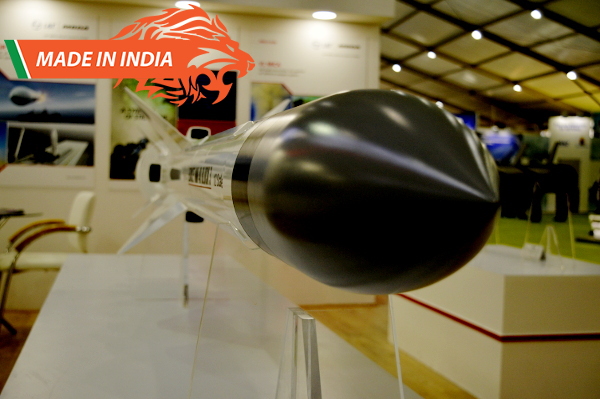
Bharat Dynamics Limited (BDL), one of India’s leading defence public sector enterprises, has achieved an important milestone in indigenous missile manufacturing through its participation in the successful flight test of the Pralay quasi-ballistic missile. The Defence Research and Development Organisation (DRDO) conducted the trial on November 5 from Dr APJ Abdul Kalam Island off the Odisha coast, validating the performance of the indigenously developed missile system during user evaluation trials.
The Ministry of Defence confirmed that Bharat Dynamics Limited served as one of the development-cum-production partners responsible for manufacturing the missile system. Developed by Research Centre Imarat (RCI), Hyderabad, in collaboration with other DRDO laboratories, Pralay represents the integration of indigenous research, advanced missile engineering and domestic defence manufacturing capabilities. The successful trial marks another step towards the induction of the missile into India’s armed forces.
Bharat Dynamics’ Role in Indigenous Missile Production
Bharat Dynamics Limited’s participation in the Pralay programme demonstrates the importance of cooperation between India’s defence research institutions and public sector manufacturing enterprises. While DRDO laboratories are responsible for developing the missile’s technologies and engineering systems, production partners such as BDL translate these designs into manufactured equipment suitable for military evaluation and eventual operational deployment.
The development-cum-production partnership model allows manufacturing organisations to participate in a defence system’s evolution before it enters regular production. Such arrangements facilitate the transfer of manufacturing knowledge, development of specialised production processes and establishment of industrial capabilities required for complex weapons systems. They also create closer coordination between missile designers, component manufacturers, integration teams and the armed forces.
BDL’s involvement in Pralay strengthens its position within India’s indigenous missile manufacturing ecosystem. The company already has experience in manufacturing guided missiles, underwater weapons, launchers and associated defence equipment. Its participation in the programme extends this industrial experience to an advanced quasi-ballistic missile system intended to strengthen India’s conventional military capabilities.
Pralay Missile Successfully Completes User Evaluation Trial
The latest Pralay flight test was conducted at approximately 11:10 AM on November 5, 2026, from Dr APJ Abdul Kalam Island. According to the Ministry of Defence, the missile successfully completed all stipulated test objectives, with its performance verified through data recorded by instrumentation systems deployed at the Integrated Test Range, Chandipur.
Senior DRDO officials, representatives of defence industry organisations and members of the armed forces witnessed the trial. Their participation formed part of the user evaluation process, which assesses whether a developed weapon system meets the performance requirements established for military deployment.
The successful flight trial demonstrates the progress achieved by DRDO and its industrial partners in developing and producing an indigenous missile system. The Ministry of Defence indicated that the successful evaluation had brought Pralay’s induction into the armed forces closer, marking an important transition from development and testing towards operational deployment.
Advanced Quasi-Ballistic Missile Technology
Pralay is an indigenously developed, solid-propellant, surface-to-surface quasi-ballistic missile designed for precision strikes against designated military targets. The missile incorporates advanced navigation and guidance technologies and is intended to provide the armed forces with a conventional strike capability.
Unlike conventional ballistic missiles that generally follow a predictable trajectory after their powered flight phase, quasi-ballistic missiles can follow modified trajectories and perform manoeuvres during flight. Such capabilities provide additional flexibility in approaching designated targets and are relevant to modern military operations involving increasingly sophisticated air defence environments.
Pralay has a reported operational range of approximately 150 to 500 kilometres and is designed to carry different conventional warhead configurations. These characteristics make the system relevant to military requirements involving precision engagement of high-value targets at tactical and operational distances.
The missile programme is part of India’s broader effort to develop advanced conventional missile capabilities through domestic research and manufacturing. Its development combines expertise in propulsion, guidance, navigation, structural engineering, systems integration and specialised defence materials.
DRDO and Defence PSUs Strengthen India’s Missile Manufacturing Ecosystem
The Pralay programme highlights the complementary responsibilities of DRDO and India’s defence manufacturing organisations in developing advanced military technologies. Research Centre Imarat, working with other DRDO laboratories, has led the indigenous development of the missile, while Bharat Dynamics Limited has contributed its manufacturing capabilities as a development-cum-production partner.
Producing an advanced missile requires specialised industrial processes, precision engineering, component integration, quality assurance and extensive testing. Developing these capabilities within India supports the establishment of a domestic supply chain capable of sustaining sophisticated defence programmes throughout their operational lives.
The involvement of domestic manufacturing enterprises also creates opportunities for Indian component suppliers, specialised engineering companies and technology developers to participate in the defence production ecosystem. As indigenous systems progress towards induction, established manufacturing partnerships can support subsequent production, maintenance and lifecycle requirements.
For Bharat Dynamics Limited, participation in Pralay represents an extension of its role as a manufacturing partner for India’s missile development programmes. The company’s contribution reinforces the connection between nationally developed defence technologies and the industrial capabilities needed to produce them.
Successful Trial Brings Pralay Closer to Military Induction
Following the successful flight test, Defence Minister Rajnath Singh congratulated DRDO, the armed forces and participating industrial organisations. He highlighted the contribution of advanced missile technologies to strengthening India’s defence capabilities and operational preparedness against emerging security challenges.
Senior officials associated with the Defence Research and Development Organisation and the Ministry of Defence also acknowledged the contributions of the participating research laboratories and manufacturing partners. The successful completion of the user evaluation trial provides further validation of the missile system’s development and manufacturing processes.
Pralay’s progress towards induction is significant for India’s conventional missile capabilities and indigenous defence production. The programme demonstrates how domestic research establishments and public sector manufacturers can work together to develop, manufacture and evaluate sophisticated military systems.
Bharat Dynamics Limited’s contribution to the successful Pralay trial underscores the growing capabilities of India’s defence manufacturing sector. By combining DRDO’s indigenous missile technologies with established domestic production expertise, the programme strengthens India’s ability to develop and manufacture advanced weapon systems while supporting the broader objective of self-reliance in defence.
Reference
Ministry of Defence, Press Information Bureau, Government of India, 5 November 2026.
https://www.pib.gov.in/PressReleasePage.aspx?PRID=2333276
You may also like
-
Sigma Advanced Systems Reports ₹2,315 Crore Defence Orders in Artillery and Anti-Drone Technologies
-
BEL Begins Production Preparations for ₹30,000 Crore Indigenous QRSAM Programme
-
India, Philippines in Advanced Talks for $800 Million BrahMos Missile Deal
-
The BrahMos Arc: India’s Expanding Strategic Reach Across the Indo-Pacific
-
Indian Air Force Achieves World’s Highest IL-76MD Landing at Strategic Nyoma Airfield in Ladakh
