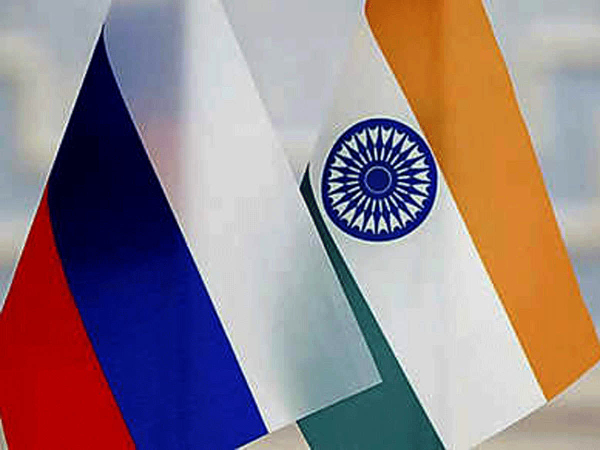
India and Russia have reaffirmed their commitment to strengthening parliamentary cooperation, bilateral relations and coordination on international issues following discussions between Lok Sabha Speaker Om Birla and Vyacheslav Volodin, Chairman of the State Duma of the Federal Assembly of the Russian Federation, in New Delhi on 25 October 2026.
The meeting took place ahead of the 12th BRICS Parliamentary Forum, which India will host on 26 and 27 October. Both parliamentary leaders discussed expanding institutional engagement, strengthening cooperation at international forums and promoting collective action against terrorism.
The discussions also covered reforms of global institutions, parliamentary exchanges, economic cooperation and the use of technology to make legislative institutions more accessible to citizens. The engagement reflects the importance both countries attach to parliamentary diplomacy as an additional pillar of the India-Russia Special and Privileged Strategic Partnership.
Om Birla Highlights India’s Longstanding Partnership with Russia
Welcoming the Russian parliamentary delegation, Om Birla emphasised the historical friendship between India and Russia, describing the relationship as one built upon mutual trust, respect and shared aspirations.
He observed that the Special and Privileged Strategic Partnership has continued to deepen under the leadership of Prime Minister Narendra Modi and Russian President Vladimir Putin. The relationship encompasses cooperation across several strategic and economic sectors, supported by sustained political dialogue and institutional engagement.
The Lok Sabha Speaker also highlighted the approaching 80th anniversary of diplomatic relations between India and Russia in 2027. The milestone will mark eight decades since the establishment of formal diplomatic relations in 1947, providing an opportunity to recognise the evolution of bilateral ties and explore new areas of cooperation.
Birla noted that the enduring friendship between the peoples of India and Russia provides a strong foundation for expanding parliamentary, cultural and economic exchanges. He emphasised that cooperation between legislative institutions could further strengthen understanding between the two countries and support their broader strategic partnership.
India and Russia Seek Stronger Institutional Parliamentary Cooperation
A major focus of the discussions was the need to strengthen regular engagement between the Lok Sabha and Russia’s State Duma through established parliamentary mechanisms.
Om Birla called for sustained cooperation through the India-Russia Inter-Parliamentary Commission, which provides an institutional platform for dialogue between the two legislatures. He also emphasised the importance of regular exchanges of parliamentary delegations to strengthen communication and promote cooperation on issues of mutual interest.
The Inter-Parliamentary Commission has played a role in maintaining legislative engagement between the two countries. Established as a bilateral parliamentary mechanism, it has held meetings in 2000, 2003, 2015, 2017 and 2018. The commission is jointly headed by the Speaker of the Lok Sabha and the Chairman of the State Duma.
During the latest meeting, both sides discussed strengthening Parliamentary Friendship Groups and expanding opportunities for interaction among legislators. Particular attention was given to encouraging exchanges involving young parliamentarians and women representatives.
These initiatives aim to broaden the institutional foundations of India-Russia relations by creating greater opportunities for lawmakers to exchange experiences, understand legislative practices and discuss common challenges.
Parliamentary Leaders Emphasise Joint Action Against Terrorism
India and Russia reaffirmed the importance of international cooperation in combating terrorism, identifying the issue as an important area for continued bilateral and multilateral engagement.
Om Birla appreciated Russia’s consistent support for India in its fight against terrorism. He stressed that the international community must demonstrate unity and determination in addressing terrorist threats while strengthening cooperation for global peace and security.
The discussions highlighted the importance of collective action through international institutions and parliamentary forums. Both sides recognised that terrorism presents challenges requiring cooperation among governments, legislative bodies and international organisations.
The meeting also provided an opportunity to discuss broader global security concerns and the contribution parliamentary diplomacy can make towards building international consensus on matters affecting peace and stability.
India and Russia have traditionally maintained close consultations on major international security issues. The renewed emphasis on parliamentary cooperation adds another institutional dimension to these exchanges.
Russia Reaffirms Support for India’s Permanent UNSC Membership
Reform of the United Nations Security Council emerged as another important subject during the bilateral discussions.
Om Birla reiterated India’s position that international institutions must become more responsive to contemporary global realities. He emphasised the importance of reforming the Security Council to reflect changes in the international political and economic environment.
The Lok Sabha Speaker also conveyed his appreciation for Russia’s continued support for India’s aspiration to become a permanent member of the United Nations Security Council.
India has consistently advocated comprehensive reform of the Security Council, including expansion of its permanent and non-permanent membership. New Delhi maintains that greater representation of developing countries is essential to strengthening the legitimacy and effectiveness of global governance.
Russia’s support for India’s permanent membership remains an important element of the two countries’ diplomatic cooperation. The discussions in New Delhi reaffirmed their shared interest in maintaining dialogue on reforms of international institutions.
BRICS Parliamentary Forum Provides Platform for Wider Cooperation
The bilateral meeting took place ahead of the 12th BRICS Parliamentary Forum, scheduled to be held in New Delhi from 26 to 27 October 2026 under India’s BRICS presidency.
The forum will bring together parliamentary leaders and representatives from BRICS member and partner countries to discuss matters concerning governance, development and international cooperation.
This year’s overarching theme, Strengthening Parliaments for People-Centric Development, reflects India’s emphasis on ensuring that legislative institutions remain responsive to the needs and aspirations of citizens.
The forum will feature four high-level sessions focusing on resilience, innovation, cooperation and sustainability. Discussions will also address institutional development, digital transformation, global governance and opportunities for cooperation among parliamentary institutions.
During his meeting with Volodin, Om Birla sought Russia’s active participation in strengthening cooperation among BRICS parliaments. He highlighted the importance of collective efforts to address global challenges, including climate change and terrorism.
The Lok Sabha Speaker emphasised that closer parliamentary engagement could help BRICS countries advance the shared priorities of developing nations and promote more inclusive international decision-making.
The forum will also include a special meeting of the chairpersons of international affairs committees from BRICS member and partner countries. The discussions will focus on parliamentary diplomacy, capacity building and the exchange of institutional best practices.
India Showcases Sansad Bhashini and Digital Parliamentary Innovation
Om Birla also highlighted India’s efforts to use modern technology to make parliamentary proceedings more accessible, efficient and citizen-centric.
During the interaction, he briefed the Russian delegation on Sansad Bhashini, an initiative designed to improve access to parliamentary proceedings in various Indian languages.
The initiative reflects India’s emphasis on using technology to strengthen democratic participation and overcome linguistic barriers in legislative communication.
India’s multilingual parliamentary environment presents unique requirements for translation, accessibility and public communication. Technology-enabled initiatives such as Sansad Bhashini seek to make legislative information more accessible to citizens across different linguistic backgrounds.
The discussion demonstrated how technological innovation can become an additional area of parliamentary cooperation. Exchanges involving digital legislative systems, multilingual accessibility and parliamentary administration could provide opportunities for both countries to share institutional experiences.
By incorporating digital governance and citizen accessibility into bilateral parliamentary discussions, India and Russia are expanding their engagement beyond conventional diplomatic and political subjects.
India and Russia Explore Trade, Industry and Nuclear Energy Cooperation
The bilateral discussions also addressed opportunities for strengthening economic and industrial relations between India and Russia.
Om Birla highlighted the potential for expanding cooperation in nuclear energy, industry and other sectors. The discussions reflected the broader economic foundations of the India-Russia partnership, which includes longstanding cooperation in strategic industries and energy.
Vyacheslav Volodin emphasised the growing scope of bilateral engagement in trade, industry and agriculture. He called for greater efforts to promote joint business ventures and address obstacles affecting bilateral trade and investment.
The State Duma Chairman also underscored the importance of creating favourable conditions for business cooperation between companies from both countries.
The discussions demonstrated the role parliamentary engagement can play in supporting economic relations. Legislative institutions provide forums for exchanging views on regulatory practices, investment conditions and policy priorities affecting international commerce.
Both sides recognised that stronger institutional engagement could complement government-level discussions and encourage wider participation by businesses, industries and professional organisations.
Cultural Exchanges and People-to-People Relations Receive Attention
Alongside strategic and economic cooperation, the parliamentary leaders emphasised the importance of cultural exchanges and direct interaction between the peoples of India and Russia.
Om Birla observed that the longstanding affection and goodwill shared by citizens of both countries remain an important foundation of bilateral relations. He highlighted the role of cultural and educational exchanges in sustaining mutual understanding across generations.
Vyacheslav Volodin reaffirmed Russia’s commitment to strengthening cooperation in cultural and humanitarian fields. He also supported greater people-to-people engagement as part of the wider bilateral relationship.
Cultural interaction has historically contributed to the development of India-Russia relations through exchanges involving literature, education, science, arts and academic institutions.
The renewed emphasis on these connections reflects the recognition that sustained international partnerships benefit from cooperation extending beyond government institutions and strategic sectors.
Parliamentary Diplomacy Adds Momentum to India-Russia Relations
The meeting between Om Birla and Vyacheslav Volodin marks another step towards strengthening the institutional foundations of the India-Russia partnership.
The discussions covered a wide range of priorities, including parliamentary exchanges, international security, United Nations reform, technological innovation, economic cooperation and cultural relations.
The engagement also demonstrated India’s intention to use its BRICS presidency in 2026 to encourage greater cooperation among legislative institutions and promote dialogue on challenges affecting developing countries.
By strengthening the India-Russia Inter-Parliamentary Commission, encouraging regular legislative exchanges and expanding cooperation through BRICS, both countries are seeking to establish more consistent channels of institutional communication.
As India and Russia approach eight decades of diplomatic relations in 2027, their renewed emphasis on parliamentary diplomacy provides an opportunity to deepen mutual understanding and support cooperation across strategic, economic and international institutions.
The New Delhi discussions reinforce the enduring importance of the India-Russia Special and Privileged Strategic Partnership while creating fresh opportunities for collaboration in an evolving international environment.
References
- Press Information Bureau, Lok Sabha Secretariat, 25 October 2026. 12th BRICS Parliamentary Forum to Be Inaugurated Tomorrow in Parliament House Complex. Release ID: 2328196. Official account of Om Birla’s bilateral discussions with Vyacheslav Volodin and other visiting parliamentary delegations.
- Akashvani News, 25 October 2026, 3:48 PM. Lok Sabha Speaker Om Birla Holds Bilateral Talks with Russian State Duma Chairman in Delhi.
- Press Information Bureau, Lok Sabha Secretariat, 22 October 2026. 12th BRICS Parliamentary Forum to Be Held in the Central Hall of Samvidhan Sadan on 26–27 October 2026: Lok Sabha Speaker. Release ID: 2326629.
- Press Information Bureau, Government of India. India-Russia Bilateral Relations. Background information concerning parliamentary cooperation, the India-Russia Inter-Parliamentary Commission and bilateral institutional exchanges.
- Press Information Bureau, Lok Sabha Secretariat, 2 April 2026. India–Russia Parliamentary Ties Set to Deepen Through Renewed Dialogue and Cooperation: Lok Sabha Speaker.
You may also like
-
India Strengthens Trade Ties with Netherlands as Piyush Goyal Visits Port of Rotterdam
-
India to Train 600 Nigerian Army Soldiers in Specialised Jungle and Mountain Warfare
-
India Seeks South Korean Shipbuilding Partnerships as Sarbananda Sonowal Begins Four-Day Visit to Busan
-
India and Italy Hold First Maritime Security Dialogue in Rome, Strengthen Strategic Maritime Cooperation
-
India and Azerbaijan Agree to Strengthen Security, Trade, Energy and Economic Cooperation
