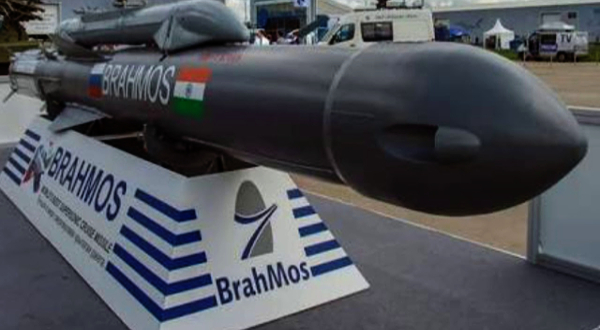
India’s indigenous missile development capabilities are set for further expansion as BrahMos Aerospace advances plans for a new long-range supersonic cruise missile with a proposed strike range of 1,500 kilometres. The development forms part of the India–Russia joint venture’s continuing efforts to enhance the range, technological capabilities and operational flexibility of the BrahMos missile family.
BrahMos Aerospace Chief Executive Officer and Managing Director Dr Jaiteerth R. Joshi confirmed on 22 October 2026 that the company has included the 1,500 km missile in its future development roadmap. He explained that BrahMos Aerospace has been extending the missile’s operational range through successive technological improvements and has already validated longer-range capabilities during test firings from land, sea and air platforms.
The proposed 1,500 km version remains at the conceptual stage, with discussions underway between BrahMos Aerospace and its Russian joint-venture partner regarding further technological upgrades. Separately, the company is developing the smaller and lighter BrahMos Next Generation (BrahMos-NG) missile, with its first prototype expected by 2027 or 2028.
These programmes reflect India’s growing focus on advanced indigenous missile technologies, long-range precision capabilities and the expansion of its domestic defence industrial ecosystem.
BrahMos Aerospace Plans Major Expansion of Missile Strike Range
BrahMos Aerospace is examining the development of a missile capable of reaching targets at distances of up to 1,500 kilometres, substantially extending the potential reach of the existing BrahMos family.
Dr Joshi confirmed that the company has adopted a phased approach to increasing the missile’s range. The original BrahMos missile was developed with a strike range of approximately 290 kilometres, but subsequent improvements have enabled longer-range operations.
According to the BrahMos chief, extended-range capabilities have undergone successful test firings from ground, naval and airborne platforms. These tests have demonstrated progress beyond the missile’s original operational range and provided a foundation for examining further technological improvements.
The proposed 1,500 km capability represents a future development objective rather than an already demonstrated missile configuration. The company is studying the concept and discussing potential upgrades with its Russian partner before proceeding towards more advanced development stages.
A substantially longer-range missile would expand the geographical reach available to military planners while preserving the importance of precision, reliability and platform compatibility. Such a development would require careful integration of propulsion, guidance, flight-control and other technologies within a complete missile system.
Range Extension Programme Builds on Earlier BrahMos Developments
The BrahMos programme has undergone a series of technological improvements since the introduction of its original supersonic cruise missile.
Developed through cooperation between India’s Defence Research and Development Organisation (DRDO) and Russia’s NPO Mashinostroyeniya, BrahMos became an important example of international defence collaboration involving advanced missile technologies.
The original missile combined supersonic speed with precision-guided strike capabilities. Its design subsequently evolved to support launches from different military platforms, including land-based launchers, naval vessels and combat aircraft.
The progressive expansion of its range has been an important part of the programme’s development. Rather than attempting a single major redesign, BrahMos Aerospace has pursued improvements through successive technological stages.
Dr Joshi stated that longer-range capabilities have already been validated through test firings conducted from different launch platforms. These developments demonstrate the company’s efforts to improve the performance of the existing missile family while maintaining compatibility with operational requirements.
The proposed 1,500 km variant represents a further extension of this technological roadmap. Its eventual development would depend on the successful completion of additional design, engineering, integration and testing activities.
India and Russia Discuss Further BrahMos Technology Upgrades
The proposed long-range missile remains part of the continuing defence technology partnership between India and Russia.
BrahMos Aerospace operates as a joint venture involving India’s DRDO and Russia’s NPO Mashinostroyeniya. The partnership has supported the development, production and continuing improvement of the BrahMos supersonic cruise missile system.
Dr Joshi confirmed that discussions are underway with the Russian joint-venture partner concerning additional upgrades to the missile family. These discussions are relevant to the proposed 1,500 km range objective and the company’s wider technological development plans.
The BrahMos programme has demonstrated the value of combining specialised technological expertise with industrial manufacturing capabilities. Over time, Indian companies have also expanded their participation in producing components, subsystems and supporting equipment.
Further cooperation could support the development of advanced missile technologies while strengthening the industrial capabilities associated with the existing BrahMos programme.
The current discussions establish the direction of the joint venture’s future work, although the company has not announced a completed design or flight-test schedule for the proposed 1,500 km missile.
BrahMos-NG Prototype Expected by 2027–28
Alongside the long-range development roadmap, BrahMos Aerospace is advancing the BrahMos Next Generation programme.
Dr Joshi confirmed that the company expects to develop the first BrahMos-NG prototype by 2027 or 2028. The new missile is being designed as a smaller, lighter and more technologically advanced derivative of the existing BrahMos system.
According to the company, BrahMos-NG will incorporate greater indigenous content, advanced materials and new technologies intended to improve its operational versatility.
Reducing the size and weight of the missile is a central objective of the programme. A more compact weapon can offer greater integration flexibility, particularly for combat aircraft that cannot accommodate the dimensions or weight of the existing air-launched BrahMos configuration.
The company has identified extensive research and development as necessary to achieve these objectives. The programme therefore involves more than reducing the physical dimensions of an existing missile, requiring corresponding improvements in materials, engineering and system integration.
The BrahMos-NG prototype schedule is separate from the proposed 1,500 km missile roadmap. While the next-generation missile is under development, the longer-range concept has not yet progressed to a publicly confirmed prototype stage.
Air-Launched BrahMos-NG to Expand Fighter Aircraft Integration Options
BrahMos Aerospace plans to develop the first BrahMos-NG prototype in an air-launched configuration.
The company has identified the Indian Air Force’s Sukhoi Su-30MKI as an initial integration platform, with the Light Combat Aircraft Tejas also envisaged for future adaptation.
The existing air-launched BrahMos missile is integrated with specially modified Su-30MKI fighter aircraft. Its size and weight place considerable requirements on the aircraft carrying it.
BrahMos-NG aims to provide a more compact alternative while retaining advanced supersonic precision-strike characteristics. Reduced dimensions and weight could enable integration with a broader range of combat aircraft.
The company’s official programme description also envisages subsequent versions for ground and naval platforms after successful development and testing of the airborne configuration.
Such flexibility would allow the new missile family to address different operational requirements while benefiting from a common technological foundation.
The first prototype remains a development target, and the company has not announced the completion of flight qualification or operational induction of BrahMos-NG.
Advanced Materials and Indigenous Technologies Drive Next-Generation Development
BrahMos Aerospace is placing considerable emphasis on advanced materials, specialised engineering and higher indigenous content in the development of BrahMos-NG.
Dr Joshi explained that the programme requires substantial research because it incorporates technologies and materials that differ from those used in existing missile configurations.
Advanced materials can contribute to reducing structural weight while maintaining the strength and reliability required for high-speed flight. Their development and qualification are important aspects of modern aerospace engineering.
Greater indigenous participation can also support domestic expertise in specialised manufacturing, electronics, propulsion-related components and other advanced subsystems.
The company intends to accelerate its research activities through dedicated technological development facilities referred to as technology bricks. These facilities are expected to support work on specialised technologies required for future BrahMos variants.
The initiative reflects the importance of investing in foundational technologies rather than focusing exclusively on the assembly of finished weapon systems.
By strengthening domestic research and industrial participation, BrahMos Aerospace aims to support the development of more advanced missile capabilities while expanding India’s technological contribution to the joint venture.
BrahMos Continues to Support India’s Land, Sea and Air Strike Capabilities
The BrahMos supersonic cruise missile family has become an important component of India’s precision-strike capabilities across the armed forces.
Land-based BrahMos systems provide mobile missile capabilities, while naval configurations equip frontline warships for maritime and land-attack missions. The air-launched variant adds another operational dimension through integration with the Indian Air Force’s Su-30MKI aircraft.
The missile’s supersonic flight characteristics distinguish it from conventional subsonic cruise missiles. Its high-speed performance, combined with precision guidance, forms an important part of the system’s operational capabilities.
The Indian Navy employs BrahMos as a principal surface-to-surface missile system aboard several frontline warships. These installations strengthen the Navy’s ability to conduct precision strikes against designated maritime and land targets.
The development of additional range and new missile configurations forms part of the continuing effort to enhance these established capabilities.
BrahMos Aerospace’s future programmes seek to improve the flexibility of the missile family while responding to changing operational requirements and technological developments.
Ministry of Defence Signs ₹661.50 Crore BrahMos Naval Contract
The continued importance of the BrahMos programme was reinforced by a Ministry of Defence contract signed on 6 October 2026.
The Ministry awarded BrahMos Aerospace Private Limited a contract worth ₹661.50 crore for the procurement of BrahMos fire-control systems and launchers for Indian Navy ships.
The agreement was signed in New Delhi in the presence of Defence Secretary Rajesh Kumar Singh under the Buy (Indian–Indigenously Designed, Developed and Manufactured) procurement category.
According to the Ministry of Defence, the project includes a minimum indigenous content requirement of 68%. It is expected to encourage participation by Indian industries, including micro, small and medium enterprises.
The procurement will support the Navy’s maritime strike capabilities while contributing to domestic production of sophisticated defence equipment.
The contract concerns fire-control systems and launchers for the existing BrahMos naval system. It does not represent a procurement agreement for the proposed 1,500 km variant or BrahMos-NG.
Nevertheless, the order demonstrates the continuing production and procurement requirements associated with the BrahMos programme as the company pursues future technological developments.
BrahMos Aerospace Expands Manufacturing Across Indian Facilities
BrahMos Aerospace is strengthening its domestic manufacturing network to fulfil existing orders and prepare for future requirements.
Dr Joshi identified the company’s production facilities at Hyderabad, Nagpur, Pilani and Lucknow as important contributors to its manufacturing activities.
The company is working to complete orders received from the Indian Armed Forces while expanding its industrial supplier network. Increasing production capacity and improving supply-chain resilience remain important priorities.
The Lucknow facility represents a significant addition to India’s BrahMos manufacturing infrastructure. Its development contributes to the geographical expansion of advanced defence production within the country.
A larger manufacturing ecosystem also creates opportunities for specialised Indian suppliers to participate in producing missile components, electronics, mechanical assemblies and supporting equipment.
BrahMos Aerospace intends to broaden its vendor base for important systems and subsystems. This approach aims to reduce excessive dependence on individual suppliers while encouraging competition in quality and pricing.
The expansion of manufacturing capabilities will support existing military requirements and provide an industrial foundation for future missile development programmes.
Indigenous Supply Chains Become Central to BrahMos Expansion
The BrahMos programme increasingly emphasises the development of domestic industrial capabilities and a more diversified network of suppliers.
Dr Joshi stated that the company intends to increase the number of qualified industry partners supplying individual systems and subsystems. The objective is to improve manufacturing flexibility and strengthen the ability to respond to higher production requirements.
Defence manufacturing involves specialised components that must satisfy demanding reliability and quality standards. Establishing additional qualified suppliers can improve production resilience while providing opportunities for Indian engineering enterprises.
The company’s approach also aligns with India’s broader efforts to strengthen indigenous defence manufacturing through greater participation by private-sector industries and MSMEs.
The Ministry of Defence’s October naval procurement contract reflects this priority through its 68% minimum indigenous content requirement.
As BrahMos Aerospace develops new technologies and missile configurations, the availability of qualified domestic suppliers will remain important for supporting sustained manufacturing and technological development.
Greater participation by Indian industry can also contribute to the long-term growth of the country’s aerospace and precision-engineering sectors.
International Interest Grows in Air-Launched BrahMos Systems
BrahMos Aerospace has reported increasing interest from foreign countries in its supersonic cruise missile systems.
According to Dr Joshi, several countries operating Sukhoi-30 fighter aircraft have expressed interest in integrating the air-launched BrahMos missile with their air forces.
He also confirmed that prospective international customers have shown interest in the BrahMos-NG programme, particularly its planned airborne configuration.
The company’s discussions reflect the growing international visibility of the BrahMos missile family and the importance of advanced precision-strike technologies in defence procurement.
For countries already operating compatible aircraft platforms, the availability of air-launched missile systems can provide opportunities to examine additional capabilities within existing fleets.
However, expressions of interest and preliminary discussions should be distinguished from confirmed export contracts. BrahMos Aerospace has not announced new procurement agreements arising specifically from the latest BrahMos-NG enquiries.
Continued technological development, production capacity and successful testing will remain important considerations for any future international procurement decisions.
BrahMos Development Supports India’s Defence Export Ambitions
BrahMos has emerged as an important element of India’s efforts to expand defence exports and strengthen its position in international military technology markets.
The missile family combines advanced supersonic performance with a growing domestic manufacturing base. Its development through an India–Russia joint venture has also contributed to the establishment of specialised industrial capabilities within India.
As international interest increases, BrahMos Aerospace is working to strengthen manufacturing capacity and maintain reliable delivery schedules for existing customers.
The company has identified completion of current orders, expansion of research activities and strengthening of industrial partnerships as major priorities for the coming years.
Future technologies such as BrahMos-NG could eventually broaden the company’s product portfolio and provide additional options for prospective customers.
The proposed 1,500 km missile represents a longer-term technological ambition rather than an existing export product. Its progression will depend on the results of future development and testing.
Together, the manufacturing expansion and ongoing research programmes reflect the company’s efforts to sustain its position in India’s defence industrial ecosystem.
India’s Supersonic Missile Programme Enters a New Development Phase
BrahMos Aerospace’s latest announcements highlight two important directions in the evolution of India’s supersonic cruise missile capabilities.
The first involves developing the proposed 1,500 km missile through a phased range-extension programme. The objective is to substantially increase the potential reach of the BrahMos family while building upon experience gained from earlier technological improvements.
The second involves BrahMos-NG, a smaller and lighter next-generation missile intended to incorporate advanced materials, greater indigenous content and improved platform compatibility.
While the longer-range missile remains at the conceptual stage, BrahMos-NG has progressed into development, with its first prototype targeted for 2027–28.
The parallel expansion of production facilities, industrial suppliers and research infrastructure provides additional support for the company’s long-term programmes.
These developments demonstrate the continuing evolution of the BrahMos partnership and India’s growing participation in advanced defence technologies.
The proposed 1,500 km capability represents an ambitious future objective within this development roadmap. Alongside the BrahMos-NG programme and ongoing domestic manufacturing expansion, it strengthens the foundation for further innovation in India’s supersonic missile sector.
References
- BrahMos Aerospace – CEO and Managing Director Dr Jaiteerth R. Joshi. Interview with ANI, 22 October 2026, discussing the proposed 1,500 km missile, BrahMos-NG prototype schedule, manufacturing expansion and international interest.
https://www.moneycontrol.com/defence/brahmos-ng-prototype-by-2027-28-1-500-km-range-missile-on-future-roadmap-brahmos-chief-article-14057878.html - BrahMos Aerospace – Official Website. BrahMos-NG Next-Generation Weapon System. Company information concerning planned technologies, indigenous content and integration with fighter aircraft.
https://www.brahmos.com/page/brahmos-ng - Ministry of Defence, Press Information Bureau, Government of India. MoD Signs Rs 661 Crore Contract to Procure BrahMos Fire Control System and Launchers for Indian Navy Ships. Published 6 October 2026. Release ID: 2319502.
https://www.pib.gov.in/PressReleseDetailm.aspx?PRID=2319502&lang=1®=3 - BrahMos Aerospace – Official Website. Technical and institutional information concerning the BrahMos supersonic cruise missile programme, India–Russia cooperation and missile configurations.
https://www.brahmos.com/
You may also like
-
BHEL–Coal India Joint Venture Begins Construction of ₹25,016 Crore Indigenous Coal Gasification Project in Odisha
-
Zen Technologies Introduces Indigenous Hyper-Strike Falcon AI-Guided Counter-Drone Interceptor
-
L&T and Germany’s SCHOTTEL Expand Partnership for Controllable Pitch Propeller Systems in Indian Shipbuilding
-
India to Train 60,000 Civil Defence Volunteers Across 12 States and UTs with Indian Army Support
-
Indian Army’s Northern Command Opens 75-Day Defence Technology Internship Programme for Young Innovators
