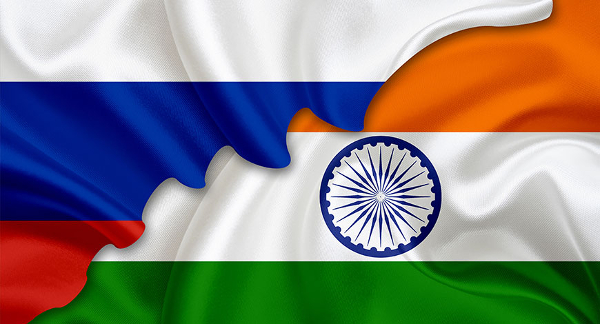
Russian President Vladimir Putin has signed a federal law ratifying an agreement with India to facilitate the temporary employment of citizens in each other’s countries. The legislation, signed on October 12, 2026, establishes the Russian legal basis for implementing a bilateral framework covering labour mobility, employment conditions and the rights of workers undertaking temporary employment abroad.
The agreement was originally signed in New Delhi on December 4, 2025, during President Putin’s state visit to India for the 23rd India–Russia Annual Summit. The latest development strengthens bilateral cooperation in labour mobility at a time when Russian industries are seeking additional workers and India is expanding international employment opportunities for its skilled workforce.
Russia Completes Parliamentary Ratification Process
The Russian State Duma approved the agreement on October 1, 2026, followed by the Federation Council on October 2. President Putin subsequently signed Federal Law No. 339-FZ on October 12, completing Russia’s legislative ratification process.
The law was published on Russia’s official legal information portal on October 12, with its commencement scheduled for October 23, 2026. The bilateral agreement itself provides for entry into force after both countries complete their domestic procedures and exchange the required diplomatic notifications.
The agreement establishes procedures governing temporary employment, including work authorisation, employment contracts, worker protections and the responsibilities of employers. It applies reciprocally to eligible Indian citizens working in Russia and Russian citizens undertaking temporary employment in India.
The two governments will implement the arrangements through their designated authorities. India’s Ministry of External Affairs and Ministry of Labour and Employment are among the responsible institutions, while Russian authorities include the ministries dealing with internal affairs, labour and higher education.
Employment Opportunities for Indian Skilled Workers in Russia
The agreement comes amid increasing demand for foreign workers across several Russian industries. Construction, textiles, manufacturing, logistics, engineering and electronics are among the sectors employing or seeking Indian personnel.
According to figures attributed to Russia’s Ministry of Labour in reports published in October 2026, more than 71,000 Indian citizens were working in Russia, primarily in construction and textile-related activities. Russian industry representatives expect demand for additional workers to continue as businesses address labour shortages.
Reports have indicated that the number of Indian workers in Russia could reach approximately 100,000 by the end of 2026. This figure represents an expectation rather than a recruitment commitment or employment quota established by the bilateral agreement.
For India, the framework creates opportunities to strengthen organised international labour mobility, particularly for workers with qualifications and experience in industrial trades, engineering, technical services and other specialised occupations.
Agreement Establishes Employment Rights and Worker Protections
An important provision of the agreement concerns the treatment of citizens working in the partner country. Workers covered by the framework must receive wages and employment conditions that are no less favourable than those prescribed under the host country’s legislation for its own citizens performing comparable work.
The provision seeks to establish a basis for fair employment conditions while recognising the labour laws of the country where the individual is employed. Employment contracts and applicable national regulations will continue to determine the specific rights and responsibilities of workers and employers.
The agreement also addresses situations involving early termination of employment because of business closure or workforce reductions. In such circumstances, eligible workers will receive compensation under the relevant national legislation and their employment contracts.
Workers affected by these circumstances may also enter into a new employment contract during the remaining validity of their work permit, provided at least three months remain and the new employer satisfies the applicable authorisation requirements.
These measures provide a framework for protecting temporary workers against certain employment disruptions while maintaining compliance with immigration and labour regulations.
Work Permits and Legal Employment Procedures
The bilateral framework requires workers to obtain appropriate authorisation before undertaking employment, except where specific exemptions apply. The agreement generally limits workers to the employment activities and employers covered by their permits.
Workers who undertake unauthorised paid activities or enter into employment arrangements outside the permitted conditions may face cancellation of their work authorisation. The agreement therefore links labour mobility with regulated recruitment and compliance with the host country’s immigration requirements.
It also includes provisions for eligible students undertaking temporary employment alongside their studies. Certain students enrolled in full-time educational programmes may work during their free time under the conditions specified in the agreement and applicable national legislation.
Questions relating to pensions, social security and medical insurance will be governed by the laws of the receiving country and relevant international agreements. The framework also establishes responsibilities concerning employment documentation, including records of work performed and wages received.
These provisions aim to provide greater clarity for employers and workers participating in organised cross-border employment.
India and Russia Strengthen Cooperation Against Irregular Migration
During President Putin’s December 2025 visit, India and Russia signed a separate agreement on cooperation in combating irregular migration. The arrangement complements the temporary employment framework by supporting cooperation on lawful movement and immigration-related matters.
The two agreements reflect an approach that combines expanding employment opportunities with stronger administrative oversight. Bilateral cooperation can help authorities distinguish legitimate employment arrangements from unauthorised migration and address risks associated with irregular recruitment practices.
For Indian citizens considering employment in Russia, legal recruitment procedures and properly documented contracts remain essential. Prospective workers must comply with visa and work-permit requirements and verify the legitimacy of employers and recruitment agencies.
Structured recruitment arrangements can improve transparency in international labour mobility while helping both governments safeguard the interests of their citizens.
Russia’s Labour Requirements Create Opportunities for Indian Industry Skills
Russia faces workforce shortages across several sectors as businesses seek personnel for manufacturing, construction, infrastructure development and associated services.
Russian Deputy Prime Minister Alexander Novak indicated in May 2026 that the country could require approximately 3.1 million additional workers by 2030. The broader workforce challenge reflects changing demographic conditions, industrial requirements and the retirement of existing employees.
India possesses a substantial workforce with experience in construction, engineering, machinery operations, manufacturing and technical services. Training institutions, industrial employers and skill-development programmes provide opportunities to prepare workers for overseas employment requirements.
However, successful labour mobility will depend on matching qualifications with employer requirements, language preparation, workplace safety training and compliance with relevant professional standards.
The agreement provides a government-to-government framework within which recruitment and employment arrangements can develop according to actual market demand.
Labour Mobility Adds a New Dimension to India–Russia Relations
India and Russia maintain longstanding cooperation in defence, energy, nuclear technology, space research, trade and education. Labour mobility is emerging as another area of engagement within their Special and Privileged Strategic Partnership.
During the December 2025 annual summit, Prime Minister Narendra Modi and President Putin reviewed opportunities to strengthen economic relations and expand bilateral cooperation into additional sectors. The temporary employment and irregular migration agreements formed part of the outcomes of that visit.
Employment cooperation can support economic exchanges by connecting Indian technical capabilities with labour requirements in Russian industries. It may also encourage closer engagement between vocational training institutions, employers and government agencies responsible for workforce development.
For Indian businesses providing engineering, industrial maintenance and technical services, an established labour mobility framework could support future participation in Russian projects where qualified personnel are required.
Towards a Structured India–Russia Skilled Labour Partnership
Russia’s ratification of the temporary employment agreement represents an important step towards institutionalising workforce mobility between the two countries. The framework establishes provisions for lawful employment, worker protections and administrative cooperation while allowing both governments to regulate labour movement under their respective national laws.
The development could create additional opportunities for Indian skilled and technical workers as Russian industries seek to address workforce requirements. It also provides a basis for improving transparency in recruitment and strengthening cooperation between employment authorities.
As India and Russia advance their economic partnership, organised labour mobility has the potential to become an increasingly important component of bilateral relations. The agreement strengthens the foundation for mutually beneficial employment cooperation and contributes to the broader diversification of India–Russia economic engagement.
References
- Government of the Russian Federation, October 12, 2026: Federal Law No. 339-FZ, ratifying the agreement between the Russian Federation and the Republic of India concerning temporary labour activities of citizens of one country in the territory of the other. Published on Russia’s official legal information portal.
- Ministry of External Affairs, Government of India, December 2025: List of Outcomes: State Visit of the President of the Russian Federation to India (December 4–5, 2025).
https://www.mea.gov.in/Images/CPV/LS2076_En.pdf - Interfax, October 12, 2026: Russian President Signs Law Ratifying Agreement with India on Temporary Employment of Citizens of Both Countries.
https://www.interfax-russia.ru/index.php/rossiya-i-mir/prezident-rf-podpisal-zakon-o-ratifikacii-soglasheniya-s-indiey-o-vremennoy-trudovoy-deyatelnosti-grazhdan-obeih-stran - Russian Federation Council, October 1, 2026: Legal assessment of the federal legislation ratifying the India–Russia temporary employment agreement.
- TASS, December 5, 2025: Number of Documents Signed During Putin’s Visit to India.
https://tass.com/politics/2054337 - Business Standard, October 14, 2026: Putin Signs Law Ratifying India–Russia Temporary Employment Agreement.
https://www.business-standard.com/economy/news/putin-signs-law-ratifying-india-russia-temporary-employment-agreement-126101400472_1.html
You may also like
-
Rosatom Completes Supply of Nuclear Safety Control Systems for Kudankulam Units 3 and 4
-
Pine Labs Partners with Sri Lanka’s WEBXPAY to Expand UPI and Indian Digital Payment Acceptance
-
BARC Scientists Develop Indigenous Technology to Recover 90% of Lithium from Seawater
-
SRF Limited Announces ₹600 Crore Battery-Grade Aluminium Foil Plant in Madhya Pradesh
-
India’s Core Sector Growth Reaches 7.9% in September 2026, Led by Iron Ore, Electricity, Coal and Refining
