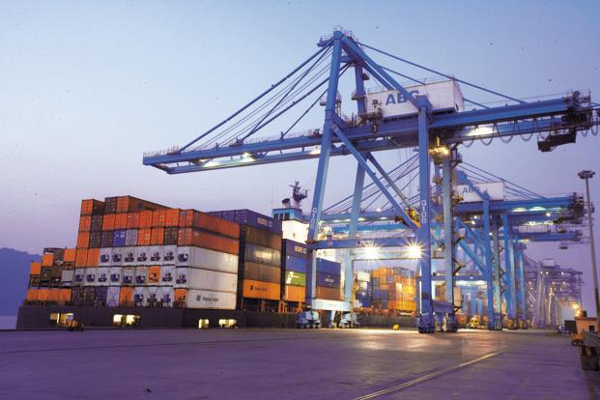
India’s merchandise exports recorded strong growth in September 2026, increasing by approximately 23% to $44.40 billion, compared with $36.08 billion during the corresponding month of the previous year. The expansion was driven by higher overseas shipments of electronic goods, engineering products, petroleum products, chemicals and textile-related commodities, reflecting the growing contribution of India’s manufacturing industries to international trade.
According to official trade statistics released by the Ministry of Commerce and Industry on October 15, 2026, merchandise exports increased by $8.32 billion year-on-year. Electronic goods emerged as the fastest-growing major export category, registering an increase of 70.44%, while engineering goods, petroleum products and chemicals also recorded substantial growth.
The Ministry reported that India’s combined merchandise and services exports reached an estimated $80.75 billion during September, representing growth of 10.99% compared with September 2025. The figures highlight the importance of both manufacturing and services in supporting the country’s international trade.
The strong September performance also contributed to India’s export expansion during the first half of financial year 2026–27. Merchandise exports reached $259.89 billion during April–September 2026, registering year-on-year growth of 18.51%, while combined merchandise and services exports increased to an estimated $476.20 billion.
Merchandise Exports Record Strong Year-on-Year Growth
India’s merchandise exports increased from $36.08 billion in September 2025 to $44.40 billion in September 2026, registering growth of approximately 23.06%.
The increase reflects higher export values across several manufacturing and industrial categories. Electronics, engineering goods, petroleum products and chemicals contributed substantially to the expansion, demonstrating the diverse composition of India’s merchandise export economy.
The Ministry of Commerce and Industry identified electronic goods, petroleum products, organic and inorganic chemicals, engineering goods, and cotton yarn, fabrics, made-ups and handloom products among the principal drivers of September’s export growth.
India’s manufacturing sector supplies a wide range of products to international markets, including industrial machinery, electronic equipment, chemical products, textiles and refined petroleum products. The simultaneous growth of several categories contributed to the improvement in overall merchandise exports.
The expansion also demonstrates the importance of India’s export-oriented industrial infrastructure, which includes manufacturing clusters, specialised suppliers, logistics networks and major ports connecting domestic producers with overseas customers.
Electronics Exports Surge 70.44% to $5.31 Billion
Electronic goods recorded the strongest growth among the major export categories identified in the Ministry’s September trade report.
India’s electronic goods exports increased by 70.44% to $5.31 billion, compared with $3.11 billion in September 2025. The increase of approximately $2.20 billion represents a substantial contribution to the overall rise in merchandise exports.
India has expanded its electronics manufacturing capabilities through investments in mobile phone production, electronic components, consumer electronics and supporting industrial infrastructure. The sector has also benefited from government initiatives aimed at strengthening domestic manufacturing and encouraging participation in international supply chains.
The Production Linked Incentive schemes and other electronics manufacturing programmes have supported the development of production capacity across different segments of the industry. These initiatives have encouraged manufacturers and component suppliers to expand their operations in India.
The latest export figures demonstrate the increasing importance of electronic goods within India’s merchandise trade. Continued growth in this category also creates opportunities for domestic suppliers involved in precision engineering, component manufacturing, packaging, testing and industrial logistics.
Engineering Goods Exports Increase 20.91% to $12.17 Billion
India’s engineering goods exports reached $12.17 billion in September 2026, increasing by 20.91% compared with $10.06 billion during September 2025.
The sector contributed approximately $2.11 billion in additional export earnings, reinforcing its position as one of India’s most important manufacturing export categories.
Engineering goods encompass a broad range of manufactured products, including machinery, mechanical equipment, industrial components, metal products and transport-related equipment. Indian manufacturers supply these products to international customers operating in construction, energy, transportation, infrastructure and general manufacturing.
The sector includes large industrial enterprises as well as numerous medium-sized and specialised manufacturers. These companies contribute to India’s engineering exports through products manufactured across established industrial regions.
The September performance reflects higher export values for Indian engineering products and the continuing importance of domestic manufacturing capabilities in supporting international trade.
Growth in engineering exports also highlights opportunities for investments in precision manufacturing, automation, advanced materials and internationally competitive industrial products.
Petroleum Product Exports Grow 31.90% to $6.22 Billion
Petroleum products recorded substantial export growth during September 2026, with overseas shipments increasing in value by 31.90% to $6.22 billion.
The corresponding export value in September 2025 was $4.71 billion, indicating an increase of approximately $1.51 billion.
India possesses significant petroleum refining capabilities, supported by large refining complexes, industrial infrastructure and established international trading relationships.
Domestic refineries manufacture a range of petroleum products supplied to overseas markets, making refined petroleum an important component of India’s merchandise exports.
The value of petroleum exports is influenced by several factors, including international energy prices, refining activity, product demand and shipment volumes. The September data establish a substantial increase in export earnings, although the value figures alone do not determine the change in physical quantities exported.
The sector’s performance contributed meaningfully to merchandise export growth alongside electronics, engineering goods and chemicals.
Chemical Exports Rise 24.21% to $2.94 Billion
India’s organic and inorganic chemical exports increased by 24.21% to $2.94 billion in September 2026, compared with $2.37 billion in the corresponding month of the previous year.
The increase of approximately $570 million demonstrates the contribution of India’s chemical manufacturing industry to international trade.
Chemical products form an essential part of numerous industrial supply chains, supporting pharmaceuticals, agriculture, textiles, plastics, coatings and specialised manufacturing applications.
India has developed a diversified chemical manufacturing ecosystem comprising large integrated manufacturers, speciality chemical companies and smaller industrial producers.
The growth in chemical exports reflects the higher value of shipments from an industry with extensive connections to domestic and international manufacturing activities.
The sector also presents opportunities for expanding production of specialised chemicals, advanced materials and industrial inputs serving emerging technologies.
Textile and Handloom Exports Record Double-Digit Growth
India’s exports of cotton yarn, fabrics, made-ups and handloom products increased by 20.76% to $1.12 billion in September 2026, compared with $0.93 billion during September 2025.
The improvement reflects the contribution of India’s textile manufacturing and traditional production industries to overseas trade.
India’s textile sector encompasses cotton cultivation, spinning, weaving, processing, fabric manufacturing, garments and handloom production. These activities support employment and industrial development across numerous states.
The Ministry’s September data also recorded positive export growth in several related categories. Carpet exports increased by 19.81%, while ready-made garments of all textiles registered growth of 13.68%.
Exports of man-made yarn, fabrics and made-ups increased by 11.23%, indicating growth across additional textile manufacturing segments.
The improvement across these categories demonstrates the continuing importance of employment-intensive manufacturing industries within India’s export portfolio.
Non-Petroleum Exports Reach $38.18 Billion
India’s non-petroleum merchandise exports increased to $38.18 billion in September 2026, compared with $31.37 billion during the corresponding month of 2025.
The increase of approximately $6.81 billion demonstrates that merchandise export growth extended well beyond petroleum products.
Non-petroleum exports encompass engineering goods, electronics, chemicals, agricultural products, textiles, pharmaceuticals and other manufactured commodities.
An additional measure of export performance excludes both petroleum products and gems and jewellery. Under this classification, India’s exports reached $34.81 billion in September 2026, compared with $28.53 billion in September 2025.
The increase reflects stronger export values across a broad range of industrial and agricultural categories.
These figures are important because they provide a clearer assessment of export activity outside sectors whose values can be strongly influenced by international petroleum and precious metal prices.
The expansion reinforces the contribution of India’s diversified manufacturing and production capabilities to the country’s international trade performance.
Agricultural and Food Product Exports Contribute to Growth
India’s agricultural and food-related exports also recorded growth across several categories during September 2026.
According to the Ministry of Commerce and Industry, exports of other cereals increased by 49.88%, while meat, dairy and poultry products registered growth of 35.18%.
Exports of cereal preparations and miscellaneous processed food products increased by 16.49%, demonstrating the contribution of value-added food manufacturing to overseas trade.
Coffee exports grew by 10.17%, while marine products recorded growth of 8.79%. Oilseed exports increased by 5.10%, rice exports by 4.21% and spices exports by 4.01%.
These figures highlight the diverse agricultural and food-processing industries contributing to India’s merchandise exports.
The country’s agricultural export ecosystem includes farmers, food processors, packaging companies, cold-chain operators, logistics providers and exporters serving different international markets.
Growth across several agricultural and processed food categories supports the wider development of domestic value chains and creates opportunities for producers to participate in international trade.
Exports to United States Increase 47.99% in September
India’s merchandise exports to several important international markets recorded substantial growth during September 2026.
According to the Ministry’s country-wise assessment, exports to the United States increased by 47.99% compared with September 2025.
The United States remains an important destination for Indian merchandise exports, including engineering products, pharmaceuticals, electronics, textiles and other manufactured goods.
India also recorded particularly strong percentage growth in exports to Singapore, where shipments increased by 169.16%.
Exports to Malaysia increased by 119.69%, while Egypt recorded growth of 90.09%. Shipments to China increased by 24.05%.
These figures represent changes in export values compared with the corresponding month of the previous year.
The growth across different destinations reflects India’s participation in international markets spanning North America, Southeast Asia, East Asia and Africa.
The geographical diversity of export destinations remains an important feature of India’s merchandise trade, providing manufacturers with access to customers across multiple regions.
First-Half Merchandise Exports Reach $259.89 Billion
India’s merchandise export growth during September contributed to the strong performance recorded during the first six months of FY 2026–27.
According to the Ministry of Commerce and Industry, merchandise exports reached $259.89 billion during April–September 2026, compared with $219.30 billion during the corresponding period of FY 2025–26.
The increase of $40.59 billion represents growth of 18.51%.
The first-half figures demonstrate sustained export expansion across the reporting period rather than growth confined to September.
Non-petroleum merchandise exports increased to $218.70 billion during April–September 2026, compared with $189.26 billion during the corresponding period of the previous year.
This represents growth of 15.56%, further highlighting the contribution of non-energy merchandise categories.
Exports excluding petroleum products and gems and jewellery reached $203.41 billion during the first half of FY27, compared with $175.06 billion during April–September 2025.
The improvement indicates that a substantial portion of export growth originated from India’s broader manufacturing, agricultural and industrial production sectors.
Combined Merchandise and Services Exports Reach $80.75 Billion
India’s combined merchandise and services exports reached an estimated $80.75 billion in September 2026, compared with $72.76 billion in September 2025.
The increase represents year-on-year growth of 10.99%.
Merchandise exports contributed $44.40 billion, while services exports were estimated at $36.35 billion.
The combined figures illustrate the complementary contributions of India’s manufacturing and services industries to foreign trade.
India’s services export economy includes information technology, professional services, business consulting, financial services and other internationally traded commercial activities.
Although merchandise exports recorded substantial growth, estimated services exports for September were slightly below the $36.67 billion recorded during September 2025.
Nevertheless, the services sector continued to generate a significant trade surplus, helping offset part of the merchandise trade deficit.
The Ministry clarified that September’s services trade figures were estimates because the latest services data released by the Reserve Bank of India covered August 2026.
India’s Merchandise Imports Reach $74.61 Billion
India’s merchandise imports increased to $74.61 billion in September 2026, compared with $69.08 billion during September 2025.
The increase reflects higher import values across several categories, including industrial inputs and other products required by India’s economy.
The Ministry reported that imports from China increased by 31.52%, while imports from Russia grew by 25.63%.
Imports from Oman recorded an increase of 331.82%, while those from South Korea and Singapore increased by 52.93% and 36.44%, respectively.
At the same time, several import categories registered declines. Gold imports decreased by 81.27%, while silver imports declined by 49.11%.
Imports of fertilisers, including crude and manufactured products, decreased by 22.18%. Project goods imports also recorded a substantial decline.
The September merchandise trade deficit stood at $30.21 billion, reflecting the difference between merchandise imports of $74.61 billion and exports of $44.40 billion.
The figures demonstrate that India’s international trade expansion involved growth in both exports and imports during the month.
Services Trade Surplus Helps Offset Merchandise Deficit
India’s services sector continued to contribute substantially to the country’s external trade balance.
Services exports were estimated at $36.35 billion in September 2026, while services imports stood at approximately $19.44 billion.
This resulted in an estimated services trade surplus of $16.91 billion.
The surplus helped offset part of the $30.21 billion merchandise trade deficit, leaving an estimated combined merchandise and services trade deficit of $13.30 billion.
During April–September 2026, India’s services exports reached an estimated $216.31 billion, compared with $199.02 billion during the corresponding period of the previous financial year.
Services imports increased to approximately $113.60 billion, resulting in a cumulative services trade surplus of $102.71 billion.
The figures underline the importance of India’s services industries in generating export earnings and supporting the country’s external trade position.
The continued expansion of internationally traded services also complements the growth of India’s manufacturing and industrial exports.
India’s Export Expansion Reflects a Diversifying Manufacturing Economy
The September 2026 trade figures demonstrate the increasing contribution of multiple industries to India’s merchandise export performance.
Electronic goods recorded particularly strong growth, while engineering products, petroleum products, chemicals, textiles and agricultural commodities also contributed to higher overseas shipments.
The diversity of growth across these categories highlights India’s expanding industrial capabilities and the role of domestic manufacturers in serving international customers.
Government programmes supporting manufacturing, industrial infrastructure, export promotion and logistics have sought to strengthen the competitiveness of Indian businesses in global markets.
India’s export economy now encompasses a wide range of products, from traditional agricultural and textile commodities to electronic equipment, industrial machinery and specialised manufactured goods.
The latest trade statistics provide an indication of the expanding scale of these activities, particularly during the first half of FY27.
With merchandise exports reaching $259.89 billion and combined merchandise and services exports estimated at $476.20 billion during April–September 2026, India has recorded substantial year-on-year growth in international trade.
The strong performance of electronics, engineering goods and other manufacturing sectors reinforces the importance of industrial development in expanding the country’s export capabilities.
India’s growing participation in international markets continues to create opportunities for manufacturers, exporters, logistics companies and specialised suppliers, strengthening the country’s position within global production and trading networks.
References
1. Ministry of Commerce and Industry, Government of India — Press Information Bureau
Date: October 15, 2026
Title: The Cumulative Exports (Merchandise & Services) During April–September 2026–27 Are Estimated at US$ 476.20 Billion, as Compared to US$ 418.31 Billion in April–September 2025–26, an Estimated Growth of 13.84%
Details: Official September 2026 merchandise and services trade statistics, export and import values, commodity-wise growth, trade balance, international export destinations and cumulative trade performance.
https://www.pib.gov.in/PressReleseDetailm.aspx?PRID=2323944
2. Directorate General of Commercial Intelligence and Statistics (DGCI&S), Ministry of Commerce and Industry
Details: Official merchandise trade statistics, commodity-wise export and import data, and country-wise trade information.
3. Department of Commerce, Ministry of Commerce and Industry
Details: Export and import statistics, international trade performance, export promotion initiatives and trade policy information.
4. Directorate General of Foreign Trade (DGFT), Ministry of Commerce and Industry
Details: Foreign trade policy, export facilitation measures, export authorisations and trade-related regulatory information.
5. Reserve Bank of India
Details: India’s international trade in services, balance of payments statistics and external sector data.
6. Ministry of Electronics and Information Technology, Government of India
Details: Electronics manufacturing initiatives, Production Linked Incentive schemes and programmes supporting India’s electronics manufacturing ecosystem.
7. Ministry of Commerce and Industry — Press Information Bureau
Date: September 15, 2026
Title: India’s Export and Import Performance, August 2026
Details: Official previous-month trade statistics and manufacturing export trends.
https://www.pib.gov.in/PressReleasePage.aspx?PRID=2310636
You may also like
-
India’s ₹1,000 Crore Space Venture Capital Fund to Accelerate Indigenous Space Startups and Advanced Technologies
-
BHAVYA: India’s push to build 100 plug-and-play industrial parks
-
India’s Gem and Jewellery Exports Rise 9.43% to $2.95 Billion in September 2026, Driven by Gold Jewellery and Lab-Grown Diamonds
-
India Launches National Strategic Trade Command Centre to Strengthen Export Intelligence
-
Biocon Secures Global Patent Settlement with Genentech for Pebrilzo Biosimilar, Targets European Launch in 2027
