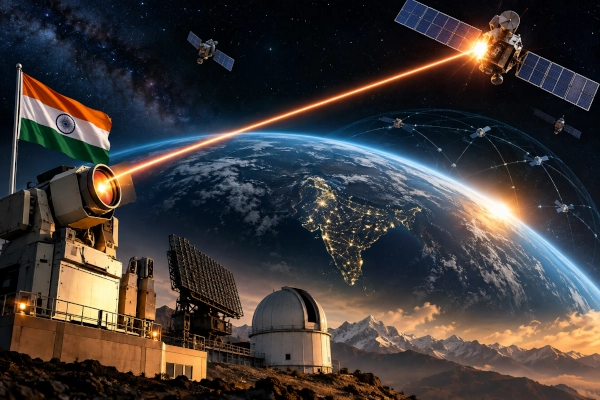
India’s Ministry of Defence is reportedly preparing to seek a 35% increase in the military modernisation budget for the financial year 2027–28, reflecting the growing importance of advanced military capabilities, indigenous defence manufacturing and long-term procurement planning.
Defence Secretary Rajesh Kumar Singh reportedly outlined the proposal during the eighth annual session of the Society of Indian Defence Manufacturers (SIDM) in New Delhi on October 9, 2026. The proposed increase concerns the capital acquisition component of the defence budget, which finances major equipment purchases for the Indian Army, Indian Navy and Indian Air Force.
The Ministry of Defence’s official budget documents confirm that ₹1.85 lakh crore has been allocated for capital acquisitions in FY 2026–27, an increase of approximately 24% over the previous financial year. A further 35% increase would raise this allocation to nearly ₹2.50 lakh crore.
The proposed increase has been attributed to the Defence Secretary in contemporary reporting. However, the Ministry of Defence’s October 9 official release does not specify the 35% figure, and the government has not approved the proposed allocation.
Defence Modernisation Budget Could Reach ₹2.50 Lakh Crore
India’s military modernisation expenditure has increased substantially as the Armed Forces pursue new equipment, advanced weapons and emerging technologies.
According to the Ministry of Defence’s official February 1, 2026, budget announcement, the government allocated ₹2,19,306.47 crore for defence capital expenditure in FY 2026–27. Of this, ₹1.85 lakh crore was earmarked specifically for capital acquisitions.
A 35% increase over the current capital acquisition allocation would provide approximately ₹64,750 crore in additional funding, taking the total to ₹2,49,750 crore.
The projected allocation would represent a considerable expansion in India’s annual capacity to finance major military procurement programmes. It would also support the acquisition of advanced platforms needed to replace ageing equipment and strengthen operational capabilities.
These figures remain projections rather than approved expenditure. The final allocation will depend on the government’s budgetary decisions for FY 2027–28.
Capital Acquisition Funding Supports India’s Military Modernisation
The capital acquisition budget plays a central role in developing the capabilities of India’s three Armed Forces. It provides funding for major platforms, weapons and systems intended to strengthen operational readiness over multiple decades.
The Ministry of Defence has identified next-generation fighter aircraft, advanced weapons, warships, submarines, unmanned aerial vehicles, drones and specialised military vehicles among the equipment categories supported by capital acquisition expenditure.
For the Indian Air Force, modernisation requirements include combat aircraft, transport platforms, helicopters, air defence systems and supporting technologies. Such acquisitions involve substantial expenditure because modern military aircraft require sophisticated sensors, weapons, communication systems and long-term logistical support.
The Indian Navy’s procurement requirements encompass surface combatants, submarines, maritime aviation and advanced weapons. Naval projects also involve extended construction periods, making predictable capital expenditure important for shipbuilding schedules and industrial planning.
The Indian Army requires continued investment in artillery, armoured platforms, air defence equipment, surveillance systems, unmanned technologies and battlefield communication networks.
Higher capital acquisition funding would provide additional financial capacity to address these requirements while supporting existing contractual commitments.
Defence Ministry Has Expanded Procurement Approvals and Contracts
The Ministry of Defence has already reported a substantial volume of procurement activity under its ongoing modernisation programme.
According to its February 2026 budget statement, the ministry had concluded contracts worth approximately ₹2.10 lakh crore during the first three quarters of FY 2025–26, while Acceptance of Necessity approvals exceeded ₹3.50 lakh crore during the period covered by the announcement.
Acceptance of Necessity, or AoN, represents an important stage in the defence acquisition process. It establishes approval to pursue a procurement requirement but does not constitute a final purchase contract.
The distinction is significant because approved procurement proposals must subsequently pass through several stages, including technical evaluation, trials, commercial negotiations and contract finalisation.
Large acquisition programmes also require expenditure spread across several financial years. A substantial annual capital acquisition allocation helps the ministry meet scheduled contractual payments while accommodating new equipment purchases.
The growing volume of acquisition approvals and contracts illustrates the financial requirements associated with India’s continuing military modernisation.
₹1.39 Lakh Crore Earmarked for Indigenous Defence Procurement
A major feature of India’s current defence budget is the emphasis on procuring equipment from domestic manufacturers.
The Ministry of Defence has officially earmarked ₹1.39 lakh crore, representing approximately 75% of the FY 2026–27 capital acquisition budget, for procurement through Indian defence industries.
The allocation supports the government’s Atmanirbhar Bharat initiative and its objective of developing indigenous manufacturing capabilities across major defence sectors.
Domestic procurement encompasses equipment produced by Defence Public Sector Undertakings, private companies and other eligible Indian manufacturers. It also creates opportunities for smaller enterprises supplying specialised components, electronics, materials and engineering services.
The policy aims to strengthen domestic supply chains while reducing reliance on imported military equipment. Increased local production can improve maintenance access, support equipment upgrades and retain industrial capabilities within the country.
A larger future capital acquisition budget would expand the overall resources available for procurement. However, the domestic procurement allocation and its percentage for FY 2027–28 have not yet been announced.
Defence Minister Calls for Greater Industrial Capacity and Research Investment
The proposed modernisation increase comes alongside the government’s continuing emphasis on strengthening India’s defence industrial ecosystem.
Addressing the SIDM Champion Awards 2026 in New Delhi on October 9, Defence Minister Rajnath Singh called for greater private-sector participation in defence manufacturing, stronger research and development capabilities and increased production capacity.
According to the Ministry of Defence’s official statement, Rajnath Singh emphasised that national security increasingly depends on the ability to design, develop, manufacture and control critical military technologies.
He identified drones, missiles, air defence systems, advanced software and communication technologies as important elements of modern warfare. The Defence Minister also urged manufacturers to treat research and development as an investment in technological competitiveness and military preparedness.
The address placed particular emphasis on manufacturing capacity during periods of heightened operational demand. Drawing on lessons from Operation Sindoor, he highlighted the importance of expanding production rapidly to meet the Armed Forces’ requirements.
These priorities demonstrate that military modernisation involves more than equipment procurement. It also requires domestic technological expertise, production infrastructure and a reliable industrial supply chain.
India’s Defence Production and Exports Continue to Expand
India’s domestic defence manufacturing sector has grown alongside policy measures encouraging indigenous development and production.
In its October 9, 2026, announcement, the Ministry of Defence reported that India’s defence exports reached a record ₹38,424 crore in FY 2025–26, registering growth of more than 60% over the preceding financial year.
Rajnath Singh reiterated the government’s target of achieving ₹50,000 crore in annual defence exports by 2029. He also encouraged greater private-sector participation in national defence production.
The expansion of exports reflects the increasing international presence of Indian defence products, including missiles, radar systems, ammunition, naval equipment and other military technologies.
The ministry has identified several measures to encourage industrial participation, including Positive Indigenisation Lists, the SRIJAN portal, Innovations for Defence Excellence (iDEX) and reforms to defence acquisition procedures.
These initiatives are intended to create opportunities for established manufacturers, research institutions, emerging technology companies and micro, small and medium enterprises.
A sustained domestic procurement programme provides manufacturers with greater visibility of future requirements, supporting investment in production facilities, technical expertise and product development.
Defence Research and Development Receives Greater Budgetary Support
Military modernisation also depends on India’s ability to develop technologies suited to its operational requirements.
The Union Budget 2026–27 allocated ₹29,100.25 crore to the Defence Research and Development Organisation (DRDO), compared with ₹26,816.82 crore in the previous financial year.
Of the current allocation, ₹17,250.25 crore was designated for capital expenditure.
DRDO’s research and development activities span missiles, radar systems, electronic warfare, aeronautics, naval technologies, advanced materials and other defence applications.
The development of indigenous technologies can support domestic manufacturing by reducing dependence on external suppliers for critical systems and components. It also provides Indian companies with opportunities to participate in technology development, production and integration.
The government’s emphasis on research investment and industrial collaboration complements its larger objective of creating a technologically capable and self-reliant defence sector.
Final FY 2027–28 Allocation Awaits Government Approval
The reported proposal for a 35% increase remains part of the anticipated budget preparation process. The Ministry of Finance will determine the eventual allocation through the government’s budgetary procedures.
The proposal should not be confused with the officially approved defence budget for FY 2026–27, which stands at approximately ₹7.85 lakh crore.
That overall figure includes expenditure on personnel, pensions, operational requirements, capital acquisitions and other defence-related responsibilities. The proposed 35% increase concerns only the military modernisation component associated with capital acquisitions.
The final budget will establish how much additional funding the Armed Forces receive for procurement during FY 2027–28.
Until then, the existing ₹1.85 lakh crore capital acquisition allocation remains the official reference point for assessing the potential increase.
India Strengthens the Financial Foundations of Defence Modernisation
India’s expanding defence capital expenditure reflects a sustained effort to equip its Armed Forces with modern platforms, advanced technologies and reliable operational capabilities.
The government’s existing allocations have established a substantial procurement framework, with a strong emphasis on domestic manufacturing and technological self-reliance. Its continued support for research, private-sector participation and indigenous production is also strengthening the wider defence industrial ecosystem.
The reported proposal to seek a 35% increase for FY 2027–28 represents the next stage of this financial planning. Its eventual outcome will become clear when the government announces the next Union Budget.
India’s long-term defence modernisation programme is increasingly combining military capability development with indigenous manufacturing, research investment and industrial expansion, strengthening the foundation for a more technologically advanced and self-reliant defence sector.
References
- Press Information Bureau, Ministry of Defence — February 1, 2026. Ministry of Defence Allocated an All-Time High of ₹7.85 Lakh Crore in Union Budget 2026–27. Official figures for defence capital expenditure, capital acquisition and domestic procurement.
https://www.pib.gov.in/PressReleasePage.aspx?PRID=2221612 - Press Information Bureau, Government of India — February 3, 2026. Defence in Union Budget 2026–27: Modernisation, Aatmanirbhar Bharat and Veterans’ Welfare. Details of defence expenditure, indigenous procurement and DRDO funding.
https://www.pib.gov.in/PressNoteDetails.aspx?ModuleId=3&NoteId=157183&lang=1 - Press Information Bureau, Ministry of Defence — October 9, 2026. Raksha Mantri Presents SIDM Champion Awards 2026 and Calls for Greater Private Sector Participation, R&D Investment and Enhanced Defence Production Capacity. Official statements on industrial development, defence exports and technological self-reliance.
https://www.pib.gov.in/PressReleasePage.aspx?PRID=2321523 - Society of Indian Defence Manufacturers (SIDM) — October 9, 2026. SIDM Annual Session and Champion Awards 2026. Official event details.
https://www.sidm.in/upcoming-engagements
You may also like
-
Philippine Marine Wargames Reportedly Show BrahMos Can Penetrate Chinese Destroyer Air Defences
-
Safran Signs 18 Agreements with Indian Aerospace Suppliers, Expanding Make in India Manufacturing Partnerships
-
Indian Army’s Vajra Corps Certifies First Batch of Drone Operators, Strengthens Battlefield Surveillance
-
INS Trishul Arrives in UK for Exercise KONKAN 2026 as India and Royal Navy Expand Maritime Cooperation
-
INS Sahyadri Arrives in Russia for Exercise INDRA 2026 to Strengthen India-Russia Naval Cooperation
