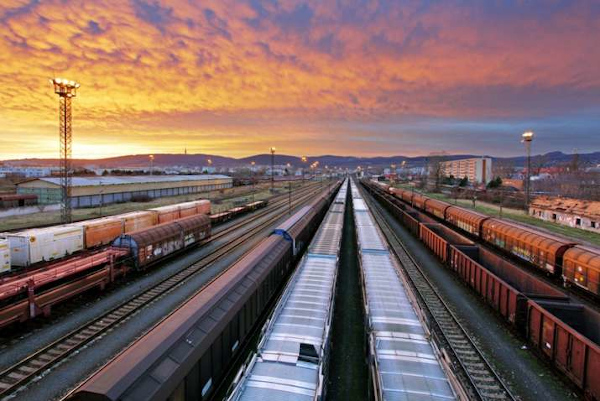
India’s dedicated freight railway network has achieved another operational milestone, with the Dedicated Freight Corridor Corporation of India Limited (DFCCIL) recording 946 freight train interchanges with Indian Railways on 6 October 2026. The achievement represents the highest daily interchange reported on the Dedicated Freight Corridor (DFC) network, reflecting its growing capacity to handle freight traffic across the country.
The latest milestone surpassed the previous record of 929 trains, achieved on 2 October 2026. It also follows an earlier achievement of 903 train interchanges on 30 August, highlighting the increasing volume of freight movements between the dedicated corridors and the conventional railway network.
The development comes as Indian Railways expands the use of dedicated freight infrastructure to improve goods transportation, reduce congestion on conventional railway lines and strengthen connectivity between industrial centres, ports and major consumption markets.
DFCCIL Handles Record 946 Freight Train Interchanges
According to a report published on 8 October 2026, DFCCIL registered 946 train interchanges with Indian Railways on 6 October, exceeding the previous record by 17 trains.
The achievement continues a series of operational improvements during 2026. On 30 August, the corporation recorded 903 interchanges, comprising 484 trains on the Eastern Dedicated Freight Corridor and 419 on the Western Dedicated Freight Corridor. The network subsequently reached 929 interchanges on 2 October before establishing the latest record.
An interchange refers to the operational transfer of a train between the Dedicated Freight Corridor network and the conventional Indian Railways system. Such transfers take place at designated connecting points where freight trains enter or leave the dedicated corridors to reach their origins, destinations or onward routes.
The interchange figure measures operational movements between railway networks rather than the number of unique trains carrying goods across India. Nevertheless, it provides an important indication of how effectively the two systems coordinate freight traffic.
How Dedicated Freight Corridors Improve Railway Operations
India’s Dedicated Freight Corridor programme separates a substantial portion of freight movement from conventional railway lines that carry both passenger and goods trains. This arrangement allows freight services to operate on infrastructure designed specifically for heavy cargo transportation.
The Eastern Dedicated Freight Corridor connects Ludhiana in Punjab with Sonnagar in Bihar, supporting the movement of coal, agricultural commodities and industrial goods across northern and eastern India.
The Western Dedicated Freight Corridor links the Dadri region of Uttar Pradesh with Jawaharlal Nehru Port in Maharashtra, creating a major freight route between northern India’s industrial centres and western coastal ports.
Both corridors use modern signalling, high-capacity infrastructure and operational systems designed to accommodate heavy freight trains. Their development has created opportunities to operate longer trains with greater axle loads while improving the movement of goods between major industrial and logistics centres.
The network also provides connections to existing Indian Railways routes, making efficient train interchange essential for uninterrupted freight transportation.
Better Coordination Between DFCCIL and Indian Railways
Handling increasing numbers of train interchanges requires close coordination between DFCCIL’s operating teams and the railway zones connected to the dedicated corridors.
Train movements must be planned around the availability of tracks, signalling arrangements, junction capacity and the operational requirements of adjoining railway sections. Dispatchers and station controllers must coordinate train departures and arrivals to prevent congestion at interchange points.
In an official statement issued in January 2026, the Ministry of Railways attributed an earlier interchange record to improved traffic management, train-speed regulation, safe headway maintenance and coordination between adjoining stations.
These operational practices help railway authorities maintain the necessary separation between trains while allowing freight services to move efficiently through busy sections.
The latest record indicates that DFCCIL and Indian Railways have continued increasing the volume of traffic handled through their interconnected networks. Sustaining this performance will require continued attention to infrastructure maintenance, signalling reliability and operational planning.
Dedicated Freight Corridors Help Reduce Congestion on Passenger Routes
One of the principal objectives of the Dedicated Freight Corridor programme is to reduce the pressure created by freight trains operating on heavily utilised conventional railway lines.
On mixed-traffic routes, slower goods trains often share tracks with express, passenger and suburban services. Differences in operating speeds can require frequent adjustments to train schedules, limiting the capacity available for both passenger and freight traffic.
Dedicated freight infrastructure allows a significant share of goods transportation to move away from these mixed-use sections. This can create additional operating capacity for passenger trains while reducing the need to hold freight services for faster trains to pass.
The Ministry of Railways has previously highlighted the relationship between higher freight interchange volumes and improved passenger train operations. Greater separation of freight and passenger services supports more efficient use of existing railway infrastructure.
As traffic on the dedicated corridors increases, the benefits can extend beyond freight operators to passengers travelling on conventional railway routes.
Faster Freight Movement Supports Indian Industries
Railway freight transportation plays an essential role in moving coal, iron ore, steel, cement, fertilisers, foodgrains and other bulk commodities across India.
Manufacturing plants, power stations and distribution networks depend on reliable supplies of raw materials and finished products. Delays in freight transportation can disrupt production schedules, increase inventory requirements and raise logistics expenses.
Dedicated freight corridors address these challenges by providing infrastructure designed to move large cargo volumes over long distances. More predictable train operations can help businesses improve their supply-chain planning and reduce dependence on road transportation for suitable freight movements.
Container operators and logistics companies also benefit from improved rail connectivity between inland terminals and seaports. The Western Dedicated Freight Corridor is particularly important for container traffic connecting northern industrial regions with ports on India’s western coast.
The record interchange figure demonstrates the growing operational use of this infrastructure, although determining its precise effect on logistics costs requires additional data on freight volumes, transit times and service reliability.
Railway Freight Growth Strengthens India’s Logistics Network
India’s railway freight sector has been expanding alongside investments in infrastructure, terminals and rolling stock.
According to the Ministry of Railways, Indian Railways transported 1,670 million tonnes of freight during 2025–26, compared with 1,098 million tonnes in 2014–15. The increase reflects the growing role of railway transportation in supporting industrial production, energy supply and domestic commerce.
The government is also developing Gati Shakti Multi-Modal Cargo Terminals to improve connections between railway infrastructure, industrial facilities, warehouses and road networks.
These terminals are intended to simplify freight handling and improve first-mile and last-mile connectivity. Their integration with dedicated freight corridors can help businesses access high-capacity railway transportation without depending exclusively on conventional freight terminals.
DFCCIL’s increasing interchange volumes form part of this wider transformation towards a more interconnected logistics system.
Dedicated Freight Corridors Support More Energy-Efficient Transportation
Rail freight offers an opportunity to transport large quantities of goods with relatively low energy consumption per tonne-kilometre compared with road haulage.
India’s dedicated freight corridors use electrified railway infrastructure, allowing freight services to operate without relying on diesel-powered long-distance road transportation for the main movement of suitable cargo.
Shifting freight from highways to railways can help reduce road congestion, fuel consumption and transport-related emissions. The scale of these benefits depends on the commodities transported, the distances involved, electricity generation sources and the efficiency of connecting road services.
The Ministry of Railways has also introduced Trucks-on-Trains operations on dedicated freight infrastructure, allowing loaded road vehicles to travel on specially designed railway wagons over selected sections.
Such services demonstrate how dedicated corridors can support multimodal transportation by combining the long-distance carrying capacity of railways with the flexibility of road-based delivery networks.
DFCCIL’s Growing Role in India’s Freight Infrastructure
DFCCIL’s latest operational milestone illustrates the increasing integration of dedicated freight infrastructure with India’s wider railway system.
The progression from 903 train interchanges in August to 946 in October reflects an improvement in the network’s reported peak daily throughput. Maintaining these gains will depend on efficient traffic management, infrastructure reliability and coordination with Indian Railways.
Future improvements in terminal connectivity, signalling systems and freight scheduling can further strengthen the effectiveness of the dedicated corridors.
The record of 946 train interchanges on 6 October 2026 marks another advance in India’s railway freight modernisation. As the Dedicated Freight Corridor network handles growing volumes of traffic, it is strengthening the infrastructure required for efficient industrial logistics, reliable goods transportation and the continued expansion of India’s economy.
References
- Dedicated Freight Corridor Corporation of India Limited — Official LinkedIn Account. Operational update on 903 train interchanges recorded on 30 August 2026.
https://www.linkedin.com/posts/dfccilindia_dfccil-dedicatedfreightcorridor-edfc-activity-7500163466176094208-bXsS - Ministry of Railways — Railways Sets New Record in Freight Movement. Press Information Bureau, 14 January 2026.
https://www.pib.gov.in/PressReleasePage.aspx?PRID=2214684 - Ministry of Railways — Full-Fledged DFC Operations and GCT Push Accelerate Freight Growth. Press Information Bureau, 7 August 2026.
https://www.pib.gov.in/PressReleasePage.aspx?PRID=2295944 - Ministry of Railways — Trucks-on-Trains: A Strategic Modal Shift Led by Indian Railways’ Dedicated Freight Corridor. Press Information Bureau, 22 January 2026.
https://www.pib.gov.in/newsite/erelcontent.aspx?lang=2®=3&relid=282598 - Dedicated Freight Corridor Corporation of India Limited — Official Website.
https://dfccil.com/
You may also like
-
India’s Wind Energy Capacity Reaches 59.20 GW as Government Targets 100 GW by 2030
-
GST Council Recommends Major Compliance Reforms, Raises Prosecution Threshold to ₹5 Crore
-
NTPC Subsidiary NVVN Targets 1,000 MWh Battery Storage Capacity by March 2027
-
NTPC Identifies Three Nuclear Power Plant Sites as India Advances 30 GW Atomic Energy Expansion
-
Seven Indian SMEs Debut on Stock Exchanges as Electronics, Software and Engineering Firms Access Public Markets
