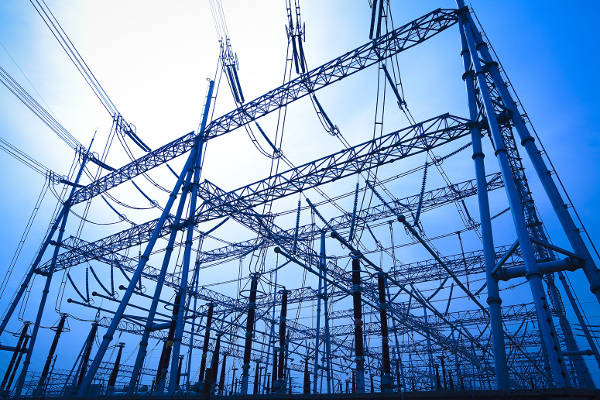
The Union Cabinet has approved the Green Energy Corridor Phase III scheme, a major expansion of India’s renewable energy transmission infrastructure that will support the evacuation of up to 135 GW of renewable power across States and Union Territories.
The scheme combines large-scale development of intra-state transmission networks with 50 GWh of Battery Energy Storage Systems, creating an integrated framework to strengthen grid flexibility, reduce renewable energy curtailment and improve the availability of power beyond solar-generation hours.
With a total project outlay of ₹1,86,405 crore and implementation targeted by FY 2032-33, Green Energy Corridor Phase III will play an important role in preparing India’s electricity grid for the country’s planned expansion towards 900 GW of installed non-fossil fuel capacity by 2035.
₹1.36 Lakh Crore for Intra-State Transmission Expansion
The largest component of the scheme is the development of Intra-State Transmission Systems, for which ₹1,36,378 crore has been allocated.
These transmission projects will strengthen the ability of State grids to absorb and evacuate electricity generated from renewable energy projects, including solar and wind installations located far from major demand centres.
The expansion of intra-state transmission infrastructure is increasingly important as renewable generation grows across different regions of India. Large renewable energy projects frequently require new substations, transmission lines and supporting infrastructure before electricity can be efficiently integrated into the wider grid.
Under Green Energy Corridor Phase III, State Transmission Utilities will act as the overall implementing agencies for the transmission component.
50 GWh Battery Storage to Strengthen Grid Flexibility
The Cabinet has also approved ₹50,000 crore for the deployment of 50 GWh of Battery Energy Storage Systems under the scheme.
The storage systems can be installed at renewable energy developer or generator locations as well as at other strategically important points in the electricity network.
Battery energy storage will help address several challenges associated with the rapid expansion of renewable power. Solar and wind generation can vary depending on weather conditions and the time of day, while electricity demand follows a different pattern.
Large-scale battery storage allows surplus renewable electricity to be stored when generation is high and released when demand rises or renewable output falls. This can reduce congestion, limit peak-hour renewable energy curtailment, improve grid stability and support electricity supply during non-solar hours.
Greenfield Transmission Projects to Use Competitive Bidding
All greenfield projects under the Intra-State Transmission System component will be implemented through Tariff Based Competitive Bidding.
Transmission Service Providers selected through the bidding process will develop projects under a Build-Own-Operate-Maintain model.
Existing transmission infrastructure that requires upgrading, reinforcement or network strengthening will be implemented under the Cost Plus Basis mechanism.
The use of competitive bidding for new transmission infrastructure is intended to improve cost efficiency while attracting participation from specialised transmission developers.
₹54,082 Crore in Central Financial Support
The Green Energy Corridor Phase III scheme includes total Central Financial Support of ₹54,082 crore.
The Central Financial Assistance provided for the transmission infrastructure is expected to reduce the burden of intra-state transmission charges and help prevent the cost of renewable energy integration from being transferred entirely to electricity consumers.
By supporting the development of essential grid infrastructure, the government aims to keep power costs under control while enabling States to accommodate increasingly large quantities of renewable electricity.
Preparing the Grid for 900 GW of Non-Fossil Capacity
India has set a target of achieving 900 GW of installed non-fossil fuel electricity capacity by 2035.
Reaching such a scale requires not only additional solar, wind, hydro, nuclear and other non-fossil generation capacity, but also substantial investment in transmission, storage and grid-management systems.
Green Energy Corridor Phase III addresses these supporting requirements by expanding transmission infrastructure and integrating energy storage into the electricity network at a much larger scale.
The scheme will allow renewable energy produced in high-generation regions to be transported more efficiently to demand centres while reducing the risk of renewable projects being constrained by insufficient transmission capacity.
Domestic Manufacturing and Employment Opportunities
Implementation of the scheme is expected to generate substantial direct and indirect employment across the power, construction and manufacturing sectors.
Expansion of transmission infrastructure will require engineering, electrical equipment, substations, towers, conductors, civil construction and specialised project-management capabilities.
Deployment of 50 GWh of battery storage is also expected to create demand across the domestic energy storage ecosystem, including battery manufacturing, power electronics, energy management systems, integration services and associated supply chains.
Once commissioned, the projects will create long-term requirements for skilled personnel in operation, maintenance, transmission management and grid control.
Strengthening India’s Long-Term Energy Security
Green Energy Corridor Phase III represents a shift from simply adding renewable generation capacity towards building the infrastructure required to operate a much larger clean-energy system reliably.
By combining 135 GW of renewable energy evacuation capability with 50 GWh of battery storage, the scheme strengthens the physical foundation required for India’s next stage of energy transition.
The programme will expand transmission capacity, improve grid flexibility, support domestic manufacturing and strengthen the reliability of renewable power integration across the country.
As renewable capacity continues to rise, Green Energy Corridor Phase III will provide States with the transmission and storage infrastructure needed to integrate clean electricity at scale while strengthening India’s long-term energy security and power-system resilience.
References
Press Information Bureau, Government of India — “Cabinet approves Green Energy Corridor Phase-III scheme for Development of Intra-State Transmission System with Battery Energy Storage Systems,” September 30, 2026.
https://pib.gov.in
You may also like
-
SAIL Tests Mongolian Coking Coal as India Diversifies Steelmaking Raw Material Supplies
-
India Notifies New Fuel-Efficiency Norms for Passenger Vehicles From 2027
-
India to Auction Two Offshore Mineral Blocks in Andaman Sea
-
Rewa Sunderja Mango — Govindgarh’s Golden Royal Mango and the Orchard Legacy of the Kymore Plateau
-
Robin Sharma Calls for Human-Centred Leadership in the Age of AI
