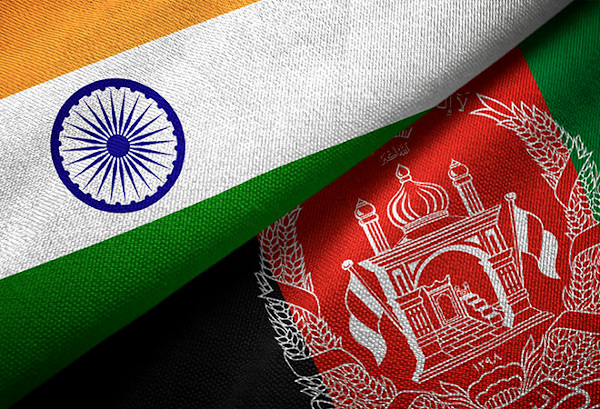
India has delivered another consignment of life-saving medicines and medical consumables to Afghanistan, reinforcing New Delhi’s continuing humanitarian engagement with the Afghan people and its long-standing focus on healthcare assistance.
The latest shipment reached Kabul on September 27, 2026 and is intended for use at a government hospital in the Afghan capital. The Ministry of External Affairs said health continues to remain at the heart of India’s humanitarian assistance to Afghanistan, where access to essential medicines and medical infrastructure remains an important requirement.
The consignment forms part of a broader Indian humanitarian programme that has continued despite the political transformation in Afghanistan since August 2021. Rather than withdrawing development and humanitarian engagement entirely, India has continued to provide assistance directed primarily towards the Afghan population.
India Maintains Focus on Healthcare Assistance
Medical support has become one of the most visible elements of India’s humanitarian engagement with Afghanistan.
The September 27 shipment includes life-saving medicines and medical consumables required by a government hospital in Kabul. India had also delivered medicines and medical supplies to a Kabul government hospital on August 20, 2026, describing the assistance as part of its enduring health partnership with the Afghan people.
These consignments continue a much larger programme of medical assistance that has developed over several years.
Official Ministry of External Affairs records show that India supplied around 300 tonnes of medicines and medical and surgical items to Afghanistan following the political changes of August 2021. These supplies have been accompanied by food assistance, disaster-relief materials and other essential commodities.
Healthcare cooperation therefore remains one of the channels through which India has maintained direct humanitarian engagement with Afghanistan.
Five Tonnes of Medicines Delivered Earlier in 2026
India also sent another five tonnes of essential medicines to Kabul in June 2026.
The shipment reflected New Delhi’s continuing emphasis on providing essential healthcare supplies even as Afghanistan continues to face economic constraints and pressure on its public-health infrastructure.
India’s assistance has included medicines required for hospitals as well as broader medical and humanitarian supplies distributed through different channels.
The repeated consignments demonstrate that India’s Afghanistan policy has increasingly separated humanitarian requirements of the Afghan population from the wider political complexities surrounding the country.
Disaster Relief Extends Beyond Medical Supplies
India’s humanitarian assistance to Afghanistan has not been restricted to healthcare.
In July 2026, New Delhi supplied relief materials to Afghanistan following destructive flooding in Nuristan. The assistance included food items and family tents intended for communities affected by the disaster.
The material was delivered to Afghanistan’s National Disaster Management Authority as part of India’s response to the emergency.
Similar interventions have taken place following earlier earthquakes and other natural disasters, allowing India to retain an important humanitarian role in Afghanistan even during periods of limited formal diplomatic engagement.
A Larger Record of Humanitarian Assistance
India’s assistance to Afghanistan since 2021 has been substantial in both scale and range.
According to Ministry of External Affairs records, India has supplied 50,000 metric tonnes of wheat and hundreds of tonnes of medicines and medical and surgical supplies to Afghanistan.
India has also provided 40,000 litres of Malathion pesticide to help combat locust infestations that threatened agricultural production and food security.
Humanitarian assistance has additionally been channelled through international organisations. India has worked with the United Nations Office on Drugs and Crime to provide support for vulnerable Afghans, particularly women receiving treatment for drug dependence.
The assistance supplied under that partnership has included hygiene kits, baby food, clothing, blankets, footwear and medical materials.
India has also supported educational institutions in Afghanistan, including Kabul’s Habibia High School, while continuing scholarship and online education opportunities for Afghan students.
India-Afghanistan Engagement Has Gathered Momentum
Humanitarian assistance is increasingly taking place alongside a gradual expansion of India-Afghanistan engagement.
The two countries have maintained diplomatic communication over issues including development cooperation, humanitarian requirements, trade and economic connectivity.
India elevated its technical mission in Kabul to the status of an embassy in October 2025, representing a significant development in the diplomatic relationship.
The move did not fundamentally alter India’s broader policy approach towards Afghanistan but provided a stronger institutional mechanism for engagement with authorities in Kabul and for coordinating humanitarian and development activities.
India has consistently maintained that its approach towards Afghanistan is guided by its historical relationship with the Afghan people as well as regional security considerations.
Trade and Economic Engagement Also Expands
Humanitarian engagement has increasingly been accompanied by attempts to strengthen economic ties.
On September 1, 2026, officials from India and Afghanistan participated in a meeting of the Joint Working Group on Trade, Commerce and Investment.
The discussions covered trade facilitation, customs cooperation, pharmaceutical and agricultural trade, banking arrangements, energy cooperation, investment promotion and cargo connectivity.
Both sides agreed to continue institutional engagement and explore measures that could improve commercial exchanges.
Pharmaceutical trade is particularly significant because India has traditionally been an important supplier of affordable medicines to Afghanistan and several other developing countries.
Greater commercial connectivity could eventually complement humanitarian medical assistance by strengthening regular access to Indian pharmaceuticals and healthcare products.
India’s Long Development Partnership With Afghanistan
India’s involvement in Afghanistan predates the present humanitarian programme by several decades.
New Delhi has supported major infrastructure and development projects across Afghanistan in sectors including power, transportation, education, healthcare and public administration.
Major Indian-assisted projects have included the Afghanistan-India Friendship Dam in Herat and the Afghan Parliament building in Kabul.
India has also supported numerous smaller community-level projects covering schools, clinics, roads, irrigation facilities and local infrastructure.
This development footprint has helped create a relationship that extends beyond formal government-to-government diplomacy.
People-to-people ties, education, healthcare and development assistance continue to form an important component of India’s engagement with Afghanistan.
Humanitarian Assistance Remains Central to India’s Afghanistan Policy
The latest shipment of medicines to Kabul demonstrates the continuity in India’s approach towards Afghanistan.
New Delhi has avoided abandoning its relationship with the Afghan population despite the major political changes that have taken place within the country.
Instead, healthcare, food security, disaster relief, education and development assistance have remained important channels of engagement.
India’s September 27 medical consignment therefore represents more than an isolated delivery of medicines. It forms part of a sustained humanitarian policy that has continued through changing political circumstances and has increasingly become one of the foundations of India-Afghanistan relations.
With medical supplies being delivered repeatedly during 2026 and broader diplomatic and economic engagement also expanding, India appears set to continue placing humanitarian assistance and support for the Afghan people at the centre of its evolving relationship with Kabul.
References
Ministry of External Affairs, Government of India — Official communication on delivery of life-saving medicines and medical consumables to a government hospital in Kabul, September 27, 2026.
Ministry of External Affairs — Annual Report 2024, Afghanistan section.
https://www.mea.gov.in/Images/CPV/Introduction-and-Synopsis-English.pdf
Ministry of External Affairs — Details of humanitarian assistance provided by India during the last five years.
https://www.mea.gov.in/Images/CPV/2324-20-03-2025-en-1.pdf
Press Information Bureau, Ministry of Commerce & Industry — India–Afghanistan Joint Working Group on Trade reviews bilateral trade and economic cooperation, September 2, 2026.
https://www.pib.gov.in/PressReleseDetailm.aspx?PRID=2305807
Ministry of External Affairs — India-Afghanistan Development Partnership and development projects.
https://www.mea.gov.in/Grant-in-Aid-projects-Development-Projects.htm
You may also like
-
India and Netherlands Deepen Agriculture and Agritech Partnership as Dutch Minister Begins Six-Day Visit
-
Jaishankar and Lavrov Review India–Russia Strategic Partnership, BRICS Coordination and Upcoming Bilateral Contacts
-
India Signs UN Convention Against Cybercrime as Global Digital Security Cooperation Expands
-
India and GCC Review Joint Action Plan as Free Trade Agreement Negotiations Move Forward
-
Australian PM Albanese Credits Modi as India’s Energy Access Expands on Historic Scale
