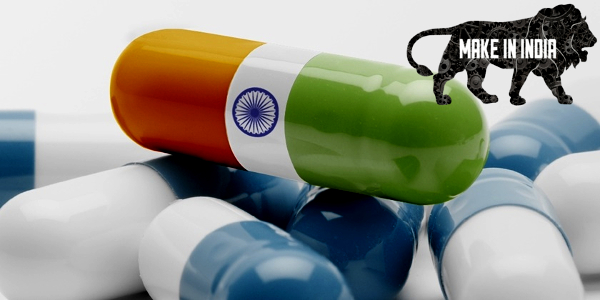
India’s domestic pharmaceutical market recorded strong double-digit growth in August 2026, with total monthly sales reaching approximately ₹24,827 crore.
According to the latest IQVIA Indian Pharmaceutical Market data, the market expanded by 12.96% year-on-year, while the Moving Annual Total, or MAT, rose to about ₹2.71 lakh crore. The figures indicate that the Indian pharmaceutical market continues to benefit from strong demand across chronic therapies, new product launches and major urban markets.
Indian Pharma Market Reaches ₹24,827 Crore in August
The August 2026 performance placed the Indian pharmaceutical market among its strongest recent monthly growth periods.
The market reached approximately ₹24,827.13 crore during August, while the MAT value climbed to around ₹2,71,283.73 crore.
On a MAT basis, the market grew by about 12.28%, while the five-year compound annual growth rate remained above 9%.
The latest numbers show that domestic pharmaceutical demand is growing not only because of short-term seasonal factors, but also because of deeper structural changes in India’s healthcare market.
Chronic Therapies Remain the Strongest Growth Segment
One of the clearest trends in the latest data is the continued strength of chronic therapies.
On a MAT basis through August 2026, chronic therapy sales grew by approximately 16.1%, significantly ahead of the 9.8% growth recorded by acute therapies.
Chronic therapy categories include long-term treatments for conditions such as diabetes, cardiovascular disease, neurological disorders and other lifestyle-related illnesses.
The stronger performance of these categories reflects changes in India’s disease profile, rising diagnosis rates, greater access to treatment and a growing need for medicines that must be taken continuously over long periods.
August Sales Also Improve Over July
The market also recorded sequential growth.
Pharmaceutical sales in August increased by approximately 2.1% compared with July 2026, showing that the month was strong both on a year-on-year and month-on-month basis.
Acute therapies performed relatively well during the month itself, although chronic therapies remained the stronger long-term growth engine.
This balance between acute and chronic demand is helping broaden the base of India’s domestic pharmaceutical market.
Multinational Companies Grow Faster Than Indian Manufacturers
The August data also shows a difference in growth rates between multinational pharmaceutical companies and Indian manufacturers.
Multinational companies recorded approximately 14.8% MAT growth, compared with around 11.8% growth among Indian pharmaceutical companies across the combined acute and chronic therapy segments.
Indian manufacturers nevertheless continue to dominate several important categories, including branded generics, respiratory medicines, anti-infectives and chronic therapies.
The domestic market therefore remains highly competitive, with both Indian and multinational companies expanding across specialised treatment segments.
Sun Pharma Retains Market Leadership
Sun Pharma remained the largest company in the Indian pharmaceutical market, with a market share of approximately 8.11%.
Its MAT revenue stood at around ₹21,997 crore.
Abbott followed with a market share of approximately 6.26%, while Cipla accounted for about 5.61% of the market.
These rankings underline the scale of competition among leading pharmaceutical companies operating in India’s fast-growing domestic medicines market.
Eli Lilly Records Exceptional Growth
One of the most striking developments in the latest data was the performance of Eli Lilly.
The company recorded MAT growth of approximately 256.99%, driven largely by strong expansion in its metabolic therapy portfolio.
The rapid rise reflects growing demand in India for newer treatments related to diabetes, obesity and metabolic health.
These therapy areas are increasingly becoming important commercial segments within the Indian pharmaceutical industry.
Mounjaro Emerges as India’s Largest Brand by Sales Value
Eli Lilly’s Mounjaro emerged as the largest individual pharmaceutical brand in India by sales value during August 2026.
The medicine generated approximately ₹180.89 crore in August sales, while its MAT value reached around ₹1,676 crore.
It was followed by major brands including Cipla’s Foracort and GSK’s Augmentin among the leading medicines by sales value.
The rise of Mounjaro highlights the growing commercial importance of metabolic and diabetes therapies in the Indian market.
Around 2,400 New Brands Enter the Market
New product launches are also contributing significantly to pharmaceutical market growth.
Approximately 2,400 new brands entered the Indian market during the previous 12 months, generating around ₹1,914 crore in sales.
The anti-diabetic category accounted for approximately 25% of the value generated by new product introductions, making it one of the most active areas of competition.
This shows that companies are increasingly targeting chronic and metabolic diseases with new formulations and therapy options.
Metro Markets Continue to Grow Faster
India’s largest urban centres continue to play a major role in pharmaceutical consumption.
The top 30 metropolitan markets accounted for approximately 35.8% of total Indian Pharmaceutical Market revenue and grew by around 14.2%, faster than the overall national average.
Regionally, southern India recorded one of the highest growth rates, while northern India retained the largest share of the domestic market.
Urbanisation, higher healthcare spending, improved diagnosis and greater access to specialist treatment are all contributing to stronger pharmaceutical demand in major cities.
Domestic Pharma Growth Comes Alongside Manufacturing Expansion
The strong domestic market performance is taking place alongside broader expansion in India’s pharmaceutical manufacturing sector.
The Government of India continues to support domestic production of active pharmaceutical ingredients, key starting materials and drug intermediates through the Production Linked Incentive scheme for bulk drugs.
By March 2026, cumulative investment under the bulk-drug PLI scheme had crossed ₹5,000 crore, with manufacturing capacity being created for several critical pharmaceutical inputs.
The objective is to strengthen India’s pharmaceutical supply chain while reducing dependence on imported raw materials.
Five Greenfield Bulk-Drug Projects Strengthen Supply Chains
The Department of Pharmaceuticals recently highlighted five greenfield projects established under the bulk-drug PLI scheme.
Among the major projects is Lyfius Pharma, a subsidiary of Aurobindo Pharma, which has established a large-scale Penicillin G manufacturing facility at the Kakinada Special Economic Zone in Andhra Pradesh.
The project involved an investment of more than ₹2,270 crore and has installed production capacity of approximately 15,000 metric tonnes per year.
Such projects are important because India remains dependent on imports for several key pharmaceutical ingredients despite being one of the world’s largest producers of finished medicines.
India’s Pharma Market Enters a New Growth Phase
The latest market data shows that India’s pharmaceutical industry is entering a phase increasingly shaped by chronic disease treatment, metabolic therapies, new product launches and higher-value medicines.
The rise of chronic therapies is particularly significant because it reflects a structural shift rather than a short-term increase in demand.
For Indian manufacturers, this creates opportunities not only in traditional generics but also in specialised formulations, advanced therapies and long-term disease management.
At the same time, continued investment in APIs, bulk drugs and key starting materials will remain essential for strengthening India’s pharmaceutical supply chain.
The 12.96% growth recorded in August 2026 therefore represents more than one strong month. It reflects the growing importance of chronic therapies, innovation, urban healthcare demand and domestic manufacturing in shaping the next phase of the Indian pharmaceutical market.
References
IQVIA / Pharmabiz — Indian Pharmaceutical Market performance for August 2026, including monthly sales, MAT growth, therapy growth, company performance and brand rankings.
Department of Pharmaceuticals, Ministry of Chemicals and Fertilizers — Official data on the Production Linked Incentive Scheme for Bulk Drugs.
Press Information Bureau, Ministry of Chemicals and Fertilizers — Official update on greenfield bulk-drug manufacturing projects and pharmaceutical supply-chain resilience.
National Pharmaceutical Pricing Authority / Department of Pharmaceuticals — Official information on domestic pharmaceutical regulation and medicines policy.
You may also like
-
India Expands Defence R&D Investment as Quantum, Hypersonic and Autonomous Systems Move to the Fore
-
India Launches Commercial Bio-Based Biodegradable PLA Plastic Under BioE3 Initiative
-
Kardi Ai Brings AI-Powered Long-Term ECG Monitoring Technology to India
-
India and GCC Review Joint Action Plan as Free Trade Agreement Negotiations Move Forward
-
EdgeForce Solutions Emerges L1 Bidder for Indian Army Manned–Unmanned Teaming System
