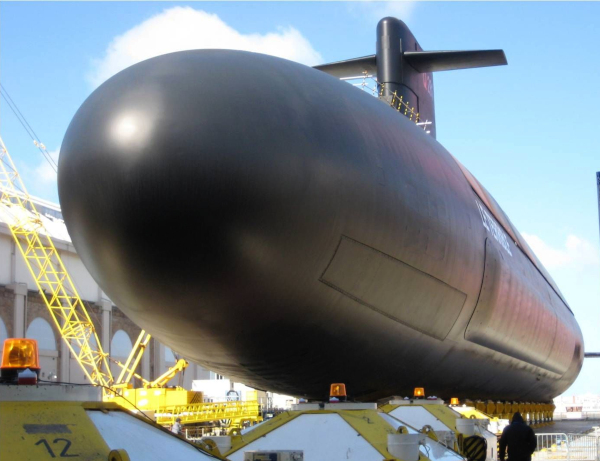
India’s Project 75(I) submarine programme has entered an advanced stage, with German shipbuilder Thyssenkrupp Marine Systems and Mazagon Dock Shipbuilders Limited formally engaged in negotiations for six next-generation conventional submarines for the Indian Navy. The programme is one of the most important naval industrial projects currently under consideration in India because it combines the acquisition of advanced submarines with Air Independent Propulsion, modern weapons and sensors, extensive technology transfer, indigenous construction and the creation of long-term submarine design and manufacturing capability within the country.
The Ministry of Defence conceived Project 75(I) under the Strategic Partnership model, under which an Indian shipyard works with a foreign original equipment manufacturer to build complex defence platforms in India while progressively absorbing critical technologies. The objective has therefore always extended beyond the procurement of six submarines. Project 75(I) is intended to deepen India’s ability to design, build, maintain and eventually develop future conventional submarines with substantially greater domestic technological ownership.
Six Advanced AIP-Equipped Submarines for the Indian Navy
The Defence Acquisition Council approved the issue of a Request for Proposal for six conventional submarines under Project 75(I) in June 2021. At the time, the programme was estimated at approximately ₹43,000 crore and was described by the Ministry of Defence as the first major acquisition being processed under the Strategic Partnership model. The formal Request for Proposal was issued the following month to Mazagon Dock Shipbuilders Limited and Larsen & Toubro, the two shortlisted Indian Strategic Partners.
The Ministry of Defence specified that all six submarines would be equipped with fuel-cell-based Air Independent Propulsion systems and would carry advanced torpedoes, modern missiles, contemporary sensors and state-of-the-art countermeasure systems. The package also includes shore-support infrastructure, engineering support, training and spare parts, making Project 75(I) an integrated underwater warfare programme rather than a simple shipbuilding contract.
Air Independent Propulsion Is Central to the Programme
Air Independent Propulsion is one of the defining requirements of Project 75(I). A conventional diesel-electric submarine normally operates underwater using stored battery power, but once those batteries become depleted it must eventually surface or raise a snorkel to run diesel generators and recharge them. That process increases vulnerability because the submarine becomes more detectable through radar, infrared, acoustic and visual signatures.
An AIP system allows a conventional submarine to generate electrical power while remaining submerged without drawing oxygen from the atmosphere. This significantly increases underwater endurance and enables the submarine to remain concealed for longer periods while conducting surveillance, sea-denial or offensive missions. The Ministry of Defence specifically required a fuel-cell-based AIP system for Project 75(I), making this technology one of the central technical elements of the competition.
Project 75(I) Is Built Around Technology Transfer
The Ministry of Defence has consistently described Project 75(I) as a programme intended to transform India’s submarine industrial base. Under the Strategic Partnership framework, the selected foreign company is expected to provide technology that allows the Indian partner to establish dedicated manufacturing lines in India and progressively increase domestic participation.
The official Request for Proposal stated that foreign partners would enable high levels of indigenisation while transferring submarine design and other technologies. This is especially important because submarine construction involves highly specialised expertise in pressure-hull engineering, hydrodynamics, acoustic management, propulsion, combat systems, underwater sensors and life-support systems. Access to design knowledge can therefore be far more valuable in the long term than the acquisition of finished submarines alone.
MDL-TKMS Partnership Has Entered Formal Negotiations
A major milestone was reached in September 2025 when Thyssenkrupp Marine Systems officially announced that it and Mazagon Dock Shipbuilders had begun contract negotiations with the Indian procurement authority for Project 75(I). TKMS confirmed that the negotiations cover six German-designed submarines planned for construction in cooperation with MDL in India.
The company described the negotiations as an important step in India’s effort to strengthen domestic naval capability and international technology transfer. This is one of the strongest official confirmations of the present status of the German proposal because it establishes that the programme has moved beyond preliminary bidding and technical discussion into formal contractual negotiations between the MDL-TKMS team and the Indian procurement authorities.
MDL Says India Will Acquire Design Capability
Mazagon Dock has also provided unusually clear information about the technological objectives of the programme. In an official corporate response discussing the significance of its partnership with TKMS, MDL stated that both the shipyard and the Indian Navy are expected to acquire the design of the new conventional submarine.
That point is particularly important because meaningful access to submarine design knowledge would strengthen India’s ability to sustain, modify and upgrade the vessels domestically rather than remaining dependent on the original foreign designer throughout their service lives. It could also contribute directly to later indigenous submarine programmes and help India move from licensed construction towards a much deeper level of design ownership.
60 Per Cent Indigenisation Is Mandated
Mazagon Dock has also stated that Project 75(I) mandates approximately 60 per cent indigenisation. This requirement is intended to draw Indian companies into the submarine manufacturing ecosystem and progressively reduce dependence on imported equipment and systems.
Indigenisation in a submarine programme extends far beyond construction of the hull. It can involve electrical systems, pumps, valves, hydraulic equipment, air-conditioning and life-support machinery, cables, structural components, control systems, sensors, fabrication equipment and other specialised elements. Developing such a supply chain can create industrial capabilities that remain useful long after the first six submarines have been delivered.
India Already Has Experience With German Submarine Technology
The proposed partnership with TKMS would not be India’s first experience with German submarine technology. The Indian Navy already operates four Shishumar-class submarines derived from Germany’s Type 209 design, with two of those submarines having been built at Mazagon Dock under technology transfer arrangements.
That earlier programme gave MDL valuable experience with German submarine construction methods and marked an important stage in India’s development as a submarine-building nation. Project 75(I), however, is designed to involve a much deeper industrial and technological relationship, with far greater emphasis on indigenous content, design participation and long-term technological independence.
MDL Has Just Completed the Kalvari Programme
Mazagon Dock enters Project 75(I) with considerably greater submarine-building experience than it possessed during the earlier German programme. The shipyard completed construction of six Kalvari-class submarines under Project 75 in collaboration with France’s Naval Group, with the sixth submarine, Vaghsheer, delivered to the Indian Navy in January 2025 before being commissioned as INS Vaghsheer.
The Kalvari programme demonstrated MDL’s ability to absorb foreign submarine-building technology, construct increasingly complex underwater platforms and maintain a specialised submarine workforce over an extended production cycle. Project 75(I) would allow that industrial base to move into a new generation of conventional submarine technology centred on significantly greater submerged endurance and deeper participation in design.
India-Germany Defence Ties Expanded in 2026
The submarine programme is unfolding alongside a broader expansion of defence cooperation between India and Germany. Defence Minister Rajnath Singh visited Germany in April 2026 and held talks with German Defence Minister Boris Pistorius, with both sides discussing priority areas for co-development and co-production of defence equipment, particularly in advanced and niche technologies.
India and Germany also signed a Defence Industrial Cooperation Roadmap during the visit. The roadmap is intended to deepen defence-industry engagement and identify opportunities for companies from both countries to work together on advanced systems. The talks reflected a broader shift towards co-development and co-production rather than a traditional buyer-seller relationship.
Rajnath Singh Visited the TKMS Facility at Kiel
The importance of naval cooperation was highlighted further when Rajnath Singh visited the TKMS submarine-building facility at Kiel in April 2026. The Ministry of Defence said the visit provided an opportunity to exchange views on advanced maritime capabilities and explore cooperation in naval technologies.
The visit was particularly significant because TKMS is the German industrial partner working with MDL on Project 75(I). A ministerial visit to the submarine facility placed the project firmly within the wider strategic defence relationship between India and Germany rather than treating it merely as a commercial competition between shipbuilders.
Cooperation Could Extend Beyond Submarines
India and Germany are also exploring defence-industrial cooperation in several other technologically advanced fields. During the 2026 visit, the Ministry of Defence identified advanced radar and sensor technologies, multi-sensor systems, artificial intelligence-enabled unmanned aerial systems, sonobuoys and high-power low-frequency underwater transmitters among potential areas for collaboration.
These areas have clear relevance to maritime warfare. Sonobuoys and underwater transmitters contribute directly to anti-submarine warfare, while advanced sensors and unmanned systems increasingly form part of modern maritime surveillance and targeting networks. Project 75(I) could therefore become one element of a much broader India-Germany maritime technology partnership.
Technology Transfer Could Be More Important Than the Six Hulls
The strategic importance of Project 75(I) ultimately lies in what India learns while building the submarines. The Ministry of Defence stated as far back as 2021 that the programme was designed to develop national competence in submarine construction and enable Indian industry eventually to design and construct submarines independently.
MDL’s later confirmation that India is expected to acquire submarine design knowledge gives further substance to that objective. A production line that simply assembles imported kits would offer limited long-term strategic value, whereas a programme that transfers design methodology, systems integration skills, manufacturing processes and maintenance expertise can create capabilities that remain useful for decades.
German Ambassador Signals Berlin’s Readiness to Advance P-75(I) Submarine Deal
A separate development emerged on September 23, 2026 through remarks attributed by Indian media to Germany’s Ambassador to India, Dr Jasper Wieck. According to reports of his interaction with journalists, Wieck said that Germany had completed its side of the documentation associated with the proposed submarine arrangement and was ready to proceed.
He was also quoted as saying that the Indian internal approval process remained to be completed and that the proposal was awaiting consideration by the Cabinet Committee on Security. Several reports placed the proposed value of the wider arrangement at around €9 billion.
These details are important, but they should be clearly separated from the officially published position. As of the latest official material reviewed for this article, neither the Indian Ministry of Defence nor the German government has issued a formal public announcement confirming CCS approval, a final €9 billion contract value or the signing of the Project 75(I) acquisition contract.
The Reported €9 Billion Figure Requires Caution
The original Indian approval for Project 75(I) was approximately ₹43,000 crore in 2021. Since then, the programme has undergone years of technical evaluation, design development, negotiations and cost revisions, and recent media reports have cited substantially higher values, including figures approaching €9 billion.
However, no current Ministry of Defence release reviewed for this article publicly fixes €9 billion as the final signed contract value. The safest description is therefore that the programme was originally approved at an estimated ₹43,000 crore, while more recent media reports place the proposed package substantially higher. A final contract value should be treated as confirmed only after an official announcement from the Government of India, MDL or another authorised contracting entity.
Final Approval Would Open a New Chapter in Indian Submarine Construction
If the programme proceeds to contract signature, Project 75(I) would represent another major step in India’s gradual transition from submarine buyer to submarine builder and ultimately towards submarine designer.
India’s earlier German Type 209 experience established an initial construction base, while the Kalvari programme with France expanded domestic submarine-building expertise considerably. Project 75(I) is intended to move the process further by combining advanced AIP technology, higher indigenous content and access to submarine design knowledge.
For the Indian Navy, the immediate result would be six advanced conventional submarines with significantly improved underwater endurance. For India’s defence-industrial ecosystem, the larger result could be the knowledge, infrastructure and supply chain required to develop future submarines with progressively greater indigenous content.
As of September 23, 2026, the strongest officially verifiable conclusion is that Project 75(I) is in an advanced negotiation stage, MDL and TKMS are formally engaged with the Indian procurement authorities, technology transfer and indigenous construction remain central to the programme, and India-Germany defence-industrial cooperation has deepened substantially. The latest remarks attributed to Germany’s ambassador suggest that Berlin believes its side is ready to proceed, but the final Indian decision must await an official announcement.
References
Press Information Bureau, Ministry of Defence — Defence Acquisition Council Approves RFP for Construction of Six P-75(I) Submarines at Approximate Cost of ₹43,000 Crore, June 4, 2021.
Press Information Bureau, Ministry of Defence — MoD Issues RFP for Construction of Six P-75(I) Submarines for Indian Navy, July 20, 2021.
Press Information Bureau, Ministry of Defence — Expression of Interest for Six P-75(I) Submarines for Indian Navy, June 20, 2019.
Mazagon Dock Shipbuilders Limited — Official corporate response on MDL-TKMS cooperation under Project 75(I), submarine design acquisition and 60 per cent indigenisation requirement.
Thyssenkrupp Marine Systems — Milestone in Indian Submarine Program: TKMS Enters Contract Negotiations with Mazagon Dock Shipbuilders for P75(I), September 11, 2025.
Press Information Bureau, Ministry of Defence — Raksha Mantri and German Defence Minister Hold Bilateral Talks in Berlin; Defence Industrial Cooperation Roadmap Signed, April 22, 2026.
Press Information Bureau, Ministry of Defence — Rajnath Singh Reviews Maritime Cooperation Following Visit to TKMS Facility in Kiel, April 2026.
Press Information Bureau, Ministry of Defence — Delivery and Commissioning of INS Vaghsheer, January 2025.
ET Now — Report quoting German Ambassador Dr Jasper Wieck on Germany’s readiness to proceed with the P-75(I) arrangement, September 23, 2026.
Outlook India — Report quoting German Ambassador Dr Jasper Wieck on the status of the proposed P-75(I) arrangement, September 23, 2026.
You may also like
-
Indian Navy Seeks Six Indigenous LCU Mk V Amphibious Ships Under Make in India
-
India’s Drone Ecosystem Expands Beyond 600 Companies as Military Demand Moves Towards Large-Scale Procurement
-
Alpha Design Emerges L1 for Indian Army’s 600 Indigenous Software-Defined Radios
-
Prostarm Builds 1.2 GWh BESS Manufacturing Base in Haryana as Indian Grid-Storage Orders Expand
-
Hughes Precision Raises ₹250+ Crore to Expand Ammunition Manufacturing, Enters Medium-Calibre Segment
%20Submarine%20Partnership%20Moves%20Closer%20to%20Decision%20as%20TKMS-MDL%20Negotiations%20Advance)