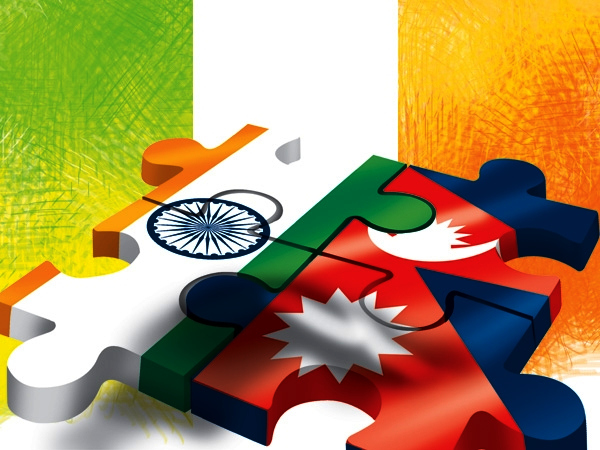
India and Nepal have moved to deepen their economic integration by addressing market-access barriers, modernising customs procedures and improving cross-border transport infrastructure, as the two neighbours seek to make bilateral and transit trade faster and more efficient.
Officials from the two countries held the India–Nepal Inter-Governmental Sub-Committee on Trade, Transit and Cooperation to Control Unauthorised Trade at Vanijya Bhawan in New Delhi on September 16 and 17, 2026.
The meeting covered a broad range of issues affecting movement of goods across the India-Nepal border, including customs procedures, product standards, food safety, agricultural certification, pharmaceuticals, border infrastructure and rail and road connectivity.
A central objective was to create greater market access for products from both countries while removing operational barriers that continue to affect legitimate cross-border commerce.
Greater Market Access for Indian and Nepali Products
India and Nepal examined measures that could provide easier access to each other’s markets, particularly in sectors where regulatory requirements and certification procedures can affect trade.
Agricultural products, dairy products, processed foods, pharmaceuticals, medical devices and AYUSH products were among the sectors discussed.
Officials also examined standards, sanitary and phytosanitary requirements and other technical regulations governing the entry of products into their respective markets.
These issues are particularly important in agricultural and food trade because even where tariffs are low, differences in testing, certification, quarantine and quality standards can effectively restrict market access.
Greater coordination between Indian and Nepali regulators could therefore lower transaction costs while allowing legitimate products to move more quickly across the border.
Pharmaceuticals and AYUSH Enter the Trade Agenda
The inclusion of pharmaceuticals, medical devices and AYUSH products gives the discussions a broader dimension beyond conventional merchandise trade.
India has significant manufacturing capabilities in generic medicines, medical equipment and traditional medicine products, while Nepal represents both an important neighbouring market and a transit-linked economy closely connected to Indian supply chains.
Regulatory cooperation in these sectors could help simplify registration, certification and market-entry procedures while maintaining safety and quality requirements.
Cooperation involving standards and conformity assessment could consequently become an important mechanism for expanding bilateral trade in higher-value manufactured and healthcare products.
India and Nepal Push Customs Digitalisation
A particularly significant part of the meeting concerned modernising customs procedures.
The two sides discussed pre-arrival exchange of information, electronic verification of Certificates of Origin, customs automation and greater digitalisation of cross-border trade procedures.
Pre-arrival information allows customs authorities to receive cargo details before a shipment reaches the border, enabling risk assessment and documentation checks to begin in advance.
Electronic verification of Certificates of Origin can similarly reduce paperwork and speed up clearance while helping authorities verify whether goods legitimately qualify for preferential tariff treatment.
Greater customs automation could ultimately reduce delays, paperwork and administrative costs for traders operating across the India-Nepal border.
Preventing Misuse of Preferential Trade Arrangements
Trade facilitation was accompanied by discussions on strengthening mechanisms against unauthorised commerce and commercial fraud.
India and Nepal have a long-standing preferential trading relationship, but such arrangements also require mechanisms to ensure that goods originating elsewhere are not routed through one country merely to obtain preferential access to the other.
The two governments therefore discussed measures to facilitate legitimate commerce while ensuring compliance with rules governing preferential trade.
Better electronic certification, customs information sharing and verification of product origin could help both objectives simultaneously: reducing delays for genuine traders while making fraudulent routing more difficult.
Officials from both countries also emphasised continued cooperation between their relevant agencies to address unauthorised trade across the open and highly interconnected border.
Rail and Road Connectivity Under Review
Physical connectivity formed another major component of the talks.
India and Nepal reviewed rail links, road connectivity, freight movement, Integrated Check Posts and land-port infrastructure.
Rather than concentrating solely on building new facilities, officials also examined ways of making better use of infrastructure that already exists and removing operational bottlenecks that restrict cargo movement.
This reflects a broader shift in India-Nepal connectivity towards integrated border logistics, where roads, railways, customs terminals and digital clearance systems increasingly operate as parts of a single trade corridor.
Improved logistics can be particularly important for Nepal, a landlocked country that depends heavily on transit access through India for international trade.
Direct Rail Freight Already Transforming Connectivity
Recent developments demonstrate how changes to transit arrangements are already altering India-Nepal freight movement.
In July 2026, the first direct commercial container freight train travelled from Kolkata Port to the Biratnagar Customs Yard in Nepal under the revised India-Nepal Rail Transit Protocol.
The 40-wagon train was able to carry containerised cargo directly to Biratnagar without requiring transshipment at the border.
Direct rail connectivity can reduce handling costs, transit times and logistical uncertainty while giving Nepali importers and exporters more efficient access to Indian ports.
The September discussions on rail freight and infrastructure therefore form part of a continuing effort to convert agreements on connectivity into functioning commercial corridors.
Integrated Check Posts Become Critical Trade Gateways
Integrated Check Posts are increasingly important to the India-Nepal economic relationship because they combine customs, immigration, security, warehousing and cargo-handling facilities within common border complexes.
Improving utilisation of these facilities could help reduce congestion and allow larger volumes of goods to move through formal trade channels.
The two sides consequently discussed land-port infrastructure alongside transport links and customs modernisation.
Efficient border terminals are particularly important because improvements to roads or railways deliver limited benefits if shipments subsequently face long clearance delays at border crossings.
India and Nepal are therefore increasingly treating connectivity as an integrated system involving transport infrastructure, customs technology, regulatory coordination and border management.
Cooperation on Food Safety and Plant Quarantine
The meeting also examined closer institutional cooperation in food safety, plant quarantine, standards and conformity assessment.
Agricultural trade between neighbouring countries can be particularly sensitive because plants, seeds, livestock products and processed foods may require inspection to prevent the spread of pests or diseases.
At the same time, excessive duplication of inspections or incompatible standards can raise costs and restrict legitimate trade.
India and Nepal therefore agreed to continue cooperation between their regulatory institutions, including capacity-building initiatives aimed at improving implementation and harmonisation.
Such cooperation could gradually make cross-border agricultural and food trade more predictable while maintaining appropriate safeguards.
India Remains Nepal’s Principal Economic Partner
India occupies a unique position in Nepal’s economy because geography, infrastructure and longstanding commercial ties closely connect the two markets.
India remains Nepal’s largest trading partner and an important source of foreign investment, while Indian territory and ports provide crucial transit routes for much of Nepal’s international commerce.
The economic relationship is therefore broader than ordinary bilateral trade. It includes transit rights, railway connectivity, border roads, petroleum supply chains, power trade and interconnected production and distribution networks.
This makes improvements to customs systems and transport corridors particularly consequential for Nepal’s wider access to global markets.
From Border Trade to Integrated Economic Corridors
The latest IGSC meeting suggests that the next stage of India-Nepal economic cooperation will increasingly focus on reducing the friction surrounding cross-border movement.
Building infrastructure remains important, but the ability to exchange documentation electronically, verify certificates digitally, harmonise standards and process cargo before it reaches a border can be equally important in lowering logistics costs.
The combination of improved rail connectivity, modern Integrated Check Posts and digital customs systems could gradually transform the India-Nepal frontier from a collection of border crossings into a network of integrated economic corridors.
Both governments agreed to continue engagement through established bilateral mechanisms and pursue time-bound follow-up on matters requiring further technical examination.
For India and Nepal, whose economies have been linked by geography and commerce for generations, the emphasis is increasingly shifting from simply maintaining trade routes to making those routes faster, more transparent and better suited to modern regional supply chains.
You may also like
-
PM Modi to Distribute Over 51,000 Government Appointment Letters at 20th Rozgar Mela on 19 September
-
India and Thailand Push to Remove Trade Barriers as Bilateral Commerce Reaches Record High
-
India, Trinidad and Tobago Deepen Parliamentary Ties
-
Banaganapalle Mangoes — The Golden Benishan of the Deccan and the Geography Behind a Celebrated Indian Mango
-
L&T Semiconductor and Tata Electronics Join Forces to Manufacture India-Designed Chips at Scale
