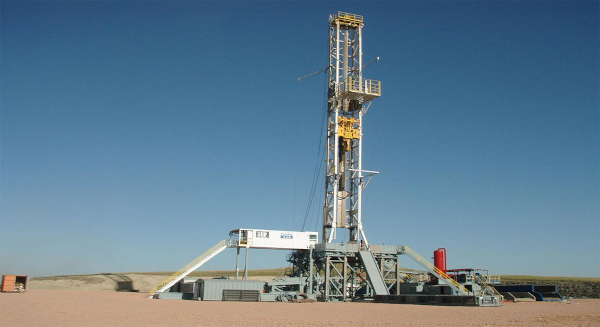
Oil India Limited is moving into the next phase of one of the most unusual petroleum discoveries made in Assam in recent decades, as the state-owned explorer looks for advanced technology capable of producing heavy crude encountered deep beneath the north bank of the Brahmaputra.
The hydrocarbons were established through the exploratory well Kobochapori-1 in the Jonai area of Dhemaji district, but the latest development in September 2026 concerns the challenge of turning that geological success into commercially sustainable production. Oil India Chairman and Managing Director Dr Ranjit Rath has said that the crude encountered at Kobochapori is heavy and that the company is examining technologies available globally to improve its ability to flow to the surface. Additional wells are also planned to determine the physical and commercial viability of the accumulation.
A Discovery That Opened a New Side of the Brahmaputra
The significance of Kobochapori goes well beyond the performance of a single well. Oil India’s FY2024-25 annual report formally recorded that Kobochapori-1 had established the presence of hydrocarbons in Block AA-ONHP-2017/10, awarded under the first round of the Open Acreage Licensing Policy. The block lies on the north bank of the Brahmaputra, an area that had remained an exploration puzzle despite Assam’s long history as India’s oldest oil-producing region.
Oil India described the result as establishing, for the first time, a working petroleum system in this part of the Assam Shelf Basin. That distinction is important because a working petroleum system means that the fundamental geological conditions required for petroleum accumulation have operated successfully. Hydrocarbons had to be generated in source rocks, migrate through the subsurface, enter suitable reservoir rocks and remain trapped beneath geological seals rather than escaping over millions of years.
For decades, most of the best-known producing areas of Upper Assam were concentrated elsewhere in the basin. Kobochapori therefore provides explorers with direct evidence that petroleum accumulation also occurred in the comparatively underexplored territory north of the river. The discovery could consequently influence exploration decisions over an area much larger than the immediate Kobochapori structure.
Oil Was Brought to the Surface, But Sustained Flow Remains the Challenge
Kobochapori-1 did more than merely register hydrocarbon indications in rock samples. Oil India’s official annual report states that heavy oil flowed to the surface from one of the intervals tested in the well. The company subsequently continued testing to determine whether a sustainable production rate could be achieved and whether the accumulation could ultimately be considered commercially viable.
That distinction explains the current technological effort. Finding crude oil underground does not automatically create an oilfield. A commercial field requires the oil to move through the reservoir and reach the well at rates capable of supporting the considerable cost of drilling, processing, infrastructure and long-term production.
The Kobochapori crude appears to have presented difficulties in maintaining such sustained flow using conventional methods. Rath said in the September 2026 update that Oil India is therefore examining technologies from around the world while planning further drilling to determine what would be required to commercially extract the resource.
Why Heavy Crude Is More Difficult to Produce
Heavy crude is not unusable oil. It is petroleum that is generally denser and considerably more viscous than conventional light crude, meaning that it does not move as easily through reservoir rock or through a production well.
The difference can be compared loosely with the behaviour of a thin liquid and a thick syrup. Light crude can often move relatively easily through porous reservoir formations when sufficient underground pressure exists. Heavy crude may move much more slowly because its larger hydrocarbon molecules, resins and asphaltenes increase its viscosity.
This can become particularly challenging when a reservoir lies several kilometres underground. Oil India’s May 2026 investor presentation places Kobochapori at approximately 4,400 metres, making the discovery considerably deeper than many conventional heavy-oil developments.
The challenge facing Oil India is therefore not whether Kobochapori’s crude can eventually be refined. Heavy crude is routinely processed around the world into fuels and other petroleum products. The immediate question is whether the company can develop a technically reliable and economically acceptable method of moving enough oil from the reservoir into the production well.
Oil India Formally Sought Heavy-Oil Technology
The technological search actually began before the latest September update. In December 2025, Oil India issued an Expression of Interest inviting service providers to propose industry-proven technologies suitable for commercial-scale production of heavy crude oil from Kobochapori Well No. 1. The submission process extended into January 2026.
That document provides an important indication of how Oil India views the discovery. Rather than treating the inability to obtain conventional sustained flow as the end of the exploration programme, the company moved toward identifying specialised production methods capable of overcoming the physical characteristics of the crude.
Depending on reservoir conditions, heavy-oil production elsewhere in the world can involve artificial lift systems, thermal stimulation, steam, chemical or solvent-assisted techniques, specialised completion systems and different well geometries. The appropriate method for Kobochapori cannot be assumed in advance because temperature, pressure, rock permeability, reservoir thickness, fluid composition and the great depth of the accumulation will determine which technologies are technically practical.
Oil India Already Has Experience Producing Difficult Heavy Oil
Oil India is not starting from zero in dealing with viscous crude. The company has accumulated experience with heavy-oil production at its Baghewala field in Rajasthan, where conventional production was also difficult.
At Baghewala, OIL introduced Cyclic Steam Stimulation, an enhanced-oil-recovery technique in which high-temperature steam is injected into the reservoir to heat the oil and reduce its viscosity. Oil India says implementation of the technology eventually turned the Rajasthan heavy-oil resource into a producing asset, with production reaching around 1,200 barrels per day during FY2025-26.
The same solution cannot simply be copied to Kobochapori. Reservoir depths and geological conditions are very different, and heating a formation more than four kilometres underground can pose substantially different engineering and economic challenges. Nevertheless, Baghewala demonstrates that difficult-flowing heavy crude need not remain permanently stranded if the correct production technology can be developed.
More Wells Will Determine Whether Kobochapori Becomes an Oilfield
The next critical step is appraisal drilling. Rath has indicated that Oil India intends to drill more wells to establish both the physical feasibility of extracting the crude and its commercial potential.
A single exploration well cannot establish the full dimensions of an underground accumulation. Further drilling can show whether the oil-bearing reservoir extends over a large area, how thick the productive formation is, whether its properties remain consistent across the structure and how much pressure and permeability are available to support production.
These additional wells will eventually allow geologists and reservoir engineers to construct a more reliable model of the accumulation and estimate how much oil is present and what proportion could realistically be recovered.
For that reason, claims that Kobochapori already represents a giant reserve or contains a particular number of barrels would be premature. Oil India has established oil and confirmed a working petroleum system, but a publicly established commercial reserve figure for Kobochapori has not yet been announced.
The Larger Prize May Be the North Bank Itself
Even if producing Kobochapori proves technically demanding, the geological information obtained from the well could have considerable value for India’s exploration programme. Oil India has said that the discovery gives fresh impetus to its wider North Bank exploration campaign.
A frontier exploration programme begins with considerable uncertainty. Geologists may identify promising structures through seismic surveys, but before drilling succeeds they cannot know with certainty whether all the elements of a petroleum system actually exist beneath the area.
Kobochapori has changed that equation. The well demonstrates that hydrocarbons were generated, migrated and became trapped in this part of the basin. Other structures identified through seismic interpretation across the North Bank can consequently be studied with stronger geological evidence than existed before the Kobochapori drilling programme.
Oil India’s 2026 presentation continues to list Kobochapori-1 among the company’s recent exploration discoveries and places the reservoir at around 4.4 kilometres depth, underlining its importance within OIL’s strategy of progressively exploring deeper geological targets.
You may also like
-
Lam Research Deepens India Semiconductor Push With ₹10,000-Crore Silicon Manufacturing and R&D Expansion
-
PM Vishwakarma Reaches 30-Lakh Artisan Registration Target as Scheme Completes Three Years
-
Aule Space: Indian Autonomous Docking Technology for Satellite Life Extension and Orbital Servicing
-
India’s EV Transition Gains Ground as New Mobility Index Links Electrification to Energy Security
-
India’s Total Trade Reaches $506.9 Billion in Q1 FY27 as Export Markets Diversify
