Researchers at the Indian Institute of Science and the Technical University of Denmark have developed an experimental recombinant antivenom that protected mice against venom from several geographically diverse Indian cobras and king cobras, pointing towards a possible new generation of precisely engineered snakebite treatments.
The antivenom is built from five small engineered antibody fragments known as nanobodies. In laboratory and animal experiments, the combination protected mice challenged with venom from the spectacled cobra, monocled cobra and two king cobra species found in different parts of India.
The study was led by researchers from the Centre for Ecological Sciences at the Indian Institute of Science in Bengaluru, working with scientists at the Technical University of Denmark and other collaborators. It was published in Science Translational Medicine on September 9, 2026.
The development does not yet mean that a new antivenom is ready for hospitals. The treatment has so far demonstrated protection in mice and will require considerably more testing, including safety studies and eventual clinical trials, before its effectiveness in humans can be established. Nevertheless, the work demonstrates a different approach to antivenom manufacture that could eventually address several weaknesses of conventional animal-derived products.
Snakebite Remains a Major Health Problem in India
Snakebite envenoming remains one of the world’s most serious neglected tropical diseases, particularly in rural areas of South Asia, Southeast Asia, Africa and Latin America.
The World Health Organization estimates that millions of people are bitten by snakes globally every year, with between approximately 81,000 and 138,000 deaths. Hundreds of thousands more survivors may suffer permanent disabilities, including tissue damage and limb loss.
India carries a particularly heavy burden. WHO information for India cites estimates of roughly 45,900 annual snakebite deaths, while broader studies covering later periods have suggested an average closer to 58,000 deaths annually. Rural agricultural workers are among those at greatest risk because of frequent contact with snakes and difficulties in reaching medical facilities quickly.
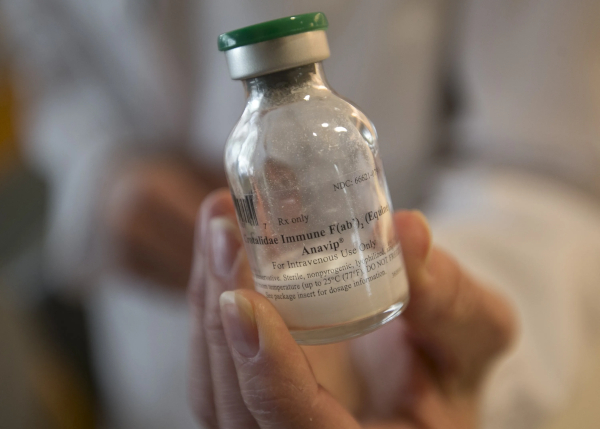
Effective antivenom already saves lives and remains the principal specific treatment for serious snake envenoming. The problem is that existing antivenoms have important limitations, particularly when the venom composition of snakes differs between species and geographical regions.
Why Snake Venom Is Difficult to Treat
Snake venom is not a single poison.
It is a complex mixture containing many different proteins, peptides and enzymes. Different toxins may attack the nervous system, damage muscle and tissue, disrupt blood clotting or interfere with other essential physiological functions.
Even snakes belonging to the same species can produce venoms whose composition varies between regions.
This geographical variation creates a major challenge for antivenom manufacturers. An antivenom produced using venom collected from snakes in one region may not neutralise every medically important toxin produced by the same species elsewhere with equal effectiveness.
The IISc-DTU researchers therefore sought antibody components capable of recognising toxin families that are shared across several related snake species rather than designing treatment for only one local venom sample.
How Conventional Antivenom Is Produced
Most conventional antivenoms are still manufactured through a process whose basic principle has existed for more than a century.
Small, controlled quantities of snake venom are injected into animals, commonly horses. The animals’ immune systems respond by producing antibodies against components of the venom.
Blood plasma is subsequently collected from the immunised animals, and the antibody-containing fractions are purified and processed into antivenom.
This method has saved countless lives and remains essential to modern snakebite treatment. However, the resulting product contains a large and variable mixture of antibodies, only some of which may directly neutralise the most dangerous venom toxins.
Because it is produced biologically in animals, there can also be differences between production batches. Animal-derived proteins may trigger adverse immune reactions in some patients, and maintaining horses, venom supplies and manufacturing facilities adds complexity to production.
The IISc researchers therefore describe recombinant antibody technology as a possible way to produce antivenoms with precisely defined components.
What Is a Nanobody?
A nanobody is a very small antibody fragment.
Conventional antibodies are comparatively large Y-shaped proteins produced by the immune system. They recognise specific molecular targets, called antigens, and bind to them.
Camelids such as camels, llamas and alpacas possess an additional type of antibody with a simplified structure. Researchers can isolate the small antigen-binding portion of these antibodies, commonly known as a single-domain antibody or nanobody.
Despite their small size, nanobodies can bind very strongly and selectively to particular molecular targets.
Once scientists identify a useful nanobody, they do not need to continuously obtain it from the original animal. The genetic instructions encoding the antibody fragment can be introduced into laboratory production systems, allowing large quantities of the same molecule to be manufactured reproducibly.
This is what makes the approach recombinant.
Instead of producing a broad mixture of antibodies through repeated immunisation of horses, researchers can manufacture a defined set of antibody molecules chosen specifically because they neutralise important toxins.
Five Nanobodies Form the Experimental Antivenom
The antivenom developed by the IISc and DTU team contains five nanobodies.
These were selected to target three important groups of cobra toxins: alpha-neurotoxins, cytotoxins and phospholipase A2 toxins.
Alpha-neurotoxins are particularly dangerous because they interfere with communication between nerves and muscles. Severe neurotoxic envenoming can progressively paralyse muscles, including those required for breathing.
Cytotoxins can damage cells and local tissues, while phospholipase A2 enzymes are involved in a variety of toxic effects depending on the venom and snake species.
Instead of attempting to neutralise every individual component in every venom, the researchers designed the antibody combination around conserved toxin families occurring across several cobras.
Earlier African Research Provided the Starting Point
Interestingly, the nanobodies were not originally identified using Indian snakes.
Researchers at DTU had previously developed and evaluated nanobodies against similar toxin families found in African elapid snakes. Because many of the medically important toxins in African and Indian cobras are evolutionarily related, the scientists investigated whether the same antibodies could cross-neutralise Indian venoms.
That idea proved successful enough to form the basis of the new five-component antivenom.
This demonstrates an important advantage of targeting conserved toxin structures. If the same molecular region occurs across related toxins in several snake species, one antibody may potentially neutralise more than one venom.
Such cross-neutralisation is essential if researchers eventually hope to create broad-spectrum recombinant antivenoms rather than developing a separate medicine for every individual snake population.
Tested Against Spectacled and Monocled Cobras
The researchers tested their antibody cocktail against venom from several medically important snakes.
These included the spectacled cobra, Naja naja, which occurs widely across India, and the monocled cobra, Naja kaouthia, found mainly in parts of eastern and northeastern India and neighbouring regions.
The team also tested venom from two Indian king cobra lineages representing different geographical regions.
In mouse experiments, the recombinant antibody mixture prevented mortality after exposure to these venoms. The researchers tested the treatment using both pre-incubation experiments, where antibodies and venom are mixed before administration, and rescue models intended to better reproduce treatment after envenoming has already occurred.
The finding that the same small antibody cocktail could protect against venom from geographically distinct snakes is one of the most significant aspects of the study.
King Cobras Add an Important Dimension
King cobra venom is particularly important because existing Indian polyvalent antivenoms are generally manufactured primarily around the so-called Big Four medically important snakes: the spectacled cobra, common krait, Russell’s viper and saw-scaled viper.
King cobras fall outside this traditional group.
India’s king cobra populations have also recently been recognised as representing greater taxonomic diversity than previously appreciated, making broad protection still more challenging.
The experimental antivenom protected mice against venom from king cobra populations representing both the Western Ghats and northeastern India, suggesting that carefully chosen recombinant antibodies may be able to bridge substantial geographic venom variation.
Why Recombinant Antivenom Could Be Different
A recombinant antivenom would differ from conventional horse-derived antivenom in one fundamental respect: scientists would know exactly which antibody molecules are present.
The composition could therefore be deliberately designed around the toxins responsible for serious disease.
If researchers discover that another toxin needs to be neutralised, an additional recombinant antibody could potentially be introduced into the formulation.
This creates the possibility of modular antivenoms, where combinations are adjusted according to the medically important snakes found in a particular region.
IISc researchers also point out that recombinant antibodies can be manufactured through controlled microbial or humanised expression systems rather than relying indefinitely on large-scale animal immunisation.
The potential advantages include greater consistency between production batches and the possibility of improving the proportion of antibodies that actually neutralise clinically important toxins.
These remain potential advantages rather than proven clinical benefits of this particular formulation because human trials have not yet been conducted.
WHO Is Already Preparing for Engineered Antibody Treatments
The broader direction of the research is significant because engineered antivenoms are no longer merely a theoretical possibility.
In February 2026, the World Health Organization published its first Target Product Profiles for novel snakebite therapeutics, specifically covering small-molecule medicines and engineered antibody biologics.
The guidance is intended to establish the safety, efficacy and practical characteristics that next-generation snakebite treatments would need before widespread deployment.
The IISc-DTU study therefore arrives at a time when international public-health organisations are beginning to prepare regulatory and development frameworks for precisely this category of treatment.
Why Human Trials Still Matter
Results in mice are an essential stage of biomedical research, but they cannot establish that a drug will be safe and effective in humans.
Human snakebite patients vary enormously in body weight, time since the bite, quantity of venom injected, species responsible for the bite and underlying medical condition.
The pharmacology of an antibody treatment in humans may also differ from its behaviour in laboratory animals.
Researchers will therefore need to establish appropriate dosage, circulation time, safety, manufacturing quality and efficacy before the nanobody cocktail could enter routine clinical use.
Nature India, reporting on the research, specifically noted that the experimental treatment will require validation through clinical trials before it can be considered for human use.
This qualification is especially important because snakebite is an acute medical emergency. Any replacement for established antivenom must demonstrate not merely laboratory neutralisation but reliable performance in patients whose condition may deteriorate rapidly.
Existing Antivenom Remains Essential
The research should therefore not discourage anyone from seeking conventional antivenom after a venomous snakebite.
Current antivenoms remain the most important specific treatment for snake envenoming, and the WHO includes high-quality antivenoms among essential medicines.
A suspected venomous snakebite requires urgent medical evaluation. Delaying treatment while attempting traditional remedies can allow neurotoxicity, bleeding, kidney injury or tissue destruction to progress.
The new IISc-DTU formulation should instead be understood as research aimed at improving what antivenom may look like in the future.
A Platform Rather Than a Finished Product
Perhaps the most important outcome of the study is not the five-component formulation itself but the principle it demonstrates.
Researchers have shown that a small number of precisely selected recombinant antibody fragments can provide protection against venoms from several related but geographically diverse Indian snakes in an animal model.
This suggests that broad-spectrum antivenom does not necessarily require enormous mixtures of antibodies raised against every possible venom.
Instead, scientists may be able to identify the toxin families that cause the greatest clinical harm, find molecular features shared across those toxins and engineer antibody combinations around those conserved targets.
Additional antibodies could then be added to extend the same platform towards other medically important snakes.
That approach could ultimately allow India to develop regionally optimised recombinant treatments covering a much wider range of snake species than existing formulations.
You may also like
-
Indian MedTech Startup Periwinkle Takes Rapid AI Cervical Cancer Screening to BRICS
-
WHO Chief Praises India’s Gains in Maternal, Child Health and NCD Care
-
Ayurvedic Foods for Liver Health and Digestion
-
Self-assembly of Organic Molecules Opens a New Path to Green Hydrogen Production
-
Ayurvedic Diet for Joint Health and Stiffness
