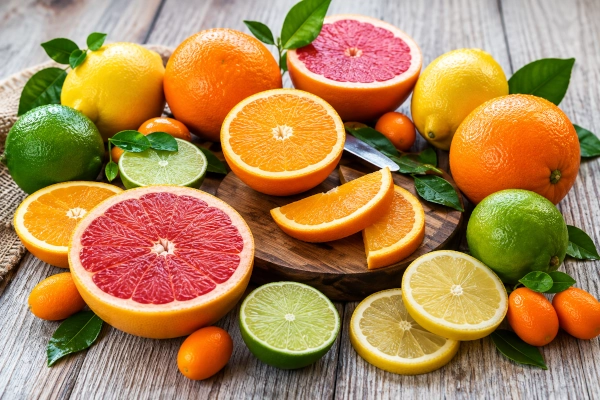
India has expanded market access for South African citrus by approving new phytosanitary treatment options that allow fresh fruit to undergo cold treatment while it is being transported to India, resolving a trade issue that had been under negotiation for nearly a decade.
The change gives South African citrus exporters substantially greater logistical flexibility and could help increase shipments of oranges, mandarins, grapefruit, lemons and other citrus fruit to the rapidly growing Indian market.
South Africa’s Cabinet formally welcomed the agreement in August 2026, describing India as one of the world’s largest and fastest-growing markets and saying the new arrangement would support increased citrus exports, agricultural growth and employment.
India Changes Citrus Import Conditions
The breakthrough followed an amendment by India’s Ministry of Agriculture and Farmers Welfare to the Plant Quarantine (Regulation of Import into India) Order, 2003.
The new conditions allow South African citrus exporters to use approved pre-shipment or in-transit cold treatment against Mediterranean fruit fly and Natal fruit fly.
Under the revised protocol, fruit can be subjected to cold treatment at one of three combinations:
- 0°C or below for 10 days
- 0.55°C or below for 11 days
- 1.1°C or below for 12 days
The consignments must subsequently remain under refrigeration while travelling to India.
India also continues to recognise alternative phytosanitary options, including approved pest-free-area status or methyl-bromide fumigation under prescribed conditions.
Why In-Transit Treatment Matters
The important change is not simply the temperature requirement but where the treatment can take place.
Previously, restrictive treatment requirements created additional logistical difficulties for South African exporters. Completing cold treatment before shipment can require fruit to remain in specialised facilities before being loaded, extending the export process and potentially affecting fruit quality and shelf life.
In-transit treatment allows the phytosanitary process to continue inside refrigerated shipping containers while the fruit is already travelling to India.
That means part of the sea voyage itself can satisfy India’s plant-health requirements, potentially reducing delays before departure and improving the quality of fruit reaching Indian consumers.
South Africa’s Department of Agriculture said the change would improve both fruit quality and logistical flexibility.
Nearly a Decade of Negotiations
The agreement follows years of technical discussions between the plant-health authorities of India and South Africa.
The Citrus Growers’ Association of Southern Africa records that engagement with India’s National Plant Protection Organisation over restoring in-transit cold treatment began as far back as 2017.
South African industry and government representatives subsequently carried out technical exchanges and trial shipments to demonstrate that the treatment could effectively manage fruit-fly risks while preserving fruit quality.
The issue gained renewed momentum during high-level bilateral engagement in 2026.
Following South African Deputy President Paul Mashatile’s visit to India in June, Pretoria specifically identified India’s notification of in-transit cold treatment for South African citrus as an important trade-facilitation achievement.
India formally changed the Plant Quarantine rules through a notification dated July 29, 2026, which subsequently entered the gazetted regulatory framework.
South Africa Sees India as a Major Growth Market
The agreement matters because South Africa is already one of the world’s largest citrus exporters.
South African government figures show that the country exported approximately 2.9 million tonnes of citrus in 2025, generating about $2.1 billion in export earnings.
India, meanwhile, has a population approaching 1.5 billion and a rapidly expanding consumer market.
The seasonal difference between the two countries also creates an opportunity. South Africa’s main citrus-export season broadly complements India’s domestic production cycle, allowing imported fruit to enter the market during periods when local availability may be lower.
Pretoria consequently believes that improved phytosanitary access could substantially expand shipments to India over time.
Plant-Health Safeguards Remain Strict
The new arrangement does not remove India’s phytosanitary requirements.
South African citrus entering India must continue to be certified as free from specified quarantine pests including Mediterranean fruit fly, Natal fruit fly, false codling moth, citrus black spot, sweet-orange scab and certain scale and mealybug species.
The revised rules therefore represent greater flexibility in how exporters comply with India’s biosecurity requirements rather than a relaxation of plant-health protection itself.
This distinction is important because imported fresh fruit can carry pests capable of damaging domestic orchards if quarantine safeguards are inadequate.
A Practical Trade Deal Rather Than a Tariff Agreement
The citrus agreement is also a useful example of how bilateral trade can be expanded without signing a conventional free-trade agreement.
The main barrier in this case was phytosanitary and logistical, not simply customs tariffs.
By resolving the treatment protocol, India and South Africa have removed a practical constraint that had limited the commercial attractiveness of the Indian market for South African growers.
Tariffs remain a separate issue, and further reductions could potentially make the Indian market still more attractive to South African exporters.
India–South Africa Agricultural Trade Gains Momentum
The citrus breakthrough comes as India and South Africa seek to expand their broader economic relationship.
The two countries are simultaneously pursuing deeper trade engagement through negotiations between India and the Southern African Customs Union, while agriculture, critical minerals, manufacturing, pharmaceuticals and infrastructure are emerging as major areas of cooperation.
For South Africa, gaining improved access to India’s enormous consumer market offers an opportunity to diversify agricultural exports.
For India, the arrangement can provide consumers with a broader supply of imported citrus while maintaining phytosanitary safeguards through controlled cold-treatment protocols.
After nearly a decade of negotiations, the significance of the agreement is therefore highly practical: South African citrus can now satisfy part of India’s quarantine treatment requirements while already at sea, reducing logistical friction and making the Indian market considerably easier to serve.
You may also like
-
India and Uruguay Agree Trade and Connectivity Roadmap as Montevideo Ratifies International Solar Alliance
-
The Return of Multipolarity: Why the World Is Moving Beyond a Single Centre of Power
-
The Financial Chokepoint: Why BRICS Can No Longer Depend on SWIFT and the Dollar Alone
-
South Africa Invites Indian Firms Into $100-Billion Infrastructure Pipeline as BRICS Ties Deepen
-
Russia Steps Up Fertiliser Supplies to India as Both Sides Explore Digital Currency Trade Settlements
