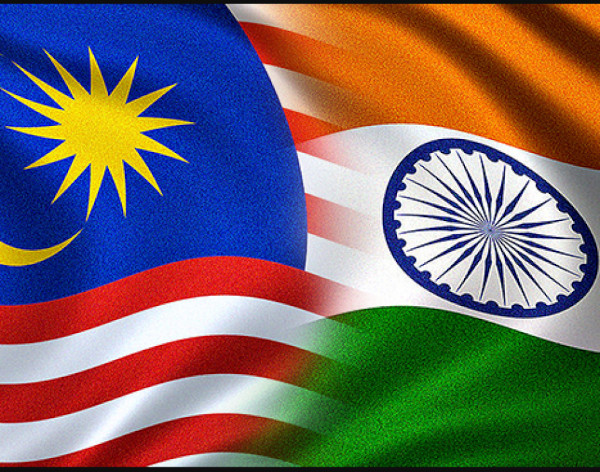
India has moved to deepen agricultural cooperation with Malaysia, Timor-Leste and Myanmar, using the ASEAN–India agricultural platform to advance partnerships in research, technology, food security, trade and capacity building.
Union Minister of Agriculture and Farmers Welfare Shivraj Singh Chouhan held separate bilateral meetings with agriculture ministers from the three countries in New Delhi on September 9, 2026, on the sidelines of the 9th ASEAN–India Ministerial Meeting on Agriculture and Forestry (AIMMAF).
The ministerial meeting, organised by the Department of Agricultural Research and Education and the Indian Council of Agricultural Research (ICAR), was held in New Delhi on September 8–9.
India and Malaysia Look to Institutionalise Agricultural Cooperation
During his meeting with Malaysian Agriculture and Food Security Minister Mohamed Bin Sabu, Chouhan discussed ways to strengthen cooperation in agricultural research, technology and innovation.
Both sides highlighted the value of exchanging knowledge, expertise and best practices and expressed interest in establishing a formal institutional framework through a Memorandum of Understanding covering agriculture and allied sectors.
The proposed cooperation could also provide a mechanism for addressing bilateral issues involving germplasm exchange, agricultural trade and market access.
A stronger research partnership could allow scientific institutions in the two countries to work more closely on crop development, agricultural technologies and other areas of common interest while simultaneously supporting expanding agricultural commerce.
India Offers Scientific Support to Timor-Leste
Agricultural cooperation featured prominently in Chouhan’s talks with Timor-Leste’s Minister of Agriculture, Livestock, Fisheries and Forestry Marcos Da Cruz.
Timor-Leste expressed interest in establishing stronger institutional links with India to help address agricultural challenges and improve national food security.
India, in turn, offered to share its experience in agricultural research and innovation, including through scientist and expert exchanges, training and human-resource development.
Timor-Leste also proposed that India consider sending a team of technical and scientific specialists to the country to assess conditions on the ground and recommend solutions in agriculture, forestry, livestock and aquaculture.
Such an initiative could expand India’s role in agricultural capacity building in Timor-Leste, particularly as the country seeks to improve domestic food production and strengthen scientific institutions.
India–Myanmar Agriculture MoU Nears Finalisation
Chouhan also met Myanmar’s Union Minister for Agriculture, Livestock and Irrigation Min Naung, with both sides discussing deeper cooperation in agriculture and related industries.
The two ministers noted the longstanding cultural and people-to-people relationship between the neighbouring countries. Myanmar shares a land border of roughly 1,600 kilometres with India, giving agricultural and economic cooperation an additional regional dimension.
Importantly, the two sides confirmed that an India–Myanmar MoU on cooperation in agriculture and allied sectors is at an advanced stage of finalisation.
Discussions also focused on opportunities to increase agricultural trade, particularly in pulses, cotton and dairy-related activities, alongside cooperation in agricultural education.
Myanmar highlighted investment opportunities available in the country and encouraged stronger economic engagement in sectors that could contribute to agricultural development and bilateral trade.
Agriculture Becomes a Wider ASEAN–India Cooperation Pillar
The three meetings underline India’s growing effort to use agricultural research and technical cooperation as an important element of its engagement with Southeast Asia.
India’s extensive network of agricultural research institutes, crop-improvement programmes, livestock research centres and agricultural universities gives New Delhi considerable scope to offer technology, training and scientific expertise to partner countries.
At the same time, stronger agricultural relationships with ASEAN partners can support India’s own interests in germplasm access, commodity trade, market expansion and resilient regional food supply chains.
The September 9 discussions therefore went beyond conventional agricultural exchanges. They pointed towards a broader model of cooperation combining science, technology, trade, capacity building and food security, strengthening India’s agricultural engagement with its extended eastern neighbourhood.
You may also like
-
INS Mysore Arrives in Malaysia for Fourth Edition of Exercise Samudra Laksamana
-
Indian Navy Chief Begins Australia–New Zealand Visit to Deepen Indo-Pacific Maritime Cooperation
-
Putin Heads to India for BRICS Summit as New Delhi and Moscow Deepen Strategic Partnership
-
Thailand Ends 60-Day Visa-Exemption Scheme, Moves to 30-Day Regime From September 15
-
India and Norway Expand Maritime Partnership With Focus on Shipbuilding and Green Shipping
