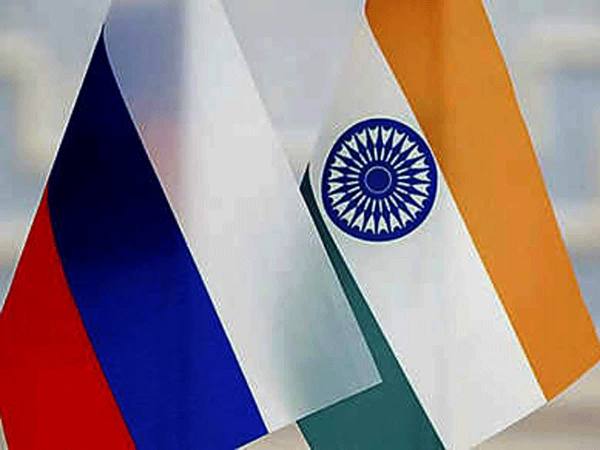
Russia has signalled that it is prepared to expand technology transfer and manufacturing cooperation with India as the two countries seek to move their economic relationship beyond energy and commodity trade towards deeper industrial partnerships.
Speaking on the sidelines of the Eastern Economic Forum in Vladivostok on September 3, 2026, Russian State Secretary and Deputy Minister of Industry and Trade Roman Chekushov said Moscow was ready to share technologies with Indian partners and support the development of long-term industrial projects. His remarks point to a broader Russian strategy of encouraging companies to manufacture in India rather than relying solely on exports.
Chekushov said several Russian companies, particularly in transportation and chemicals, already operate production facilities in India, while others are studying opportunities to establish manufacturing operations in the country. He described the existing projects as an early stage of what could become a considerably larger industrial relationship.
The approach fits closely with India’s Make in India strategy, under which New Delhi has increasingly encouraged overseas companies to establish domestic production, create local supply chains and transfer technological capabilities instead of treating India simply as an import market.
The industrial agenda is already visible in official negotiations between the two governments. At the 12th India–Russia Working Group on Modernization and Industrial Cooperation, held in New Delhi on August 7, the two sides discussed cooperation covering aerospace, railway infrastructure, critical minerals, fertilizers, power engineering, industrial equipment and advanced manufacturing.
Some of the areas under discussion are particularly significant for India’s industrial ambitions. The official Indian statement said the two sides explored cooperation involving the Vande Bharat train programme, railway signalling, unmanned aerial systems, 3D printing, Russia’s SJ-100 regional aircraft and aero engines. They also discussed carbon-fibre technologies, propulsion systems, automation, lithium, titanium technologies and exploration of rare-earth elements.
This suggests that the emerging partnership could extend well beyond conventional Russian exports to India. Technologies related to aircraft, propulsion, railways, advanced materials and industrial machinery could potentially become candidates for joint production or localisation if individual commercial agreements can be reached.
Aviation is one area attracting particular attention. Russia has been seeking international partners for its SJ-100 regional aircraft, while India is simultaneously trying to develop a larger domestic commercial-aircraft manufacturing ecosystem. The August working-group meeting specifically recorded discussions on SJ-100 production and aero-engine cooperation, though no manufacturing agreement has yet been announced.
Critical minerals represent another potential area of convergence. India requires secure supplies of lithium, rare earths, titanium and other strategic materials for electric vehicles, electronics, defence systems and advanced manufacturing. Russia possesses substantial mineral resources and metallurgical expertise, making mining, processing and technology cooperation a potentially important pillar of the relationship.
Railways could provide an earlier route to industrial localisation. India and Russia already cooperate in the transport sector, and the latest talks have expanded towards Vande Bharat infrastructure, signalling systems and associated manufacturing technologies. Rather than simply supplying railway equipment, the discussions indicate growing interest in production and technology partnerships inside India.
The next major platform for developing these relationships will be INNOPROM. India, scheduled to take place for the first time in New Delhi from September 9 to 11, 2026 at Bharat Mandapam. The exhibition is being organised by Russia’s Ministry of Industry and Trade and India’s Ministry of Commerce and Industry and will bring together companies operating in machinery, metallurgy, chemicals, information technology, pharmaceuticals, medical technology and other industrial sectors.
Organisers say the exhibition will cover approximately 10,000 square metres and include direct meetings between Indian and Russian buyers and suppliers. The event is intended specifically to generate industrial partnerships rather than functioning only as a product exhibition.
The timing is significant because India and Russia are trying to change the structure of a bilateral trade relationship that has expanded rapidly but remains heavily weighted towards Russian exports, particularly energy.
The two countries have formally set a target of taking bilateral trade to more than $100 billion by 2030, while also increasing Indian exports so that the relationship becomes more balanced. Their economic cooperation roadmap specifically calls for new transport corridors, greater investment and expansion of industrial partnerships.
Prime Minister Narendra Modi said during the India–Russia Business Forum in December 2025 that he believed the $100-billion target could potentially be achieved before 2030, reflecting the rapid growth in economic ties between the two countries.
Industrial cooperation could become essential to that next stage. Energy purchases can increase trade volumes rapidly, but factories, joint ventures and technology-transfer arrangements create longer-term relationships involving engineers, suppliers, skilled workers and local manufacturing ecosystems.
Russia already has experience with this model in India through defence programmes including BrahMos, Su-30MKI and T-90 manufacturing, where Russian technology has been combined with Indian production and integration capabilities. The current industrial discussions indicate that both governments are increasingly considering whether similar approaches can be extended into civilian sectors.
The potential areas are considerably broader than defence. Aircraft manufacturing, railway systems, mining machinery, fertilizers, speciality chemicals, advanced metallurgy, propulsion, carbon fibre and critical-mineral processing could all become areas where Russian technology is combined with Indian manufacturing scale.
There are still substantial hurdles. Technology-transfer arrangements require commercial agreements, intellectual-property protections, financing, regulatory clearances and confidence that there will be sufficient demand to justify local manufacturing. Payment systems and logistics have also remained important issues in India–Russia commerce.
Yet the direction of policy is becoming clearer.
Russia increasingly sees India not only as a market for energy and industrial products but as a potential manufacturing partner, while India is looking for access to technologies that can strengthen domestic industrial capability.
Chekushov’s willingness to openly emphasise technology sharing therefore carries more significance than a simple trade-promotion statement. It comes only weeks after the two governments formally discussed cooperation in aircraft, aero engines, UAVs, advanced materials, railways and critical minerals.
The partnership would increasingly be built around technology, factories and joint production in India — turning a long-standing strategic relationship into a deeper industrial one.
References
Ministry of Commerce & Industry / PIB — August 7, 2026
12th India–Russia Working Group on Modernization & Industrial Cooperation; discussions covered Vande Bharat, SJ-100 aircraft, aero engines, UAVs, critical minerals, carbon fibre, propulsion and advanced manufacturing.
INNOPROM — Official Announcement
First INNOPROM. India exhibition to be held at Bharat Mandapam, New Delhi, from September 9–11, 2026, focused on industrial and technology cooperation.
Government of India — India–Russia Economic Cooperation Roadmap
Confirms the bilateral goal of more than $100 billion in trade by 2030, alongside investment, industrial cooperation and improved connectivity.
You may also like
-
Inside PRAGYA: India’s First Private Tokamak Begins Producing Plasma
-
India’s Serendipity Space Tests ‘Alchemy’ as It Builds Satellites to Manufacture Medicines in Orbit
-
India-France Textile Partnership Opens Premium Global Market for Indian Manufacturers and Artisans
-
Sanjaya’s Embassy to the Pandavas: The Messenger Who Had to Speak for a Policy He Did Not Fully Support
-
Offgrid Energy Labs: India-Developed ZincGel Batteries Target the Long-Duration Energy Storage Market
