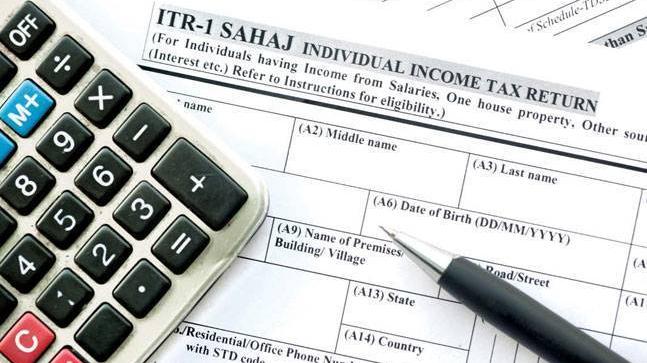
India has recorded more than 7.8 crore Income-Tax Return filings for Assessment Year 2026-27 by August 31, 2026, marking another major milestone in the expansion of the country’s digital tax-compliance ecosystem.
The Income Tax Department announced the record after the August 31 filing deadline, thanking taxpayers and tax professionals for completing their returns. The assessment year covers income earned during Financial Year 2025-26, from April 1, 2025 to March 31, 2026.
The scale of filing demonstrates the continuing expansion of India’s formal tax system, supported by online filing, increasingly pre-filled tax information, digital verification and greater integration of financial data available to taxpayers and the Income Tax Department.
More Than 7.8 Crore Returns Filed
More than 7.8 crore returns had been submitted by August 31 for AY 2026-27, according to the Income Tax Department.
The figure is significant when viewed against India’s recent filing trajectory. For Assessment Year 2024-25, more than 7.28 crore returns had been filed, while during the AY 2025-26 filing cycle the government reported that more than 7.57 crore returns had been submitted by September 23, 2025.
The latest total therefore shows that the number of return filers remains at historically high levels and continues to expand as more individuals and businesses enter the formal tax system.
Direct year-to-year comparisons nevertheless need some care because filing deadlines have changed between assessment years and different categories of taxpayers have different statutory due dates.
August 31 Was an Important New Filing Deadline
AY 2026-27 introduced a revised filing calendar.
Under the new framework, taxpayers with business or professional income whose accounts are not required to undergo tax audit were given until August 31 to submit their returns.
Most other non-audit taxpayers had an earlier July 31 deadline, while companies and taxpayers whose accounts are required to be audited generally have until October 31.
Taxpayers covered by transfer-pricing requirements under Section 92E have a later deadline of November 30.
The August 31 deadline therefore did not represent the end of all income-tax filing for AY 2026-27. Additional returns from audit cases, companies and other eligible categories will continue to be filed during the remaining statutory windows.
The final number of returns for the assessment year could consequently rise further beyond the 7.8-crore mark.
Digital Filing Has Transformed Income-Tax Compliance
One of the most important structural changes behind India’s growing number of tax returns has been the rapid digitisation of the filing process.
Income-tax returns can now be prepared, submitted and verified electronically through the Income Tax Department’s e-filing portal. For AY 2026-27, ITR forms ranging from ITR-1 to ITR-7 were made available through online or offline utilities depending on the category of taxpayer.
The digital system increasingly incorporates information already available with the tax authorities, reducing the amount of data taxpayers need to enter manually.
Salary information, tax deducted at source, interest income and several categories of financial transactions can be reflected through systems such as the Annual Information Statement and Taxpayer Information Summary.
This infrastructure allows taxpayers to compare information reported by banks, employers and other institutions with the income declared in their returns before completing the filing process.
Pre-Filled Information Reduces Compliance Burden
The use of pre-filled tax information has become an important feature of India’s income-tax administration.
For a salaried taxpayer with relatively straightforward income, much of the basic information required for filing can already be available electronically. This can reduce errors while making tax compliance easier for individuals who do not require complex accounting assistance.
At the same time, expanded digital reporting gives the Income Tax Department considerably greater ability to identify differences between income declared in returns and transactions reported by financial institutions or other entities.
This has gradually shifted India’s tax administration towards a system based increasingly on data reconciliation rather than depending primarily on conventional physical scrutiny.
The long-term objective is to make voluntary compliance easier while making deliberate non-disclosure progressively more difficult.
Filing and Paying Tax Are Not the Same Thing
The growth in the number of income-tax returns should not be interpreted as meaning that every filer necessarily pays income tax.
A taxpayer may be required or choose to file a return even when no additional income tax is payable.
Returns may be necessary for claiming a refund of excess tax deducted, carrying forward certain losses, reporting income or assets, meeting statutory filing requirements or maintaining formal financial documentation.
Changes in tax slabs, rebates and deductions can therefore affect the amount of tax collected without necessarily reducing the number of returns filed.
This distinction is important when assessing the growth of India’s tax base. The number of return filers measures participation in the income-tax reporting system, while actual tax revenue depends on taxable income and the amount of tax ultimately payable.
Income-Tax Returns Are Becoming Important Financial Records
An income-tax return also increasingly functions as an important financial document beyond its immediate taxation purpose.
Individuals may use their ITR records while applying for bank loans, home loans and other forms of institutional credit. They can also be useful when demonstrating income for visa applications, business transactions or other financial requirements.
For self-employed individuals and small business owners who may not receive a conventional salary certificate, regularly filed tax returns can provide a formal record of declared income over several years.
The spread of return filing therefore supports not only tax administration but also broader financial formalisation.
E-Verification Remains Essential
Submitting an income-tax return does not by itself complete the filing process. Taxpayers are also required to verify their return.
The Income Tax Department generally provides 30 days from the date of filing for electronic verification or submission of the signed ITR-V acknowledgement through the prescribed process.
Electronic verification can be completed through options such as Aadhaar-based authentication and other approved methods available on the e-filing portal.
Failure to verify a return within the required period can have significant consequences because an unverified return may not be treated as a validly completed filing.
Taxpayers who submitted their returns close to the August 31 deadline therefore still need to ensure that the verification process has been successfully completed.
Belated Returns Remain Possible
Missing the applicable statutory filing deadline does not necessarily mean that a taxpayer loses the ability to file a return altogether.
Eligible taxpayers can generally submit a belated return for AY 2026-27 until December 31, 2026, unless the assessment is completed earlier.
Late filing can, however, lead to financial consequences.
The applicable late-filing fee can reach ₹5,000, while taxpayers with total income not exceeding ₹5 lakh face a lower fee of up to ₹1,000. Interest liabilities and restrictions on carrying forward certain losses can also arise depending on the circumstances.
Filing within the normal statutory deadline therefore remains advantageous even when a belated-return option is available.
A Changing Income-Tax Framework
AY 2026-27 is also an unusual transitional assessment year because India has moved to the Income Tax Act, 2025, which came into effect from April 1, 2026.
However, income earned during FY 2025-26 relates to the period before the new legislation became operational.
The Income Tax Department has accordingly clarified that returns for Assessment Year 2026-27 continue to be governed by the Income-tax Act, 1961, even though the new Income Tax Act became effective from April 1, 2026.
The distinction is important for taxpayers because the transition between the old and new legal frameworks follows the tax year to which the income relates rather than simply the date on which the return is filed.
India’s Tax Administration Becomes Increasingly Data-Driven
The expansion in ITR filing is occurring alongside a larger transformation of India’s direct-tax administration.
Permanent Account Numbers, Aadhaar authentication, digital banking, TDS reporting, the Annual Information Statement and online tax-payment systems have created an increasingly interconnected information architecture.
The government has simultaneously moved towards faceless assessments and appeals in several areas, reducing the need for conventional physical interaction between taxpayers and tax officers.
Data analytics can now be used to identify discrepancies and unusual transactions while routine compliance is progressively automated.
This transition is intended to allow tax officials to concentrate enforcement resources on higher-risk cases while making straightforward compliance easier for ordinary taxpayers.
Formalisation of the Economy Supports Return Growth
The rising number of returns also reflects the broader formalisation of economic activity.
Growth in digital payments, formal employment, organised financial savings, securities investment and registered business activity has brought a greater share of economic transactions into systems where financial information is recorded electronically.
The spread of GST has contributed to this process by increasing formal reporting among businesses, while digital banking and electronic payment systems generate increasingly detailed transaction records.
This does not mean that every digital transaction creates an income-tax liability. It does, however, make economic activity more transparent and gives both taxpayers and the government access to better financial records.
As the formal economy expands, the number of individuals and businesses participating in the income-tax system can be expected to grow alongside it.
More Returns Could Still Be Added
The 7.8-crore figure announced after August 31 is therefore an important milestone rather than the final total for AY 2026-27.
Companies, audit cases, transfer-pricing taxpayers and other categories with later statutory deadlines can continue submitting returns during the coming months.
Belated returns will also add to the eventual number.
The significance of the August milestone lies in how quickly the filing base has reached this scale. India now routinely processes income-tax returns from tens of millions of taxpayers through a predominantly digital platform, something that would have required an enormous administrative operation under the earlier paper-based system.
The growing number of filings also gives the government a broader tax-information base from which future improvements in compliance and revenue mobilisation can emerge.
From Tax Filing to a Wider Digital Compliance Ecosystem
India’s record 7.8-crore ITR filings should therefore be viewed as part of a wider transformation rather than simply as a single annual statistic.
The country’s tax system is progressively moving towards a model in which income information, tax deductions, financial transactions, payments, return filing, verification, processing and refunds are connected through digital infrastructure.
For taxpayers, the objective is increasingly to make compliant filing faster and more predictable. For the government, the same infrastructure provides greater transparency and improved capacity to detect discrepancies without relying exclusively on intrusive physical enforcement.
The challenge ahead will be to ensure that the system remains reliable and simple as the number of taxpayers and the volume of financial data continue to grow.
With more than 7.8 crore returns already filed by August 31, AY 2026-27 has nevertheless established another milestone in the continuing expansion of India’s formal and digitally administered income-tax ecosystem.
You may also like
-
India Revises Fuel Export Levies as Petrol and Diesel Duties Rise, ATF Rate Eases
-
₹23,731-Crore GOBARdhan Scheme Takes Effect to Drive India’s Compressed Biogas Economy
-
India-SACU Trade Pact Could Reshape New Delhi’s Emerging-Market Strategy
-
India Considering Further Liberalisation of Defence FDI Rules to Attract Global Manufacturers
-
Antelopus Selan Energy Wins Two Onshore Oil and Gas Blocks in KG and Cambay Basins
