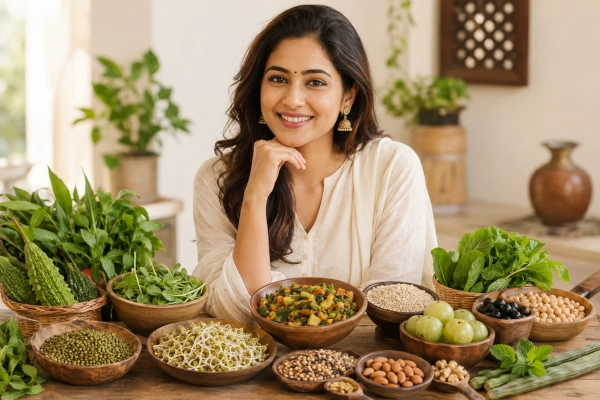
Diabetes management depends greatly on what a person eats every day. Ayurveda recognised disorders involving excessive urination, altered metabolism, obesity and abnormal sweetness of bodily fluids under the broad description of Prameha, with Madhumeha traditionally regarded as one of its important forms. Ayurvedic management therefore places considerable emphasis on diet, physical activity, digestion and maintaining an appropriate body weight rather than looking for a single medicinal food.
Many foods traditionally recommended in Ayurveda for Prameha also fit surprisingly well with modern nutritional principles for diabetes. These include barley, selected millets, pulses, green leafy vegetables, bitter vegetables and minimally processed foods. Modern diabetes guidance similarly emphasises non-starchy vegetables, fibre-rich carbohydrates, legumes, lean protein and whole foods while reducing refined grains and added sugar.
Ayurvedic food, however, should be understood as part of diabetes management rather than as a replacement for prescribed medicines, insulin, glucose monitoring or medical care. Individual requirements also differ depending on medication, kidney health, weight, age and the severity of diabetes.
Yava or Barley — One of Ayurveda’s Important Grains for Prameha
Yava, or barley, occupies a particularly important place in classical Ayurvedic dietary recommendations for metabolic disorders. India’s Ministry of AYUSH includes barley among cereals traditionally considered beneficial in dietary management of diabetes.
From a modern nutritional perspective, barley is valuable because whole barley contains substantial amounts of dietary fibre, including soluble fibre. Instead of heavily polished or refined grains, barley can therefore be incorporated into meals as barley porridge, barley khichdi, vegetable barley soup or partially substituted for rice in mixed-grain preparations.
Barley should still be treated as a carbohydrate food. Large portions can raise blood glucose, so the objective is not unlimited consumption but replacing part of a more refined carbohydrate meal with an appropriate portion of whole or minimally processed barley.
Millets — Traditional Grains with a Place in the Diabetic Diet
Ayurvedic dietary descriptions for Prameha include several traditional grains that correspond to foods such as kodo millet, foxtail millet, finger millet and sorghum. The Ministry of AYUSH’s metabolic-disorder dietary guidance likewise identifies a range of these traditional grains.
Millets can be useful when they replace highly refined grains and are combined with vegetables, pulses and protein. Kodo millet, foxtail millet, little millet, barnyard millet and other traditional grains can be prepared as vegetable millet khichdi, upma, dosa or mixed-grain roti.
Millet should not automatically be considered a “free food” for diabetes. It still supplies carbohydrate, and the glucose response varies according to the particular millet, processing method, cooking technique and portion size. Whole or minimally processed forms are preferable to highly refined millet flour products.
Mudga or Green Gram
Mudga, commonly known as green gram or moong, is another food traditionally valued in Ayurveda. Moong provides plant protein together with fibre and can be incorporated into meals without relying heavily on refined carbohydrates.
Whole green gram, sprouted moong, moong dal, vegetable moong soup and moong-based khichdi can all be useful. Pairing pulses with vegetables also makes meals more filling, which can help with portion control.
Modern diabetes nutrition guidance similarly encourages beans, peas and lentils as high-quality carbohydrate and plant-protein foods.
Masura, Chanaka and Other Pulses
Ayurvedic dietary recommendations for Prameha also include masura or lentils, chanaka or chickpeas, adhaki or pigeon pea, kulattha or horse gram and other pulses.
These foods are particularly suitable for building an Indian diabetic diet because they provide fibre and protein while allowing portions of white rice, refined flour or other rapidly digested carbohydrates to be reduced.
Dal does contain carbohydrate, so portion size remains important. Nevertheless, a meal containing vegetables, dal and a moderate portion of whole grain is generally nutritionally preferable to one dominated by polished rice, maida or other refined starches.
Karavellaka or Bitter Gourd
Karavellaka, or bitter gourd or karela, is probably one of the best-known traditional foods associated with diabetes in India. Ayurveda has long included bitter vegetables in the dietary management of Prameha, and bitter gourd appears in Ministry of AYUSH dietary guidance for metabolic disorders.
Karela is a non-starchy vegetable and can therefore form part of a diabetes-friendly diet. It can be prepared as lightly cooked karela sabzi, incorporated into mixed vegetable dishes or combined with other vegetables.
It should not, however, be treated as a substitute for diabetes medication. Concentrated bitter-gourd juices, extracts or supplements may affect blood glucose differently from ordinary food and can be particularly problematic when combined with glucose-lowering medicines. Using karela primarily as a vegetable is the more sensible dietary approach unless a clinician advises otherwise.
Methika or Fenugreek
Methika, or fenugreek, is another important Ayurvedic food. Fenugreek leaves are a nutrient-dense green vegetable and can easily be incorporated into dal, vegetable preparations and whole-grain rotis.
Fenugreek seeds are also widely used in traditional diets. They contain soluble fibre and several biologically active compounds, but they should not be viewed as a stand-alone treatment for diabetes. Ordinary culinary quantities can be included in food, while concentrated seed preparations or supplements deserve greater caution, particularly in people taking glucose-lowering medication.
Fresh methi leaves are especially useful because increasing green and non-starchy vegetables is strongly supported by modern diabetes nutrition guidance.
Shigru or Drumstick
Shigru, better known as drumstick or moringa, is traditionally used both as food and in Ayurvedic preparations. Ministry of AYUSH dietary guidance for metabolic disorders includes drumstick fruits and leaves among vegetables suitable in the traditional Prameha diet.
Drumstick pods can be included in sambar, dal and vegetable curries, while moringa leaves can be cooked with pulses or other vegetables. The leaves provide micronutrients and fibre while adding relatively little carbohydrate to a meal.
The practical value of moringa in diabetes management comes primarily from its role as a nutritious vegetable rather than from relying on powders or extracts marketed as diabetes cures.
Amaranth, Bathua and Other Leafy Vegetables
Traditional Ayurvedic recommendations include vegetables such as tanduleyaka, associated with amaranth greens, and vastuka or bathua.
Green leafy vegetables are particularly valuable for people with diabetes because they provide fibre, vitamins and minerals with relatively little carbohydrate. Spinach, amaranth, bathua, mustard greens, fenugreek leaves and similar vegetables can therefore appear frequently in meals.
Modern diabetes guidance recommends making non-starchy vegetables approximately half of the meal plate, an approach that fits naturally with vegetable-rich Indian cooking.
Bimbi or Ivy Gourd
Bimbi, commonly identified with ivy gourd or kundru/tindora, is another vegetable found in traditional dietary recommendations for Prameha.
Ivy gourd is relatively low in carbohydrate compared with cereal foods and can be prepared as a lightly cooked vegetable with spices. Instead of deep-frying it, steaming, sautéing or cooking it with minimal oil makes it better suited to everyday diabetes management.
Brinjal and Other Non-Starchy Vegetables
Ayurvedic Prameha dietary recommendations also include vrintaka or brinjal and a variety of bitter and leafy vegetables.
Brinjal, gourds, cauliflower, cabbage, okra, cucumber, tomato, beans and leafy greens can collectively form the foundation of a diabetes-friendly Indian diet. Modern nutritional guidance similarly places non-starchy vegetables at the centre of meal planning because of their relatively low carbohydrate content and high nutrient density.
Cooking methods remain important. A vegetable that is naturally suitable can become considerably less healthy when deep-fried or cooked with excessive oil, sugar or calorie-dense sauces.
Amla
Amla or Indian gooseberry has an important place in Ayurveda and is rich in vitamin C and several plant compounds. Fresh amla can be incorporated into a balanced diet in moderate quantities.
For people with diabetes, the form in which amla is consumed matters considerably. Fresh amla, unsweetened chutney or preparations without added sugar are very different from amla candy, sweetened murabba and sugary commercial beverages. A product containing amla does not automatically become diabetes-friendly if large amounts of sugar have been added.
Jamun
Jamun or Indian blackberry has a long traditional association with Madhumeha. The whole seasonal fruit can form part of a balanced diet, as fruits do not need to be completely eliminated in diabetes.
Modern guidance confirms that people with diabetes can eat fruit, although fruit contributes carbohydrate and therefore portion size matters. Whole fruit is preferable to juice because it retains its natural fibre.
Traditional use of jamun seed powder is sometimes promoted specifically for lowering blood glucose, but such preparations should not replace prescribed treatment. Whole jamun fruit consumed as part of the diet is a very different proposition from taking concentrated powders or extracts therapeutically.
Turmeric and Culinary Spices
Indian cooking naturally incorporates spices such as turmeric, cumin, coriander, ginger, black pepper, cinnamon and fenugreek. These spices can make vegetable- and pulse-rich meals more enjoyable without requiring large quantities of sugar or unhealthy sauces.
Some of these spices are being studied for possible metabolic effects, but evidence is not strong enough to treat ordinary kitchen spices as diabetes medicines. Their most reliable role is culinary: they make healthy, minimally processed foods flavourful and sustainable as part of the daily diet.
Nuts and Seeds
Small quantities of almonds, walnuts, peanuts and seeds can contribute healthy fats, fibre and protein. Modern diabetes dietary guidance encourages healthy unsaturated fats from foods such as nuts and seeds.
Because nuts are calorie-dense, modest portions are preferable, especially when weight reduction is an important part of diabetes management. Unsalted and unsweetened nuts are better choices than sugar-coated, heavily salted or deep-fried versions.
What About Rice?
Ayurvedic traditions did not necessarily prohibit rice. Some classical dietary recommendations refer to older varieties or properly stored rice rather than freshly harvested grain. Modern diabetes management likewise does not require every person to eliminate rice completely.
The important questions are quantity, variety and what accompanies it. A smaller portion of rice eaten with generous vegetables, dal and protein will usually create a more balanced meal than a large plate dominated by polished white rice.
Brown rice and other less refined grains provide more fibre, but portion control remains necessary because even whole grains contain carbohydrates. Modern diabetes guidelines recommend replacing refined grains with whole grains whenever appropriate.
Foods That Should Be Reduced
A diabetes-friendly Ayurvedic diet should minimise table sugar, sweets, sweetened beverages, refined flour products, biscuits, cakes, sugary breakfast foods and heavily processed snacks. Jaggery, brown sugar and honey are sometimes mistakenly presented as healthier substitutes for sugar, but they still contain sugars that can raise blood glucose.
Fruit juice also deserves caution. Eating a whole fruit generally provides more fibre and greater satiety than drinking its juice. Sweetened tea, soft drinks, packaged fruit beverages and other sugar-containing drinks are particularly easy ways to consume large amounts of carbohydrate without feeling full.
Modern diabetes recommendations likewise emphasise reducing added sugars, refined grains and highly processed foods.
Deep-fried foods should also remain occasional rather than everyday foods. Poori, bhatura, chips, pakoras and similar foods can add substantial calories and fat even when their ingredients are otherwise traditional.
An Ayurvedic-Style Indian Diabetes Plate
A practical way to combine traditional Indian foods with modern diabetes management is to make approximately half of the plate non-starchy vegetables. These might include karela, brinjal, bhindi, cauliflower, cabbage, gourds, beans, drumstick, methi, spinach, bathua or amaranth.
Approximately one-quarter of the plate can contain protein-rich foods such as moong, masoor, chickpeas, other pulses, paneer, curd, eggs or other appropriate protein according to individual dietary preference. The remaining quarter can contain a controlled amount of barley, millet, whole wheat, brown rice or another minimally processed carbohydrate.
This broadly mirrors the diabetes plate approach recommended by both the American Diabetes Association and the US National Institute of Diabetes and Digestive and Kidney Diseases.
A Simple Day of Ayurvedic-Inspired Eating
Breakfast could consist of a vegetable moong chilla, a small bowl of barley and vegetable porridge, or a millet preparation containing generous vegetables rather than a breakfast dominated by refined flour.
Lunch could combine a large serving of seasonal vegetables and greens with moong, masoor or another dal and a modest amount of barley, millet, whole-wheat roti or rice. Unsweetened curd may be included when suitable for the individual.
A small portion of whole fruit, a few unsalted nuts or roasted chickpeas can serve as snacks instead of biscuits or sweets. Dinner can follow a similar vegetable-rich pattern while keeping portions appropriate for the person’s energy needs and medication schedule.
Water should remain the principal beverage, while unsweetened beverages are preferable to fruit juices and sugary drinks.
Ayurveda Emphasises More Than Individual Foods
Ayurveda’s approach to Madhumeha extends beyond selecting particular ingredients. Traditional management places importance on the quantity of food, digestion, physical activity, avoiding habitual overeating and preventing excessive accumulation of body fat.
This broader principle remains highly relevant. No amount of karela, methi or barley can compensate for an overall diet containing excessive calories, refined carbohydrates and sugary drinks.
Modern diabetes care similarly emphasises sustainable eating habits, physical activity, healthy body weight and regular monitoring rather than dependence on a supposed “superfood.”
Traditional Wisdom and Modern Diabetes Care Can Work Together
Perhaps the strongest aspect of an Ayurvedic-inspired diabetes diet is not any single herb or vegetable but its emphasis on whole grains, pulses, bitter and leafy vegetables, simple meals and moderation. Barley, millets, green gram, lentils, chickpeas, bitter gourd, fenugreek leaves, drumstick, amaranth and other vegetables can all fit naturally into a balanced diabetes diet.
Modern nutritional science strengthens many of these basic dietary principles by emphasising vegetables, fibre-rich carbohydrates, legumes, minimally processed foods and reduced added sugar.
The safest approach is therefore to use Ayurveda as a dietary framework rather than searching for foods that supposedly “cure” diabetes. Someone taking insulin or glucose-lowering medicines should also monitor blood glucose carefully when making significant dietary changes, since changes in carbohydrate intake can alter medication requirements.
Diabetes is a chronic metabolic condition that requires ongoing management. Ayurvedic foods can contribute to that management when they are incorporated intelligently into a balanced diet, but prescribed medicines or insulin should never be stopped or reduced solely because a traditional food, herb, juice or supplement has been introduced.
Reference
- Ministry of Ayush, Government of India. Standard Treatment Guidelines in Ayurveda for Metabolic Disorders. The guideline includes dietary recommendations for diabetes/Prameha, listing foods such as yava (barley), kodrava, kangu, millets, green gram, lentils, chickpeas, horse gram, fenugreek leaves, bitter gourd, ivy gourd, drumstick, brinjal, amaranth and bathua.
Ministry of Ayush guideline - American Diabetes Association. Eating Well & Managing Diabetes. Recommends building meals around non-starchy vegetables, lean or plant proteins, quality carbohydrates including whole grains and legumes, healthy fats, reduced added sugar and minimally processed foods.
American Diabetes Association — Healthy Eating - American Diabetes Association. Diabetes Meal Planning. Describes the Diabetes Plate method, with approximately half of the plate consisting of non-starchy vegetables and the remaining half divided between protein and quality carbohydrate foods.
ADA Diabetes Meal Planning - National Institute of Diabetes and Digestive and Kidney Diseases, U.S. National Institutes of Health. Healthy Living with Diabetes. Provides guidance on portion control and the plate method, emphasising non-starchy vegetables, fibre-rich carbohydrate foods and appropriate protein sources.
NIDDK — Healthy Living with Diabetes - American Diabetes Association. Know Your Facts About Diabetes. Notes that people with diabetes do not require special “diabetic foods” and generally benefit from non-starchy vegetables, whole foods, fewer refined grains and reduced added sugar.
ADA — Diabetes Facts and Myths - American Diabetes Association. Diabetes Nutrition & Wellness. Recommends dietary patterns centred on vegetables, lean proteins, legumes, lentils, whole grains and fibre while limiting refined grains, added sugars and heavily processed foods.
ADA Nutrition & Wellness
Health Disclaimer
This article is intended for general educational and informational purposes and discusses foods traditionally used in Ayurveda alongside established principles of healthy eating for diabetes. It is not a substitute for medical diagnosis, personalised nutritional advice or treatment from a qualified healthcare professional.
Diabetes is a chronic metabolic condition that may require medicines, insulin, regular blood-glucose monitoring and ongoing medical supervision. People with diabetes should not stop, reduce or alter prescribed medicines or insulin on the basis of Ayurvedic foods, herbs, juices, powders or supplements without consulting their doctor.
Some Ayurvedic herbs and concentrated preparations may lower blood glucose and could potentially increase the risk of hypoglycaemia when taken together with diabetes medicines. Dietary requirements may also differ substantially in people with kidney disease, liver disease, pregnancy, cardiovascular disease or other medical conditions. Anyone considering therapeutic quantities of herbs or supplements should therefore seek individual advice from a qualified physician and an appropriately trained Ayurveda practitioner.
Whole foods such as barley, pulses, vegetables, millets, bitter gourd, fenugreek and fruits may form part of a balanced diabetes diet, but portion size, total carbohydrate intake, overall calorie intake and individual blood-glucose response remain important. No individual food should be considered a cure for diabetes.
You may also like
-
Cipla Secures Rights to Investigational HER2 Cancer Therapy TQB2102 Across India and Emerging Markets
-
Gir Kesar Mango — Gujarat’s Saffron-Hued Treasure From the Foothills of Gir
-
Saffron in Ayurveda: Kumkuma for the Mind, Complexion, Vitality and Healthy Ageing
-
Ayurveda’s Protein-Rich Plants: Ancient Indian Foods That Can Rival Meat in Protein
-
Stryker and IAGE Launch India-Wide Initiative to Expand Fluorescence-Guided Gynaecological Surgery
