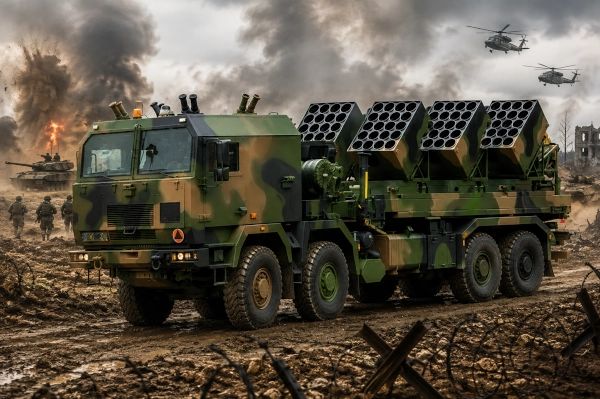
India is moving to strengthen its battlefield engineering capabilities with a new initiative from BEML Limited. The defence public sector company is seeking a technology partner for a Vehicle-Based Mine Scattering System, or VBMSS. The proposed system could give the Indian Army a faster and more mobile way to create minefields during land operations.
The initiative is important because modern armies need combat engineers who can keep pace with tanks and mechanised formations. Traditional mine-laying often requires considerable manpower and time. A vehicle-mounted system can scatter mines much faster while remaining mobile.
Such a capability could help Indian Army engineers create obstacles at short notice. Commanders could then use those obstacles to slow, redirect or restrict an opposing force.
BEML Is Building a Specialised Battlefield Engineering Capability
BEML has issued the latest EOI as a technology partnership rather than a simple purchase of equipment. This indicates that the company wants to develop or absorb the specialised technology required for the system.
BEML already has extensive experience in military mobility and heavy engineering. It produces high-mobility vehicles and specialised platforms for several Indian defence programmes. The company now wants to expand further into complete strategic systems.
A mine-scattering vehicle fits naturally into that strategy. The programme combines a military vehicle with specialised dispensing equipment and control systems. BEML could therefore use its existing vehicle expertise while developing the mission equipment needed for mine-laying operations.
BEML Has Pursued the VBMSS Requirement Before
The latest initiative follows an earlier BEML effort connected directly with the Indian Army.
BEML wanted a partner that could support design, engineering, manufacturing and assembly. The collaboration also covered testing, supply and field commissioning. BEML further sought the ability to provide repair, servicing and future upgrades within India.
The earlier proposal showed that BEML wanted more than imported equipment. It sought access to technology that could support long-term domestic production and maintenance.
The new 2026 EOI carries a different reference number. Therefore, every detail from the earlier requirement should not automatically apply to the current programme. However, the two initiatives show that BEML has maintained its interest in this capability.
The latest EOI appears to continue a wider effort to establish a modern mine-scattering system within India’s defence industrial base.
Indian Army Has Identified a Need for Rapid Mine-Laying
The Indian Army has already shown interest in automated mine-laying systems.
An Army requirement reported in late 2024 focused on a Vehicle-Based Mine Scattering System for combat engineers. Reports at the time indicated a requirement for around 70 systems.
The Army wanted equipment that could create minefields quickly during military operations. This capability could prove particularly useful after commanders identify the likely direction of an opposing force.
Traditional defensive planning often requires engineers to prepare obstacles before a battle begins. That approach can work well when commanders know where the enemy will advance. However, modern land warfare can change direction rapidly.
A mobile mine-scattering system offers greater flexibility. Engineers could retain the system with mobile formations and deploy it when the battlefield situation becomes clearer.
Minefields Help Control the Battlefield
Military minefields serve a wider purpose than damaging vehicles or personnel. Armies use them as part of counter-mobility operations.
Counter-mobility aims to reduce an enemy’s freedom of movement. Engineers create obstacles that force hostile formations to slow down, stop or change direction.
A minefield can block an important route or protect the flank of a defensive position. It can also guide enemy vehicles towards areas covered by artillery, anti-tank weapons or other defensive systems.
The obstacle does not need to destroy every vehicle to achieve its purpose. Even a temporary delay can provide valuable time.
Defending forces can use that time to move reserves, reposition artillery or strengthen threatened sectors. Commanders may also use the delay to prepare another defensive position.
Minefields therefore become part of a much larger battlefield plan.
Vehicle-Based Systems Make Mine-Laying Faster
Traditional mine-laying can require engineering teams to transport and place mines across large areas. This takes time and can expose soldiers to enemy observation and fire.
A vehicle-mounted system changes that process.
The carrying vehicle transports the mines and uses a mechanical system to scatter them while moving. Engineers can therefore establish an obstacle far more quickly than with manual methods.
Speed becomes especially important during mobile operations. A combat formation may need to secure a sector within hours rather than days.
A vehicle-based system can also leave the area quickly after completing its task. This reduces the time that soldiers and equipment remain exposed.
The ability to move, deploy and relocate gives the VBMSS an important advantage over static mine-laying methods.
Responsive Minefields Give Commanders More Flexibility
One of the most useful roles for a VBMSS involves the creation of responsive minefields.
A commander may not know the enemy’s main direction of advance when a conflict begins. Intelligence and surveillance systems may reveal that information only after forces start moving.
If engineers lay all available mines too early, they may create obstacles in areas that later become less important.
A mobile mine-scattering system allows commanders to delay that decision.
Reconnaissance teams, drones and other sensors can first identify enemy movement. Combat engineers can then move rapidly to the threatened sector and create an obstacle.
This makes mine warfare more responsive to battlefield intelligence.
The concept also allows engineers to shift their effort as the battle changes. A unit can create an obstacle in one sector and then move elsewhere for another mission.
Modern Surveillance Makes Faster Engineering Essential
Combat engineering has become increasingly dangerous because modern battlefields have far greater surveillance coverage.
Small drones can detect vehicles and engineering activity from several kilometres away. Larger unmanned aircraft can watch wider areas. Satellites, electronic sensors and ground reconnaissance systems add further layers of observation.
An engineering unit that remains stationary for too long can attract artillery, drones or precision weapons.
This makes speed increasingly important.
A vehicle-based mine-scattering system can reduce the time needed to create an obstacle. The engineering unit can complete the task and move before enemy forces respond.
The same trend affects other military engineering systems. Armies now seek faster bridging equipment, automated mine-clearance systems and mobile recovery platforms.
Modern combat engineers need both protection and mobility.
The Vehicle Platform Will Play an Important Role
A VBMSS requires more than an effective mine dispenser. The carrier vehicle must also perform well in demanding battlefield conditions.
It may need to travel over rough ground and damaged roads. The vehicle could operate in deserts, plains or other difficult terrain. It must also carry a heavy payload while maintaining adequate mobility.
BEML has considerable experience in this field.
The company has supplied thousands of high-mobility vehicles to India’s Armed Forces. Its vehicles support missile, radar, transport and engineering missions.
BEML platforms also support important Indian weapon programmes. The company’s defence portfolio includes vehicles associated with systems such as BrahMos, Akash and Pinaka, along with several radar and engineering applications.
This background gives BEML a strong base for the VBMSS programme.
The company can focus on integrating the specialised mine-scattering equipment with a military vehicle suited to Indian operating conditions.
BEML Is Expanding Beyond Military Trucks
The VBMSS effort also reflects a larger change within BEML.
The company has traditionally played an important role in heavy engineering and military mobility. It supplies trucks, recovery vehicles and specialised platforms to India’s defence forces.
However, BEML now wants to move further into complete defence systems.
Its portfolio includes armoured platforms, engineering systems, high-mobility vehicles and emerging unmanned technologies. The company has also created a Strategic Systems activity within its defence business.
This approach allows BEML to become a system integrator rather than only a vehicle manufacturer.
A VBMSS illustrates that transition clearly. The final product must combine mobility, mechanical equipment, controls and mission systems into a single operational platform.
BEML’s role could therefore extend from supplying the vehicle to delivering a complete battlefield engineering system.
Technology Partnership Can Speed Up Development
A specialised mine-scattering system requires experience in several engineering areas. These include mechanical dispensing, control systems, vehicle integration and safety mechanisms.
Developing every part of such a system from the beginning can take significant time.
A technology partnership can shorten that process. BEML can work with a company that already has experience in the field while building more of the capability within India.
However, the depth of technology transfer will matter.
Simple assembly of imported components offers limited strategic value. A deeper partnership can give Indian engineers greater knowledge of design and manufacturing.
That knowledge can later support repairs, upgrades and new variants.
BEML’s earlier VBMSS proposal showed interest in design, engineering, testing and lifecycle support. Such an approach can gradually create a much stronger domestic technology base.
Domestic Support Is Important During Wartime
Military equipment needs support throughout its service life.
Vehicles require spare parts and repairs. Electronic and mechanical systems need upgrades. Armies may also want to modify equipment after gaining operational experience.
Dependence on a foreign supplier can create problems during a crisis.
Export restrictions or supply disruptions may delay spare parts. International transport can also become difficult during prolonged conflicts.
Domestic technology and manufacturing reduce these risks.
BEML already operates a large Indian production and support network. Its facilities can manufacture, repair and overhaul complex heavy equipment.
If the company develops sufficient control over the VBMSS technology, it could support the system inside India throughout its operational life.
This form of defence indigenisation has strategic value beyond the initial manufacturing contract.
Combat Engineers Are Essential to Land Warfare
The VBMSS would support the wider battlefield role of combat engineers.
Military engineers perform several tasks that allow armies to move and fight. They construct bridges, repair routes and prepare defensive positions. They also clear enemy obstacles and create new ones.
Their work directly affects the speed of military operations.
An armoured formation cannot maintain momentum if mines block its route. Engineers must breach the obstacle and open a safe passage.
During defensive operations, the same engineering forces can create barriers to slow an attacking formation.
A VBMSS strengthens this counter-mobility role.
Instead of relying only on manually prepared minefields, engineers gain a system that can establish obstacles much more quickly.
Mine-Laying and Mine-Clearing Work Together
A modern army needs capabilities on both sides of mine warfare.
It needs equipment to create obstacles for an enemy. At the same time, it needs systems that can clear mines and protect friendly movement.
BEML already works in this wider engineering field.
Its defence portfolio includes mine ploughs and mine-clearance equipment. These systems help military forces cross areas that contain hostile mines.
The proposed VBMSS would strengthen the opposite side of the same battlefield requirement. It would help Indian forces create obstacles rather than remove them.
Together, such capabilities support a more complete combat engineering ecosystem.
Drones Could Make Responsive Mine-Laying More Effective
Modern surveillance systems could make mobile mine-laying even more useful.
Drones can identify troop concentrations and vehicle movement. Battlefield radars and reconnaissance teams can also track enemy activity.
Commanders can use this information to decide where an obstacle would have the greatest effect.
They could then direct a VBMSS unit towards that sector.
This creates a link between battlefield sensors and combat engineering.
The mine-scattering vehicle itself remains an engineering platform. However, intelligence from other systems can help commanders use it more effectively.
This reflects a wider transformation in warfare. Sensors increasingly influence how artillery, missiles, drones and ground forces operate.
Combat engineering can also become part of this information-driven battlefield.
Recent Conflicts Have Highlighted the Importance of Obstacles
Recent wars have shown that minefields remain highly relevant despite advances in drones and precision weapons.
Armies have used extensive obstacle belts to slow mechanised forces and restrict movement. Mines can force vehicles towards narrow corridors where defenders can observe and engage them more easily.
Drones have made this combination even more effective. A defending force can watch an obstacle area and quickly detect attempts to breach it.
Artillery and other weapons can then target forces concentrated near the breach.
This demonstrates an old military principle in a modern setting. Obstacles become much more effective when forces combine them with surveillance and firepower.
At the same time, mine warfare carries serious responsibilities. Military forces need accurate records and strong command procedures. They must also plan for eventual clearance.
Poorly recorded minefields can remain dangerous long after fighting ends.
Strengthening India’s Indigenous Land-Warfare Ecosystem
India has steadily expanded its domestic manufacturing base for land warfare.
Indian companies now produce or develop artillery systems, armoured vehicles, missile carriers, battlefield electronics and unmanned ground platforms. Domestic industry also supplies specialised mobility and engineering equipment.
A Vehicle-Based Mine Scattering System would add another important capability to this growing ecosystem.
The technology may not attract the same attention as a fighter aircraft or long-range missile. However, battlefield engineering can strongly influence the outcome of land operations.
Armies need the ability to cross difficult terrain, recover damaged vehicles and breach enemy obstacles. They also need the ability to slow hostile forces and shape their movement.
A mobile mine-scattering system directly supports that second requirement.
BEML’s VBMSS Effort Has Wider Defence Significance
BEML’s latest EOI may appear to be a relatively small tender notice, but it points towards a significant defence capability.
A Vehicle-Based Mine Scattering System could allow Indian combat engineers to establish obstacles faster and with greater mobility. It could also give commanders more freedom to create minefields after they understand the enemy’s likely direction of advance.
For BEML, the project provides another opportunity to move beyond its traditional role as a supplier of military vehicles.
The company can combine its existing expertise in high-mobility platforms with specialised battlefield equipment. A successful technology partnership could also help India establish domestic manufacturing, maintenance and future upgrade capabilities.
The programme still remains at the technology-partnership stage. BEML has not announced a final design, production order or technology provider.
Even so, the fresh 2026 EOI confirms that the company continues to pursue a Vehicle-Based Mine Scattering System as part of its expanding Strategic Systems portfolio.
Modern land warfare demands much more than tanks, artillery and missiles. Armies also need engineering systems that can move quickly, respond to battlefield intelligence and support manoeuvre at short notice.
BEML’s VBMSS programme addresses exactly that requirement. If the initiative progresses successfully, it could strengthen the Indian Army’s combat engineering capability while adding another specialised system to India’s growing indigenous defence-industrial base.
You may also like
-
India Opens Defence Export Access to Nearly Entire Global Market Under Major OGEL Reforms
-
DRDO Seeks Indigenous 200-kg Heavy-Lift Drone for High-Altitude Army Logistics
-
CISF Partners Drone Federation of India to Build Indigenous Counter-Drone Capabilities for Critical Installations
-
Rolls-Royce Offers India 120+ kN AMCA Engine Scalable to 145 kN With Full IP Rights
-
Indian Army Reportedly Moves to Integrate PRABAL Counter-Drone System on Mahindra Armado ALSV
