India has reached an important milestone in its effort to secure overseas supplies of lithium, with state-backed Khanij Bidesh India Limited (KABIL) completing Phase-II drilling at its lithium project in Argentina’s Catamarca province.
The progress was confirmed by the Government of India on 29 August 2026, following the fourth meeting of the India–Argentina Joint Trade Committee, held in Buenos Aires on 24 August. The government described the Catamarca venture as the first lithium mining initiative undertaken by an Indian company in Argentina and said opportunities for further engagement are now being explored in the Argentine provinces of Salta and Jujuy.
The development is strategically significant because lithium has become one of the critical raw materials underpinning electric mobility, large-scale battery storage, portable electronics and increasingly sophisticated defence and aerospace systems. India currently remains heavily dependent on imports for lithium requirements, making overseas resource partnerships an important component of the country’s broader critical-mineral security strategy.
Phase-II Drilling Completed in Catamarca
The latest milestone marks a considerable advance from KABIL’s initial geological exploration work in Argentina.
At the India–Argentina Joint Trade Committee meeting, both countries reviewed investment opportunities in mining, energy and infrastructure. The Indian government confirmed that KABIL’s activities in Catamarca had progressed significantly with the completion of Phase-II drilling.
Exploration drilling is a critical stage in determining whether a mineral prospect can ultimately become a commercially viable mine. In a lithium-brine project, drilling allows geologists to understand the subsurface aquifer system, establish the distribution and chemistry of lithium-bearing brines and gather the data required to estimate resources and undertake subsequent feasibility studies.
Completion of Phase-II therefore does not mean that commercial lithium production has begun. Instead, it represents an important step in reducing geological uncertainty and determining whether the Catamarca deposits can support economically viable extraction.
KABIL is expected to proceed through further resource assessment, metallurgical studies, pilot-scale work and feasibility evaluation before any decision on commercial production is taken.
Five Lithium-Brine Blocks Under Indian Exploration
India’s entry into the Argentine lithium sector began formally on 15 January 2024, when KABIL signed an Exploration and Development Agreement with Catamarca Minera y Energética Sociedad del Estado, or CAMYEN SE, the state-owned mining company of Catamarca province.
Under the agreement, KABIL obtained exploration and exclusivity rights covering five adjoining lithium-brine blocks:
Cortadera-I, Cortadera-VII, Cortadera-VIII, Cateo-2022-01810132 and Cortadera-VI.
Together, the blocks cover approximately 15,703 hectares in the Fiambalá region of Catamarca. The agreement gives KABIL the right to evaluate and explore the areas and, subject to establishing commercially viable lithium resources and fulfilling regulatory requirements, pursue their development and eventual exploitation.
The original project announcement placed the investment associated with exploration and development at around ₹200 crore. Subsequent KABIL planning documents indicated an envisaged expenditure of around ₹211 crore through detailed feasibility work.
The project therefore represents considerably more than a simple mineral-purchase agreement. India is participating directly in exploration and potentially in the future development of the lithium resource itself.
From Geological Surveys to Drilling
KABIL began field exploration at its Argentine blocks in October 2024, initially undertaking non-invasive work such as geological mapping, geophysical surveys and geochemical investigations.
These early studies are used to identify areas where subsurface conditions appear most favourable for lithium-bearing brines.
Once promising zones are identified, drilling becomes essential. Boreholes allow exploration teams to obtain information on the depth, thickness, continuity, chemistry and hydrological behaviour of lithium-rich brine reservoirs.
The completion of Phase-II drilling announced in August 2026 therefore indicates that the project has moved substantially beyond its initial reconnaissance stage.
However, substantial work still remains before a mine can be established. Resource modelling must be completed, extraction technologies assessed, environmental and hydrogeological conditions examined and a commercially viable development plan prepared.
Argentina Sits at the Heart of the Global Lithium Belt
Argentina is one of the world’s most important lithium-resource countries.
Together with Chile and Bolivia, it forms the famous Lithium Triangle, an arid high-altitude region of South America containing enormous lithium-bearing salt flats and brine systems.
US Geological Survey assessments have placed Argentina among the countries possessing the world’s largest identified lithium reserves. USGS data for 2024 indicated that Argentina accounted for approximately 13% of global lithium reserves, ranking third worldwide.
This geological position makes Argentina especially attractive to countries seeking long-term security of battery minerals.
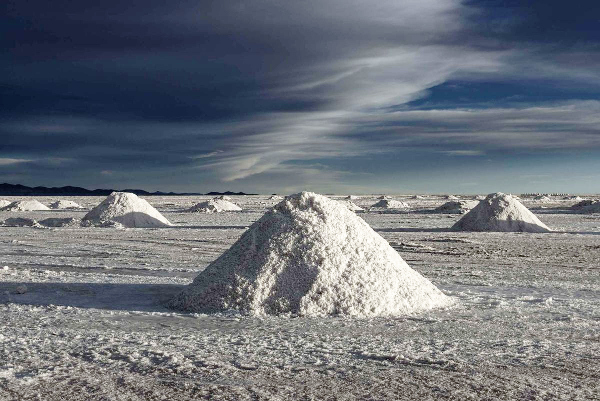
Unlike conventional hard-rock lithium deposits, much of Argentina’s lithium occurs in underground brines beneath salt flats. These mineral-rich fluids can contain dissolved lithium along with potassium, magnesium and other salts.
Producing battery-grade lithium from such deposits involves extracting the brine and subsequently concentrating and separating lithium compounds through evaporation or increasingly through newer direct-lithium-extraction technologies.
For KABIL, operating in Catamarca therefore also provides Indian industry with valuable practical experience in brine-based lithium exploration and extraction, a field in which India has comparatively limited operational experience.
KABIL Was Created to Secure Strategic Minerals Overseas
Khanij Bidesh India Limited was established specifically to address India’s vulnerability to overseas critical-mineral supply disruptions.
The company is a joint venture of three Central Public Sector Enterprises — National Aluminium Company Limited (NALCO), Hindustan Copper Limited (HCL) and Mineral Exploration and Consultancy Limited (MECL).
Its mandate is to identify, acquire, explore, develop and secure overseas sources of minerals considered critical to India’s economy and strategic industries.
Lithium and cobalt have been among its highest-priority targets because of their importance to batteries and advanced manufacturing.
The Catamarca project is particularly important because it represents KABIL’s first major overseas lithium exploration undertaking and India’s first government-company lithium exploration and mining venture abroad.
India Is Looking Beyond the Existing Five Blocks
India’s plans in Argentina are already expanding beyond the original Catamarca holdings.
The Government of India confirmed on 29 August that opportunities in Salta and Jujuy are being explored alongside the existing Catamarca project.
More detailed information reported earlier in August indicates the scale of that expansion.
The Catamarca provincial government has offered KABIL seven additional greenfield lithium-brine blocks, which the Indian company is evaluating. KABIL is also working towards a preliminary arrangement with authorities and the provincial mining company in Salta, while discussions are underway concerning two additional greenfield lithium-brine projects in Jujuy.
All three provinces — Catamarca, Salta and Jujuy — form part of Argentina’s principal lithium-producing region in the country’s northwest.
If even part of this expanded pipeline ultimately progresses to development, India’s presence in South America’s lithium sector could become substantially larger than the original five-block project.
Commercial Production Is Still Several Years Away
The completion of drilling is an important achievement, but it should not be confused with the beginning of commercial lithium extraction.
A parliamentary assessment of KABIL’s operations reported in August indicated that production from the Argentine project could begin in roughly four to five years, subject to completion of feasibility and development work.
The programme has also encountered challenges. The parliamentary review noted delays and highlighted KABIL’s limited previous experience with lithium-brine deposits.
This makes the current drilling milestone particularly important. India is not merely trying to purchase lithium from an established foreign producer; KABIL is developing the technical experience required to evaluate and eventually operate an overseas lithium-brine project.
Success therefore depends not only on locating sufficient lithium but also on demonstrating economically viable extraction, securing environmental approvals, developing infrastructure and establishing an efficient route from the mine to downstream processing and battery manufacture.
Lithium Has Become a Strategic Mineral for India
Lithium’s importance has risen dramatically with the expansion of lithium-ion batteries.
Electric vehicles require lithium for their traction batteries, while stationary battery-storage systems are becoming essential for integrating large quantities of intermittent solar and wind energy into electricity grids.
Lithium batteries are also used across smartphones, computers, industrial equipment, drones, satellites, communications systems and numerous defence applications.
India has consequently identified lithium as a critical and strategic mineral.
The importance of reducing import vulnerability was underlined by the government in March 2026, when it noted that India’s current lithium requirement for lithium-ion batteries was being met through imports.
That dependence creates exposure to price volatility, geopolitical disruptions, export controls and concentration of mineral processing capacity in a small number of countries.
Securing upstream mineral assets is therefore increasingly being treated as an industrial-security issue rather than simply a mining investment.
Part of the National Critical Mineral Mission
KABIL’s Argentina programme fits directly into India’s National Critical Mineral Mission, approved by the Union Cabinet on 29 January 2025.
The mission seeks to establish resilient critical-mineral supply chains extending from exploration and mining through beneficiation, processing and recycling.
One of its explicit objectives is the acquisition of critical-mineral assets overseas, alongside efforts to expand domestic exploration and production.
The government has framed the mission as a whole-of-government programme involving ministries, public-sector companies, private industry and research institutions.
Its strategic significance extends across electric mobility, renewable energy, electronics, telecommunications, aerospace and defence manufacturing.
KABIL’s activities therefore provide an overseas resource-security arm to a much broader domestic programme designed to build India’s critical-mineral ecosystem.
Argentina Could Become a Major Critical-Mineral Partner
Lithium is also emerging as an increasingly important pillar of the wider India–Argentina relationship.
The fourth Joint Trade Committee meeting was led by Indian Commerce Secretary Rajesh Agrawal and Argentina’s Secretary for International Economic Relations Fernando Brun.
Both sides reviewed the roadmap developed following Prime Minister Narendra Modi’s visit to Argentina in 2025 and discussed cooperation spanning mining, energy, infrastructure, agriculture, pharmaceuticals, digital technologies, aviation and space.
The economic relationship has expanded rapidly. Bilateral trade crossed US$6.5 billion in 2025, with India becoming Argentina’s fifth-largest trading partner, according to the Commerce Ministry.
Critical minerals provide an especially strong strategic complementarity.
Argentina possesses abundant lithium resources and is seeking foreign investment to expand mining and related infrastructure. India, meanwhile, has a rapidly growing battery and electric-vehicle industry but lacks sufficient domestic production of several important raw materials.
The partnership therefore has the potential to evolve from conventional commodity trade towards long-term investment in resource development, processing and industrial supply chains.
From Resource Security to Battery Manufacturing
Owning or participating in lithium resources overseas does not automatically guarantee battery independence.
The complete lithium-ion battery supply chain includes mining, extraction, chemical conversion, cathode and anode production, cell manufacturing, battery-pack assembly, recycling and associated technologies.
India is simultaneously attempting to develop several of these stages domestically.
An overseas lithium asset can nevertheless provide a crucial upstream foundation. Long-term access to mineral resources can reduce exposure to spot-market disruptions and give Indian battery manufacturers greater confidence when expanding downstream capacity.
The strategic objective is therefore broader than simply importing lithium carbonate or lithium hydroxide.
India is attempting gradually to build greater influence across the entire critical-mineral value chain — from geological exploration and overseas resource ownership to refining, battery materials, cell manufacturing and recycling.
A Significant Step, but Exploration Remains the Key Word
The completion of Phase-II drilling in Catamarca represents tangible progress for India’s overseas mineral strategy.
It transforms a project that began with an exploration agreement in early 2024 into an increasingly advanced geological programme capable of generating the data needed for resource estimation and feasibility studies.
At the same time, expectations should remain realistic.
KABIL has not yet begun commercial lithium production in Argentina, and the ultimate size, grade, recoverability and economic viability of the resources under evaluation have not been publicly established.
The project’s strategic importance therefore lies not in an immediate stream of lithium arriving in India, but in something potentially more consequential over the longer term: India establishing a direct position inside one of the world’s most important lithium-producing regions.
With Phase-II drilling completed, additional blocks being evaluated in Catamarca and opportunities emerging in Salta and Jujuy, India’s engagement with Argentina is shifting from diplomatic intent towards physical exploration on the ground.
For India’s critical-mineral strategy, the Catamarca drilling milestone is therefore only one stage of a much larger undertaking. But it is an important one: India’s overseas lithium ambitions are moving from agreements and geological surveys towards the difficult technical work required to turn mineral resources into secure strategic supply.
References
- Press Information Bureau, Ministry of Commerce & Industry — “Commerce Secretary Shri Rajesh Agrawal Leads 4th India–Argentina JTC Meeting; Both Sides Reaffirm Commitment to Deepen Strategic and Economic Partnership,” 29 August 2026. Confirms completion of KABIL’s Phase-II drilling in Catamarca and exploration of opportunities in Salta and Jujuy.
- Press Information Bureau, Ministry of Mines — “India Signs Agreement for Lithium Exploration & Mining Project in Argentina,” January 2024. Details KABIL’s agreement with CAMYEN, the five lithium-brine blocks, approximately 15,703 hectares and the original project framework.
- Press Information Bureau, Ministry of Mines — “Reserves and Extraction of Critical Minerals,” 24 March 2025. Confirms KABIL’s exclusivity rights for exploration, development and mining of five lithium-brine blocks in Catamarca.
- Press Information Bureau — “Strategic Supply Chain Management for Critical Minerals,” 24 March 2025. Details the National Critical Mineral Mission and its overseas critical-mineral asset acquisition strategy.
- Reuters — “India’s state-owned KABIL expects to start lithium production in Argentina in 4–5 years,” 17 August 2026. Reports KABIL’s prospective production timeline and expansion discussions covering additional projects in Catamarca, Salta and Jujuy.
- U.S. Geological Survey — Argentina mineral industry information. Provides context on Argentina’s position among the world’s major lithium-reserve holders.
- Press Information Bureau, Ministry of Heavy Industries — “Impact on EV Due to Policy Changes in China Pertaining to Lithium,” 17 March 2026. Details India’s import dependence for lithium used in EV batteries and measures being pursued under the critical-mineral strategy.
You may also like
-
Indian Startup Gnani AI Unveils Sovereign AI Stack Built Around 30-Billion-Parameter Evon 3.3
-
Third Jammu–Srinagar Vande Bharat Service Set to Strengthen Kashmir Rail Connectivity
-
India’s Digital Merchant Payments Reach ₹11.73 Lakh Crore in July as UPI Captures 77.3% Share
-
Jio Platforms Gets SEBI Clearance for Mega IPO, Setting Stage for Potentially India’s Largest Listing
-
India Moves to Raise 5G Base-Station EMF Limit to 10 W/m², Bringing Norms Closer to Global Standards
