Finnish space-intelligence company ICEYE has formally established ICEYE India in New Delhi and announced plans to build satellite manufacturing capability within the country, marking another major step in India’s emergence as a global centre for advanced space manufacturing, Earth observation and sovereign intelligence systems.
The company announced the establishment of its Indian entity on August 24, 2026, describing India as one of the world’s most important defence and space markets. ICEYE India will initially focus on supporting Indian defence and intelligence users with space-based intelligence capabilities while progressively developing a domestic industrial ecosystem involving Indian engineers, suppliers and technology companies.
The more significant element of the announcement is ICEYE’s decision to use its Indian entity as the foundation for in-country manufacturing. The company intends to establish production capability for satellite systems serving defence, surveillance and environmental-monitoring requirements, with an emphasis on local sourcing, Indian suppliers and engineering talent.
ICEYE co-founder and CEO Rafal Modrzewski has described the India expansion as involving genuine engineering and manufacturing capability on the ground rather than merely establishing a sales office. That distinction gives the development a strong Aatmanirbhar Bharat and Make in India dimension, particularly because Synthetic Aperture Radar satellites represent one of the more sophisticated segments of the Earth-observation industry.
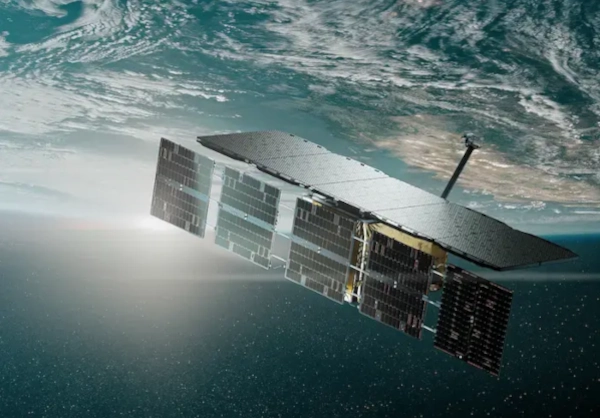
Unlike conventional optical Earth-observation satellites, Synthetic Aperture Radar, or SAR, uses radar energy to image the Earth’s surface. This allows SAR spacecraft to collect imagery during both day and night and through cloud cover, giving the technology particular importance for persistent surveillance and rapid monitoring.
Such capabilities are highly relevant for India. SAR systems can support border and maritime surveillance, military intelligence, disaster response, flood monitoring, agricultural assessment, infrastructure monitoring and environmental management. Their ability to operate regardless of daylight or weather conditions makes them particularly valuable during monsoons, cyclones and other situations where optical satellites may be restricted by heavy cloud cover.
ICEYE has built its business around relatively small SAR spacecraft deployed as a large constellation. Operating numerous satellites instead of depending on a small number of large spacecraft allows more frequent observation of locations on Earth and can significantly reduce the time between a request for imagery and its delivery.
The India expansion is not an isolated announcement. It follows a series of partnerships through which ICEYE has been building relationships with the country’s rapidly growing private space industry.
In June 2026, Hyderabad-based Dhruva Space and ICEYE signed a strategic partnership to explore satellite manufacturing, space-system production, Earth-observation services, disaster-management solutions and ground infrastructure in India and international markets. The companies said they would examine opportunities to jointly manufacture satellite buses and other space systems while potentially producing components and subsystems in India for ICEYE’s wider global requirements.
That partnership could be particularly important because Dhruva Space is developing a 280,000-square-foot Assembly, Integration and Testing facility designed to support scalable spacecraft manufacturing. Under the ICEYE collaboration, this infrastructure could potentially contribute to building a resilient Indian manufacturing base capable of supporting both domestic missions and international satellite programmes.
The collaboration extends beyond manufacturing. Dhruva Space and ICEYE are also examining access to SAR Earth-observation data, disaster-management applications, agriculture, maritime surveillance and climate monitoring. Ground-station cooperation is another proposed area, potentially giving customers faster access to satellite data through infrastructure located within India.
Taken together, these developments point toward a much broader industrial model than simply importing finished foreign satellites. India could increasingly participate across the entire value chain — spacecraft structures, electronics, subsystems, satellite buses, assembly and integration, ground infrastructure, data processing and downstream intelligence applications.
That transition is central to the changing character of India’s space sector. For decades, advanced satellite development was primarily centred around ISRO and its established industrial suppliers. The reforms introduced from 2020 onward have opened the sector to a much larger private ecosystem, with Indian startups and established companies now developing launch vehicles, satellites, propulsion systems, sensors and Earth-observation constellations.
The arrival of major international space companies looking to manufacture locally adds another dimension. India is increasingly being viewed not simply as a customer for foreign space technology but as a potential engineering, manufacturing and export base for global spacecraft programmes.
For the Aatmanirbhar Bharat strategy, foreign participation can be particularly valuable when it creates domestic capability rather than relying on imported finished equipment. Manufacturing satellites in India using local engineers and suppliers can expose domestic companies to sophisticated quality-control standards, radar technologies, spacecraft integration processes and global supply chains.
The benefits could extend beyond ICEYE’s own requirements. Indian suppliers qualifying for advanced SAR satellite production could potentially use that expertise to participate in other commercial and government space programmes. Over time, such supply-chain development can create an industrial ecosystem capable of supporting increasingly complex indigenous spacecraft.
India is already building its own private Earth-observation capability. In 2025, IN-SPACe selected a consortium involving Pixxel, Dhruva Space, SatSure and PierSight to establish the country’s first fully indigenous private Earth-observation satellite network. The programme is intended to develop sovereign geospatial intelligence capabilities using multiple sensor technologies.
ICEYE’s arrival therefore takes place alongside, rather than instead of, a rapidly expanding indigenous industry. The opportunity is for foreign technology leaders and Indian companies to participate in the same ecosystem while domestic companies retain and expand their own independent technological capabilities.
The defence implications are also important. Modern military operations increasingly depend on persistent space-based intelligence to identify changes across large geographic areas, monitor maritime activity, observe infrastructure and support strategic decision-making. SAR constellations are especially useful because they can maintain surveillance through conditions that would prevent conventional optical imaging.
A sovereign system can provide another advantage: the customer can control satellite tasking, data access and operational priorities rather than depending entirely on imagery purchased from an external provider. For strategically important applications, control over tasking and data can be as important as the satellite hardware itself.
ICEYE’s decision to establish a permanent Indian entity and develop manufacturing capability consequently represents more than another foreign investment announcement. It connects one of the world’s leading commercial SAR ecosystems with India’s expanding private space industry and increasingly ambitious requirements for sovereign intelligence.
Important details are still awaited. ICEYE has not yet publicly disclosed the location of its proposed manufacturing facility, investment value, annual production capacity or commissioning schedule. The announcement should therefore be described as a commitment to establish local manufacturing capability rather than evidence that satellite production has already begun.
Nevertheless, the strategic direction is significant. India is gradually creating an environment in which Indian startups build satellites, launch companies provide domestic access to orbit, private firms develop Earth-observation constellations and global aerospace companies increasingly consider the country for sophisticated manufacturing.
With the entry of ICEYE, it has established that India is increasingly being chosen as a place where advanced space systems can be engineered, manufactured, integrated and potentially supplied to customers around the world.
References
1. ICEYE — Official Press Release | 24 August 2026
“ICEYE Establishes Indian Entity to Support India’s Sovereign Intelligence Capability”
ICEYE officially announced the establishment of ICEYE India in New Delhi and confirmed that the Indian entity will serve as the platform for its in-country manufacturing plans. The company intends to develop production capability using Indian suppliers, local sourcing and Indian engineering talent for defence, surveillance and environmental-monitoring requirements.
2. Dhruva Space — Official Press Release | 17 June 2026
“Dhruva Space and ICEYE Announce Strategic Full-Stack Partnership to Explore Space-based Solutions in India & Abroad”
The official announcement confirms cooperation covering satellite manufacturing, space-system production, SAR Earth-observation services, ground infrastructure and downstream applications. The companies will explore joint manufacture of satellite buses and other space systems in India and evaluate large-scale production of components and subsystems for Indian and international programmes.
Dhruva Space Official Press Release
3. IN-SPACe — Government of India | Earth Observation PPP Programme
IN-SPACe officially selected the consortium comprising Pixxel Space India, SatSure Analytics, PierSight Space and Dhruva Space for India’s private-sector Earth Observation system under the PPP model. The planned indigenous constellation includes SAR, panchromatic, multispectral and hyperspectral satellites, providing additional official context for India’s expanding sovereign Earth-observation ecosystem.
Primary Source for the ICEYE India Story: ICEYE official press release dated 24 August 2026.
Image Courtesy: ICEYE
You may also like
-
ICAR Scientists Develop Indigenous Protective Gloves for Cotton Farmers, Sign Commercial Manufacturing Agreement
-
India Moves Towards Five-Year Assured Orders for Defence Startups Under New Procurement Reforms
-
BHEL–Coal India Joint Venture Begins Construction of ₹25,016 Crore Indigenous Coal Gasification Project in Odisha
-
Zen Technologies Introduces Indigenous Hyper-Strike Falcon AI-Guided Counter-Drone Interceptor
-
L&T and Germany’s SCHOTTEL Expand Partnership for Controllable Pitch Propeller Systems in Indian Shipbuilding
