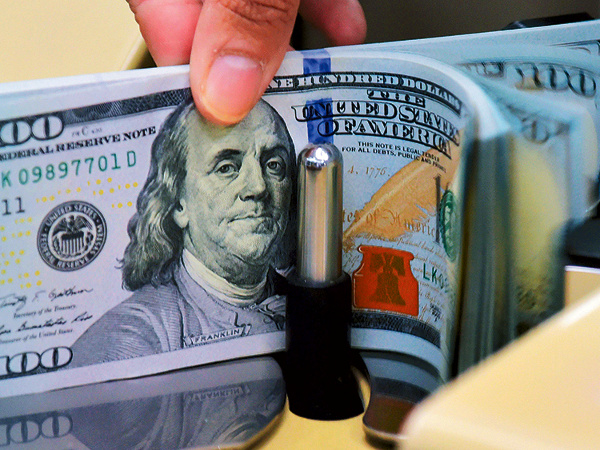
India’s foreign exchange reserves jumped by nearly $10 billion in a single week to $716.9 billion, reaching their highest level in about six months and moving closer to the country’s record reserve position.
Reserve Bank of India data for the week ending August 14, 2026 showed total reserves rising to $716.907 billion, compared with $707.002 billion a week earlier. The increase was driven primarily by higher foreign currency assets and the rising value of the RBI’s gold holdings.
Foreign Currency Assets Lead the Increase
Foreign currency assets, the largest component of India’s reserves, increased by approximately $7.23 billion during the week to reach $581.851 billion, up from $574.625 billion.
Meanwhile, the value of the RBI’s gold reserves climbed by about $2.68 billion to $111.417 billion.
India’s Special Drawing Rights stood at approximately $18.740 billion, while its Reserve Tranche Position with the International Monetary Fund reached around $4.899 billion.
Together, these components brought total reserves to $716.907 billion.
Reserves Rise About $50 Billion in Seven Weeks
The latest increase is part of a much stronger accumulation trend.
India’s foreign exchange reserves have risen for seven consecutive weeks, adding roughly $50 billion during that period. At $716.9 billion, reserves are now approaching the record level of approximately $728.5 billion reached in February 2026.
A major factor behind the increase has been the RBI’s recent effort to attract additional foreign currency inflows and strengthen India’s balance-of-payments position.
Measures announced in June included discounted foreign-exchange hedging facilities for overseas borrowing by public-sector companies and banks, along with favourable swap arrangements for banks mobilising foreign currency deposits.
By August 13, these measures had generated nearly $57 billion in foreign currency inflows, with more than $50 billion coming through foreign exchange deposits.
The scale of the response was sufficiently large for the RBI to bring forward the closure of one of its deposit hedging facilities to August 31.
A Larger Buffer Against External Shocks
Large foreign exchange reserves provide India with an important financial buffer during periods of global instability.
The RBI can use foreign currency reserves to reduce excessive volatility in the rupee, meet external payment requirements and help maintain confidence during periods of capital outflows or sharp increases in commodity prices.
This has become particularly relevant as elevated crude oil prices and geopolitical uncertainty continue to place pressure on emerging-market currencies.
The RBI has recently been active in the foreign exchange market, with traders reporting repeated dollar sales aimed at limiting excessive weakness in the rupee. Despite volatile oil markets, the currency has consequently traded within a relatively narrow range.
Gold Becomes a Bigger Part of India’s Reserves
The increase in the value of India’s gold holdings is also becoming increasingly important.
At more than $111 billion, gold now represents a sizeable component of the RBI’s reserve portfolio. Rising global gold prices can lift the dollar value of these holdings even without additional physical purchases.
Similarly, movements in foreign currency assets do not represent only fresh dollar inflows. The reported dollar value of assets held in currencies such as the euro, pound and yen can rise or fall as exchange rates change.
The latest $9.9-billion weekly increase therefore reflects a combination of genuine foreign currency accumulation and valuation movements.
Closing in on the Record High
At $716.9 billion, India’s reserve position remains around $11.6 billion below the record level reached earlier in 2026.
However, the rapid accumulation over recent weeks shows that India has rebuilt a substantial external buffer at a time when oil-price volatility, geopolitical tensions and currency-market pressures remain elevated.
For an economy heavily dependent on imported crude oil and integrated deeply with global financial markets, the combination of rising reserves and sustained foreign currency inflows provides the RBI with significantly greater room to manage external shocks and maintain stability in the foreign exchange market.
You may also like
-
Indian Semiconductor Companies Propose New Manufacturing and Chip Design Investments in Madhya Pradesh
-
CSIR-CRRI Partners with Industry to Develop Advanced Indigenous Airport Runway and Pavement Materials
-
Paras Semiconductors Secures 43 Acres in Madhya Pradesh for Proposed ₹6,200 Crore Advanced Chip Packaging Facility
-
Petronet LNG Plans ₹1,200 Crore Joint Venture for Ten Compressed Biogas Plants Across India
-
India Seeks South Korean Shipbuilding Partnerships as Sarbananda Sonowal Begins Four-Day Visit to Busan
