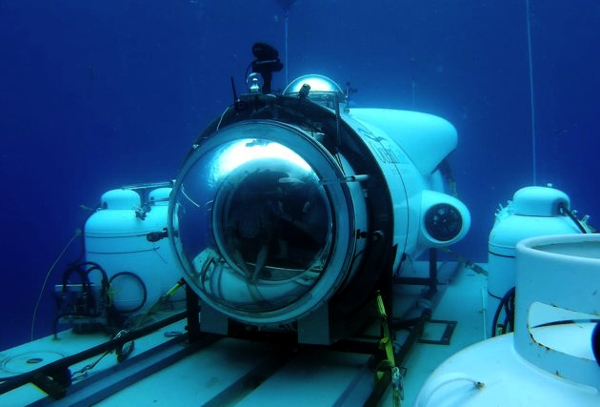
India has achieved an important milestone in deep-sea technology by testing a seabed mining system at a depth of 5,270 metres in the Central Indian Ocean Basin.
The National Institute of Ocean Technology (NIOT), Chennai, developed the system under the Ministry of Earth Sciences. The technology aims to support the reliable and sustainable recovery of polymetallic nodules from the deep ocean.
Mining System Tested in Central Indian Ocean
NIOT successfully conducted mobility and power-system trials at a site in the Central Indian Ocean Basin (CIOB).
The International Seabed Authority (ISA) has allocated this area to India for mineral exploration.
Operating machinery at depths exceeding five kilometres presents major engineering challenges. Equipment must function under extreme pressure, low temperatures and complete darkness.
The successful trials therefore mark progress in India’s efforts to develop indigenous technology for deep-ocean operations.
Technology to Collect Polymetallic Nodules
NIOT is also developing components that can collect and crush polymetallic nodules from the seabed.
These nodules are mineral deposits found across parts of the deep ocean floor. They contain several metals of economic and strategic importance.
NIOT is developing the collection and crushing systems in accordance with guidelines issued by the International Seabed Authority.
The programme forms part of India’s wider effort to build technological capabilities for exploring and eventually using deep-ocean resources.
India Holds Exploration Contracts With ISA
The Ministry of Earth Sciences has signed contracts with the ISA for exploring two types of seabed mineral resources.
These include Polymetallic Nodules (PMN) and Polymetallic Sulphides (PMS) in areas of the Indian Ocean beyond national jurisdiction.
India conducts resource assessments in these contract areas. Scientists also carry out environmental impact studies as required under ISA rules.
The work remains focused on exploration. Commercial extraction of minerals from the international seabed has not yet begun under India’s programme.
Environmental Studies Form Key Part of Mission
India is also conducting multidisciplinary oceanographic studies in its allocated exploration areas.
Scientists study the physical, chemical and biological conditions of deep-sea environments. These surveys create baseline data before any future mining activity takes place.
Researchers also assess how exploration could affect deep-sea ecosystems.
Such studies are important because deep-ocean habitats remain among the least understood ecosystems on Earth. Environmental data can help regulators evaluate the possible impact of future mineral extraction.
Building India’s Deep-Ocean Capability
The seabed mining programme forms an important technological component of India’s Deep Ocean Mission.
Developing indigenous underwater systems can strengthen India’s ability to explore resources at extreme depths. It can also expand the country’s expertise in marine engineering, robotics and ocean science.
The work could become increasingly important as India studies the long-term potential of critical minerals found beneath the ocean.
Minister of State (Independent Charge) for Earth Sciences Dr. Jitendra Singh provided the information in a written reply in the Lok Sabha on August 12, 2026.
India’s progress at a depth of 5,270 metres shows that the Deep Ocean Mission is moving beyond surveys alone. The programme is steadily building the technology and scientific knowledge required for future operations in one of the world’s most challenging environments.
Source: Press Information Bureau, Ministry of Earth Sciences, Government of India, August 12, 2026.
You may also like
-
Cosmochute Develops Reusable Lunar Robotics Platform, Raises $1.5 Million to Advance Moon Exploration
-
PGIMER, IIT Ropar and ISRO Plan Microgravity Research Laboratory to Advance India’s Human Spaceflight Medicine
-
New Technology Provides Environment Friendly Route for Treating Dye-Contaminated Wastewater
-
Large- and Small-scale Magnetic Activity Driving Microwave Polar Brightening in the Sun
-
Molecular Geometry Tweak Opens New Way for Smart Biomaterials
