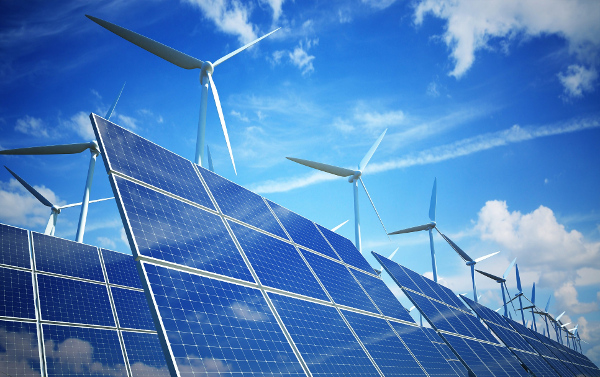
India has crossed a major threshold in its energy transition, with the country’s installed non-fossil fuel-based electricity generation capacity reaching 300.50 GW as of July 31, 2026, according to the Ministry of New and Renewable Energy.
The milestone means India has already created more than 60% of the 500 GW non-fossil fuel capacity it has targeted for 2030, underlining the rapid transformation taking place in the country’s electricity sector.
With India’s overall installed power generation capacity currently standing at around 552 GW, non-fossil sources now account for more than 54% of the country’s total installed electricity capacity.
Solar Power Drives India’s Clean Energy Expansion
Solar energy has emerged as the dominant force behind the expansion.
India now has 164.59 GW of installed solar power capacity, compared with just around 2.8 GW in 2014. In slightly over a decade, solar power has therefore expanded nearly sixty-fold, transforming from a relatively small component of the electricity system into one of its principal generation technologies.
Wind power has also recorded substantial growth, reaching 58.14 GW, compared with approximately 21 GW in 2014.
India’s non-fossil fuel capacity as of July 31, 2026, consists of:
- Solar Power — 164.59 GW
- Wind Power — 58.14 GW
- Large and Small Hydro Power — 57.24 GW
- Bio-power — 11.75 GW
- Nuclear Power — 8.78 GW
Together, these sources provide a combined installed capacity of 300.50 GW.
The numbers also illustrate an important characteristic of India’s energy transition. While solar and wind are expanding rapidly, the country continues to maintain a diversified non-fossil portfolio incorporating hydroelectricity, biomass-based generation and nuclear power.
Record 55.29 GW Added in Just One Financial Year
The pace of capacity creation has accelerated sharply.
During 2025-26 alone, India installed a record 55.29 GW of new non-fossil fuel-based electricity generation capacity.
Solar power accounted for the overwhelming majority of the increase, with approximately 44.6 GW of new solar capacity commissioned during the year.
Another 6 GW of wind power capacity was added.
Such annual additions indicate that India’s energy transition has moved beyond incremental deployment and entered the stage of large-scale infrastructure expansion.
Maintaining comparable rates of installation over the remaining years of the decade would considerably strengthen India’s ability to reach its 500 GW target.
Renewable Electricity Generation More Than Doubles
Installed capacity is also translating into increasing electricity generation.
Renewable energy generation in India increased from 190.96 billion units in 2014-15 to 477.79 billion units during 2025-26.
This represents an increase of around 150% in little more than a decade, reflecting both the rapid commissioning of renewable projects and their growing contribution to actual electricity supply.
As renewable capacity continues to increase, the challenge increasingly shifts from merely building generation assets towards ensuring adequate transmission networks, energy storage, grid balancing and flexible power generation.
India Builds Domestic Solar Manufacturing Base
India’s clean energy expansion is being accompanied by an effort to reduce dependence on imported equipment.
Domestic solar manufacturing capacity has expanded significantly under government policies including the Production Linked Incentive scheme for high-efficiency solar photovoltaic modules.
The manufacturing capacity enlisted under the Approved List of Models and Manufacturers for Solar PV Modules has now crossed 200 GW.
In 2014, comparable domestic capacity stood at only around 2.3 GW.
The transformation of the manufacturing ecosystem is strategically important because solar power is expected to account for a large share of India’s future electricity capacity.
Building solar cells, modules and associated equipment domestically reduces exposure to international supply-chain disruptions while simultaneously creating an industrial ecosystem capable of serving both the domestic and export markets.
From Climate Commitment to Energy Security
India’s renewable energy expansion is increasingly linked with objectives extending far beyond climate policy.
Large-scale domestic renewable capacity can reduce the country’s exposure to imported fossil fuels, particularly during periods of volatile international energy prices.
The transition also provides India with an opportunity to build new manufacturing industries around solar modules, wind turbines, batteries, electrolyzers, power electronics and electricity transmission infrastructure.
As electricity demand rises alongside India’s industrialisation and economic expansion, the strategic objective is therefore not simply replacing existing fossil-fuel generation.
India must simultaneously expand its electricity system while progressively increasing the share supplied by domestic non-fossil sources.
That distinction is important because India’s electricity consumption is expected to continue increasing substantially as manufacturing, urbanisation, electric mobility, digital infrastructure and household electricity demand expand.
Green Hydrogen Becomes the Next Frontier
The government is also attempting to extend renewable energy beyond the electricity grid into sectors that are difficult to directly electrify.
Through the National Green Hydrogen Mission, India is seeking to establish domestic capabilities for producing green hydrogen and its derivatives using renewable electricity.
Green hydrogen could eventually support decarbonisation in industries such as steel, fertilisers, refining, shipping and heavy transport.
India also intends to develop itself as a manufacturing and export centre for green hydrogen, ammonia and associated technologies.
This would connect the country’s rapidly growing renewable power sector with a much broader industrial decarbonisation strategy.
The Road from 300 GW to 500 GW
Crossing 300 GW of non-fossil electricity capacity represents a significant milestone, but the scale of the remaining task is considerable.
India still needs approximately 199.5 GW of additional non-fossil capacity to reach the 500 GW target.
Yet the record 55.29 GW addition during 2025-26 demonstrates how rapidly capacity deployment has accelerated.
If India can maintain high annual renewable additions while simultaneously strengthening transmission corridors, storage systems and domestic manufacturing, the country could enter the next decade with one of the world’s largest non-fossil electricity systems.
The significance of the 300 GW milestone therefore extends beyond climate commitments.
India’s clean energy programme is increasingly becoming a central component of its strategy for energy independence, industrial competitiveness, technological self-reliance and long-term economic resilience.
Source: Ministry of New and Renewable Energy / Press Information Bureau, Government of India — August 9, 2026
You may also like
-
India’s First Port-Based e-Methanol Plant at Kandla to Supply Green Fuel to Global Shipping
-
India’s Recent Oil and Gas Discoveries: New Finds, Offshore Frontiers and How Much Crude India Produces at Home
-
India’s Hidden Gold Mountain: How Households Came to Own an Estimated 31,000 Tonnes of Gold
-
India–Afghanistan Air Cargo Corridor Returns to Focus as Both Sides Push for Stronger Trade Connectivity
-
India’s Defence Shipyards Build Common Indigenous Supply Chain for Specialised Naval Cables
