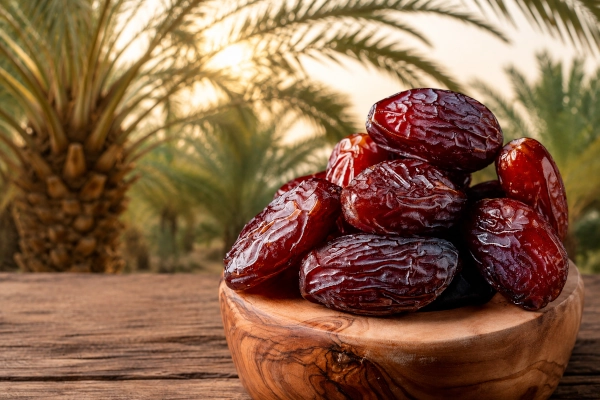
Dates are among the oldest cultivated fruits and have long been valued as concentrated sources of nourishment, sweetness and strength. In Ayurveda, the fruit is known principally as Kharjura or Pinda Kharjura. It is regarded as a nourishing food-drug particularly suited to fatigue, tissue depletion, excessive thirst, heat-related discomfort and states requiring restoration of strength.
The Ayurvedic Pharmacopoeia of India contains separate monographs for the fresh and dried fruits of Phoenix dactylifera. Modern botanical authorities place the species in the palm family, Arecaceae.
Botanical Identity
Sanskrit name: Kharjura, Pinda Kharjura
English name: Date, Date palm fruit
Hindi: Khajur; dried fruit—Chuhara
Malayalam: Intappazham, Inthappana
Tamil: Pericham, Pericham Pazham
Telugu: Kharjura, Kharjuramu
Botanical name: Phoenix dactylifera L.
Family: Arecaceae
Part used: Ripe fruit, generally after removal of the seed
The date palm is a tall, long-lived palm adapted to warm and dry regions. Its fruits develop in large hanging clusters and pass through several stages of ripening. Depending on the variety and stage of maturity, dates may be soft, semi-dry or fully dried.
The Ayurvedic Pharmacopoeia describes fresh Kharjura as a soft, fleshy, sticky and sweet fruit, while dried Kharjura is darker, firmer, wrinkled and more concentrated.
Ayurvedic Properties of Kharjura
The Ayurvedic pharmacological profile of dates is:
Rasa—taste: Madhura or sweet, with Kashaya or a mild astringent undertone
Guna—qualities: Guru or heavy and Snigdha or unctuous
Virya—potency: Shita or cooling
Vipaka—post-digestive effect: Madhura or sweet
Dosha action: Traditionally described as supportive in balancing Vata and Pitta; quantity, digestion and preparation determine its effect on Kapha
Principal actions: Balya, Brimhana, Tarpana, Hridya, Vrishya and Shukrala
The Ayurvedic Pharmacopoeia attributes to Kharjura actions including Balya, or strength promotion; Hridya, or support for the heart; Tarpana, or deep satisfaction and nourishment; Brimhana, or tissue building; and Shukrala, or nourishment of the reproductive tissue.
Because it is sweet, cooling, heavy and unctuous, Kharjura is particularly appropriate when dryness, heat, exhaustion or deficient nourishment predominate. At the same time, these same qualities mean that very large quantities may feel heavy for people with weak digestion.
Fresh Dates and Dried Dates
Ayurveda distinguishes between fresh Kharjura and the dried fruit commonly called Chuhara or Kharek.
Fresh dates
Fresh dates contain more moisture and have a softer, more succulent quality. They are traditionally associated with:
- Nourishment and restoration of strength
- Relief from hunger and exhaustion
- Support during thirst and burning sensations
- Building of muscle and reproductive tissue
- Satisfaction after exertion or prolonged weakness
The Pharmacopoeia describes fresh Kharjura as Balya, Tarpaka, Mamsavardhaka, Shukrakara, Rucikara and Kshudha-Shramahara—strengthening, satisfying, muscle nourishing, reproductive-tissue supporting, taste promoting and helpful in hunger accompanied by exhaustion.
Dried dates
Dried dates are denser and more concentrated. Their sweetness, heaviness and strengthening nature become more pronounced as water is removed.
They are traditionally used in small quantities for:
- General weakness
- Recovery from physical exertion
- Dryness and tissue depletion
- Cough and respiratory irritation
- Excessive thirst
- Convalescent nourishment
- Formulations intended to support vitality
The Pharmacopoeia records sugars, tannins and vitamins among the principal constituents of dried Kharjura and lists several nourishing and restorative actions.
Kharjura as a Brimhana Food
Brimhana refers to the Ayurvedic approach of nourishing, building and replenishing the body. Kharjura is considered a valuable Brimhana food because it combines natural sweetness with heaviness and unctuousness.
It may be selected when a person experiences:
- Loss of body weight associated with inadequate nourishment
- Physical weakness following exertion
- Dryness and depletion
- Fatigue after illness
- Increased nutritional requirements
- Poor satisfaction after meals
This does not mean that dates independently treat severe weight loss or chronic illness. Rather, they may form part of a properly planned nourishing diet under professional guidance.
Balya: Supporting Strength and Endurance
Kharjura is described as Balya, meaning that it promotes physical strength. Its concentrated carbohydrates provide readily available dietary energy, while its fibre, minerals and phytochemicals make it more nutritionally complex than refined sugar.
Modern reviews report that date fruits contain carbohydrates, dietary fibre, minerals and numerous phenolic and flavonoid compounds. Their precise composition differs according to cultivar, growing conditions and stage of ripeness.
Dates may therefore be useful as a compact food during travel, demanding physical work or recovery from exertion. Their concentrated nature also means that portion size matters.
Kharjura for Thirst and Burning Sensations
The sweet taste and cooling potency of Kharjura explain its traditional use in Trishna, or excessive thirst, and Daha, or burning sensations.
In hot weather, dates may be soaked and used in cooling drinks or milk preparations. Soaking softens dried dates and makes them easier to blend or chew. The resulting preparation is still naturally sweet and should be used according to appetite, digestive capacity and overall diet.
Support for the Heart
The term Hridya refers to substances traditionally considered pleasing or supportive to the heart and circulation. Kharjura is included among Hridya fruits in Ayurvedic literature and the Pharmacopoeia.
Modern studies have examined date fruit in relation to antioxidant activity, lipid metabolism and cardiovascular health. However, much of the evidence remains laboratory-based or preclinical, and dates should not be represented as a substitute for medicines prescribed for heart disease.
Dates for Cough, Hiccough and Respiratory Dryness
Classical indications for Kharjura include Kasa, or cough; Hikka, or hiccough; and Shwasa, a broad Ayurvedic category associated with disturbed breathing.
Its sweet and unctuous nature may be particularly relevant where the throat and respiratory passages feel dry or irritated. Traditional recipes sometimes combine dates with ingredients such as:
- Ghee
- Honey
- Pippali
- Draksha or raisins
- Warm milk
The suitability of these combinations depends upon the individual. Honey must not be heated or cooked according to Ayurvedic dietary principles, and persistent cough, breathing difficulty, fever or chest pain requires medical assessment.
Digestive Effects
Although dates contain dietary fibre, their Ayurvedic qualities are Guru and Snigdha—heavy and unctuous. Their digestive effect therefore depends on quantity and the strength of Agni.
A modest portion may be satisfying and nourishing. Excessive consumption may contribute to:
- Abdominal heaviness
- Reduced appetite
- Gas or fermentation
- Sticky stools
- Kapha accumulation
- A feeling of sluggish digestion
People with Mandagni, or weak digestion, may find soaked dates easier to tolerate than large quantities of dry dates. Gentle digestive spices such as dry ginger or cardamom are sometimes combined with rich date preparations.
Reproductive Nourishment
Kharjura is traditionally described as Vrishya, Shukrala and Shukrakara. These terms refer to nourishment of the reproductive tissues, vitality and healthy reproductive function.
This action is understood within the wider Ayurvedic concept of progressive tissue nourishment. When digestion is efficient and the diet is adequate, nourishing foods contribute to the formation of healthy Dhatus, culminating in Shukra Dhatu and Ojas.
Modern reviews have explored the nutritional and reproductive potential of different date-palm products, including fruits, pollen and seeds. Evidence varies greatly between the plant parts, and results involving pollen or concentrated extracts should not be attributed automatically to ordinary date fruit.
Dates and Modern Nutritional Science
Date fruits are principally carbohydrate-rich foods. They also supply dietary fibre and varying quantities of minerals, phenolic acids, flavonoids, carotenoids and other phytochemicals.
Researchers have reported compounds such as gallic acid, ferulic acid, catechin, quercetin and related plant constituents. Experimental studies suggest antioxidant, anti-inflammatory and metabolism-related effects, but most proposed therapeutic actions still require stronger and more consistent human clinical evidence.
A systematic review found substantial research on the nutritional and medicinal properties of date fruit and other parts of the palm. However, it also noted that clinical validation remains limited compared with the larger number of laboratory and animal studies.
Dates and Blood Sugar
Dates contain a considerable amount of natural sugar. The presence of fibre and the structure of the whole fruit distinguish them from refined sugar, but they still contribute carbohydrates and calories.
Some studies have investigated moderate date consumption among people with type 2 diabetes, with results suggesting that carefully controlled portions may be incorporated into certain dietary plans. These findings do not establish unrestricted safety for every person with diabetes. Variety, serving size, accompanying foods, medication and individual glucose response all matter.
People with diabetes, insulin resistance or a medically prescribed carbohydrate restriction should decide the appropriate portion with their physician or dietitian.
Dates in Sugandhit Ksheera
The supplied Pakadarpanam recipe for Sugandhit Ksheera—Aroma-Infused Milk includes Khajura or dates in a quantity sufficient for the preparation.
The recipe combines buffalo milk with fragrant flowers, fruits, rice, honey, ginger, sugar and clarified butter. Dates contribute sweetness, density and a nourishing quality that complements the cooling richness of milk.
When preparing a simplified household version, dates may be deseeded and softened before being blended into warm milk. However, a complete classical preparation should follow the original method and proportions rather than relying on the ingredient table alone.
Traditional Ways of Using Dates
Soaked dates
Two or three dried dates may be washed, deseeded and soaked overnight. Soaking softens the fruit and may make it easier to chew or blend.
Date milk
Deseeded dates may be simmered gently in milk with cardamom. This is a rich Brimhana preparation and is more suitable for people who digest milk well.
Dates with ghee
A small quantity of date pulp may be combined with ghee as a concentrated nourishing food. This combination is heavy and should be used sparingly when digestion is weak.
Date paste
Dates can be soaked and ground into a paste for use in porridges, laddus or traditional confections. Although date paste contains the whole fruit, it remains a concentrated sweetener.
Classical formulations
The Ayurvedic Pharmacopoeia lists Kharjura in preparations such as Drakshadi Churna, Eladi Gutika and Shiva Gutika. Formulations bearing these names should be used according to an authorised text or under the supervision of an Ayurvedic practitioner.
Classical Quantity and Dietary Portion
The Ayurvedic Pharmacopoeia records an adult medicinal guidance range of 10–15 grams for dried Kharjura and 10–50 grams for fresh Kharjura. These are pharmacopoeial guidance ranges, not universal daily serving recommendations.
The suitable dietary quantity depends upon the type and size of the fruit, digestive strength, physical activity, season, health condition and the other foods eaten with it.
Who Should Use Dates Carefully?
Dates should be consumed judiciously by people with:
- Diabetes or difficulty controlling blood glucose
- Kapha-predominant heaviness
- Weak digestion and frequent bloating
- Obesity requiring calorie restriction
- Acute diarrhoea or indigestion
- Intolerance to very sweet or concentrated foods
Dates are sticky and can remain around the teeth. Rinsing the mouth and maintaining regular dental hygiene are advisable after eating them.
Commercial date products should also be checked for added sugar, glucose syrup, artificial flavouring or coatings. Whole, clean, properly stored dates are preferable.
Conclusion
Kharjura is one of Ayurveda’s important nourishing fruits. Its Madhura rasa, Guru and Snigdha qualities, Shita virya and Madhura vipaka give it a distinctly cooling, restorative and tissue-building character.
It is traditionally valued for promoting strength, relieving exhaustion, satisfying thirst, supporting the heart and nourishing muscle and reproductive tissues. Modern nutritional research confirms that dates provide concentrated carbohydrates, fibre, minerals and diverse phytochemicals, while also emphasising that many proposed medicinal benefits still require stronger clinical validation.
Used in a suitable quantity and matched to digestive strength, dates can serve as a wholesome food, a classical recipe ingredient and a valuable component of Ayurvedic Brimhana nutrition.
REFERENCES
1. Government of India, Ministry of Health and Family Welfare, Department of AYUSH. The Ayurvedic Pharmacopoeia of India, Part I, Volume IV. Monographs: Kharjura—Dried Fruit and Kharjura—Fresh Fruit; Phoenix dactylifera L.
2. Royal Botanic Gardens, Kew. Plants of the World Online. Phoenix dactylifera L.; Family: Arecaceae.
3. Pakadarpanam. Recipe 14.6: Sugandhit Ksheera—Aroma-Infused Milk. 10/11–21, pp. 109–110.
4. Mahomoodally MF, Khadaroo SK, Hosenally M, et al. Nutritional, Medicinal and Functional Properties of Different Parts of the Date Palm and Its Fruit (Phoenix dactylifera L.): A Systematic Review. Critical Reviews in Food Science and Nutrition. 2024;64(22):7748–7803. DOI: 10.1080/10408398.2023.2191285.
5. Lani MN, Fazel MF, Razali MR, et al. Nutraceuticals of Phoenix dactylifera L.: Physicochemistry, Nutritional Value and Therapeutic Potential. Drug Design, Development and Therapy. 2026;20:583862. DOI: 10.2147/DDDT.S583862.
6. Awan KAA, Yaqoob S, Ul-Haq I, et al. Therapeutic Power of Date Fruit (Phoenix dactylifera L.): A Nutrient-Rich Superfood for Holistic Health and Disease Prevention. Food Science & Nutrition. 2025;13(9):e70896. DOI: 10.1002/fsn3.70896.
7. Alu’datt MH, Rababah T, Tranchant CC, et al. Date Palm Bioactive Constituents and Their Applications as Natural Multifunctional Ingredients in Health-Promoting Foods and Nutraceuticals: A Comprehensive Review. Comprehensive Reviews in Food Science and Food Safety. 2025;24(1):e70084. DOI: 10.1111/1541-4337.70084.
8. Al-Okbi SY. Date Palm as Source of Nutraceuticals for Health Promotion: A Review. Current Nutrition Reports. 2022;11(4):574–591. DOI: 10.1007/s13668-022-00437-w.
Ayurvedic health disclaimer: This article presents traditional Ayurvedic knowledge for educational purposes. It does not diagnose disease or replace advice and treatment from a qualified Ayurvedic physician, registered dietitian or medical practitioner.
You may also like
-
Robotics, AI and Nanoscience Set to Transform Precision Medicine in India
-
Why Ayurveda Recommends Eating Only When Hungry
-
Ayurveda on Eating at the Right Time: How Food Timing Supports Balance and Health
-
Ayurveda and Late-Night Living: What Irregular Sleep Does to the Body
-
India’s Ayush Services Economy Reaches $36.92 Billion, RIS Study Projects Strong Growth to 2047
)