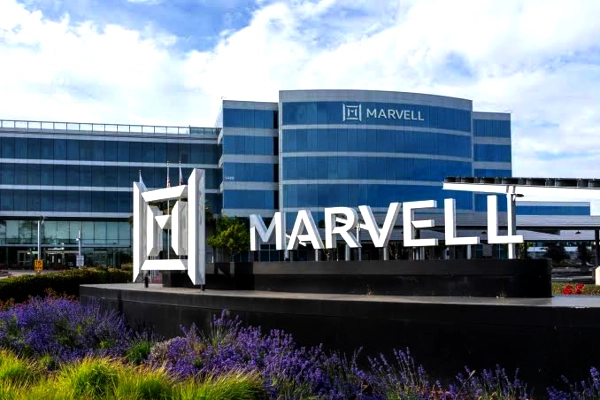
US-based semiconductor company Marvell Technology has announced plans to invest $250 million in India over the next three years as it expands its engineering capabilities and supports the growing demand for artificial intelligence (AI) semiconductor solutions.
The investment will be directed toward strengthening the company’s research and development operations, expanding its workforce, and upgrading infrastructure across its India centers.
As part of the expansion, Marvell plans to significantly increase hiring at its facilities in Bengaluru, Pune, and Hyderabad. The company will also add a new wing to its Bengaluru campus and expand its Hyderabad office to accommodate its growing engineering teams.
Marvell, which has maintained a presence in India since 2006, said the expansion reflects the country’s increasing importance in its global innovation and product development strategy.
The company is focusing on the design and development of advanced semiconductor technologies for artificial intelligence, cloud computing, and data infrastructure. The investment comes at a time when demand for AI-enabled chips is accelerating worldwide.
The announcement also aligns with India’s broader push to establish itself as a global semiconductor manufacturing and design hub through policy support and investments aimed at strengthening the country’s electronics and chip ecosystem.
With the latest investment, Marvell joins a growing list of global semiconductor companies expanding their footprint in India as the country continues to attract investments in next-generation chip design and engineering.
You may also like
-
India and Uruguay Agree Trade and Connectivity Roadmap as Montevideo Ratifies International Solar Alliance
-
The Return of Multipolarity: Why the World Is Moving Beyond a Single Centre of Power
-
The Financial Chokepoint: Why BRICS Can No Longer Depend on SWIFT and the Dollar Alone
-
India Expands Market Access for South African Citrus With New In-Transit Cold Treatment Rules
-
South Africa Invites Indian Firms Into $100-Billion Infrastructure Pipeline as BRICS Ties Deepen
