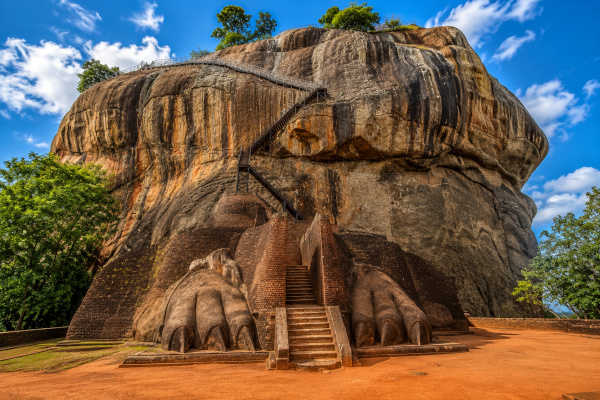
Sri Lanka occupies a unique place in the sacred geography of the Ramayana. In the epic tradition, Lanka is the island kingdom ruled by Ravana, the place where Sita was held after her abduction, the destination reached by Hanuman after his great leap across the ocean and the setting of the final war between Rama’s forces and the armies of Lanka.
The association extends far beyond one ancient narrative. Across Sri Lanka, mountains, waterfalls, caves, temples, forests and coastal regions preserve local traditions connected with Ravana, Sita, Hanuman, Vibhishana and the events of the Yuddha Kanda. The Sri Lankan tourism authorities have formally documented many of these places as part of a Ramayana pilgrimage circuit, demonstrating the continuing cultural strength of the epic on the island.
Archaeology documents Sri Lanka’s ancient settlements, temples, maritime connections and religious institutions. The identification of individual landscapes with particular Ramayana episodes comes primarily through sacred tradition, temple practice, folklore, place memory and pilgrimage literature. Together, these different forms of heritage make Sri Lanka one of the most important countries in the global Ramayana tradition.
Lanka in the Ramayana
The Lanka of the Ramayana is presented as a wealthy, fortified and highly organised island kingdom. Ravana rules from a splendid capital surrounded by walls, gateways, palaces, gardens and military defences. His kingdom possesses warriors, chariots, weapons, ritual specialists and an elaborate royal court.
The grandeur of Lanka forms an important element of the epic. Rama’s victory gains moral significance because he confronts a powerful and sophisticated ruler. The conflict centres on dharma: strength, knowledge and prosperity acquire lasting value when guided by righteousness.
Ravana is therefore remembered as a complex figure. He possesses immense power, courage and intelligence. Later Hindu traditions also celebrate his devotion to Shiva, mastery of music, knowledge of sacred learning and practice of austerities. His decision to abduct Sita and reject the counsel of Vibhishana leads his kingdom towards destruction.
The Ramayana presents this contrast as a timeless lesson. Knowledge requires humility, power requires restraint and kingship requires adherence to dharma.
Sita and Ashoka Vatika
One of Sri Lanka’s most revered Ramayana locations is Sita Eliya, situated near Nuwara Eliya in the mist-covered central highlands. The Seetha Amman Temple stands beside a stream amid forested hills and is traditionally associated with Ashoka Vatika, the garden where Sita lived during her captivity.
According to the local tradition, Sita chose the natural surroundings of Ashoka Vanam after refusing the luxury of Ravana’s palace. It was here that Hanuman found her, presented Rama’s ring and assured her that Rama was preparing to cross the ocean and rescue her.
The Sri Lankan Ramayana itinerary identifies the Seetha Amman Temple and the nearby Hakgala gardens with this sacred episode. The stream beside the temple is traditionally associated with Sita, while depressions on nearby rocks are revered by devotees as marks connected with Hanuman.
The setting gives the story a powerful physical presence. The cool climate, flowing water, thick vegetation and mountain mist correspond closely with the devotional imagination of a secluded royal garden. Pilgrims experience Ashoka Vatika as a landscape of courage, patience and unwavering fidelity.
Sita’s time in Lanka represents moral strength expressed through stillness. She remains surrounded by the power of Ravana’s kingdom while her mind remains fixed upon Rama and dharma.
Hanuman’s Journey Across Lanka
Hanuman’s arrival in Lanka begins one of the most celebrated sections of the Ramayana. He crosses the sea, searches the island, discovers Sita, studies Ravana’s defences and returns with vital intelligence for Rama.
Sri Lankan tradition connects several locations with this journey.
The Ramboda Sri Bhakta Hanuman Temple is associated with the belief that Hanuman surveyed the highlands while searching for Ashoka Vatika. A large granite image of Hanuman stands at the temple, and special worship attracts devotees throughout the year.
Ravana Falls and Ravana Cave near Ella preserve another major cluster of traditions. The dramatic waterfall descends through a mountainous landscape, while the nearby cave is associated in local memory with Ravana and Sita. These sites have become among the most recognisable Ramayana-related landscapes in Sri Lanka.
Rumassala near Galle is connected with the Sanjeevani episode. Tradition holds that fragments of the medicinal mountain carried by Hanuman fell at several places on the island. Rumassala, Dolukanda, Ritigala, Thalladi and Kachchativu appear within this sacred botanical geography.
These traditions transform Hanuman’s mission into a journey across the island. Mountains, caves and forests become reminders of his devotion, courage, intelligence and service to Rama.
Rama Setu: The Bridge Between Bharat and Lanka
The sea crossing between India and Sri Lanka occupies a central place in the epic. Rama’s forces reach the southern coast of Bharat, where Nala directs the construction of a passage across the ocean to Lanka.
The chain of shoals between Rameswaram and Mannar is traditionally revered as Rama Setu or Nala Setu. Sri Lankan Ramayana literature places the Mannar region within this sacred geography and connects it with the arrival of Rama’s army.
Rama Setu carries a civilizational meaning extending beyond physical geography. It symbolises determination overcoming distance, collective effort transforming nature and devotion creating a path where none appeared possible.
It also serves as the most powerful geographical image linking India and Sri Lanka. The bridge belongs to the memory of both shores, uniting Rameswaram, Dhanushkodi, Talaimannar and the wider Gulf of Mannar within one sacred landscape.
The Final War and the Triumph of Dharma
The final stages of the Ramayana unfold in Lanka. Rama, Lakshmana, Hanuman, Sugriva, Angada, Jambavan and the Vanara forces confront Ravana’s commanders and warriors.
The war includes the fall of Kumbhakarna, the campaigns of Indrajit, Lakshmana’s wounding, Hanuman’s search for the life-restoring herb and the final confrontation between Rama and Ravana.
Sri Lankan traditions associate different regions with military camps, ritual sites and battlefields. Gayathri Peedam in Nuwara Eliya is linked with the Nikumbhila ritual performed by Indrajit. The tradition recalls how Vibhishana warned Rama’s side about the ritual, allowing Lakshmana and his companions to intervene.
The final war expresses the Ramayana’s understanding of dharmayuddha. Rama fights to rescue Sita, punish a grave violation of dharma and restore moral order. His campaign also leaves room for reconciliation: Lanka remains an honoured kingdom under Vibhishana after Ravana’s defeat.
Vibhishana and the Restoration of Lanka
Vibhishana represents the moral conscience of Lanka. He advises Ravana to return Sita and seek peace. When Ravana rejects this counsel, Vibhishana joins Rama and assists him with knowledge of Lanka’s military strength and the powers of its commanders.
His decision embodies the principle that loyalty to dharma stands above loyalty to wrongdoing.
Sri Lankan tradition connects Kelaniya with the coronation and rule of Vibhishana. The Kelaniya Buddhist Temple contains traditions and artistic representations associated with his coronation, and Vibhishana continues to be revered as one of the island’s guardian deities.
This connection is especially important because it brings the Ramayana into Sri Lanka’s Buddhist cultural world. Vibhishana moves from the Sanskrit epic into local guardianship, temple art and popular devotion.
His presence demonstrates how Sri Lanka received, interpreted and localised the Ramayana through its own religious and cultural experience.
Ravana in Sri Lankan Cultural Memory
Ravana holds a larger and more varied position in Sri Lankan memory than the role of an epic antagonist alone.
Some traditions remember him as a powerful ancient ruler associated with medicine, music, architecture, aviation legends and devotion to Shiva. Places such as Ravana Falls, Ravana Cave, Ussangoda, Wariyapola and Gurulupotha have accumulated stories linked with his kingdom and technological abilities.
These accounts belong to folklore, modern cultural memory and sacred tourism. They reveal the continuing fascination with Ravana as a symbol of power, knowledge, ambition and tragic greatness.
The strongest moral reading remains connected with dharma. Ravana’s accomplishments could sustain neither his throne nor his dynasty after desire overcame wisdom. Vibhishana, who chose righteousness, inherited Lanka.
Sri Lanka’s Ravana traditions therefore enrich the Ramayana by preserving the complexity of its most formidable ruler.
The Vedic Connection with Sri Lanka
Sri Lanka’s Vedic connection emerges through a long civilizational continuum of sacred ideas, rites, languages, deities and philosophical concepts.
The Ramayana itself carries the intellectual world of Vedic and post-Vedic civilisation. Dharma, yajna, homa, mantra, tapas, vrata, Agni, Brahma, Shiva, Vishnu, rishis, royal consecration and funeral rites shape the actions of characters throughout the epic.
The Lanka narrative preserves many of these elements. Ravana and Indrajit perform austerities and rituals. Agni appears during Sita’s ordeal. Shiva worship holds an important place in traditions associated with Ravana and Rama. Vibhishana’s coronation represents the sacred restoration of legitimate kingship.
Sri Lanka’s official Ramayana pilgrimage literature connects Koneswaram, Ketheeswaram, Manavari and Munneswaram with Shiva worship and the events following the war. These traditions link the sacred geography of Lanka with Rameswaram across the sea.
Koneswaram at Trincomalee is one of Sri Lanka’s most important ancient Shiva temples. The country’s Central Cultural Fund identifies it as one of the Pancha Ishwarams and records that Tamil and Sanskrit sources celebrated its importance. Pilgrims from South and Southeast Asia visited the temple across centuries.
Kataragama, associated with Skanda or Murugan, provides another major connection with the wider Hindu sacred world. The deity is revered by Hindu and Buddhist communities, making the shrine a powerful example of Sri Lanka’s layered religious civilisation.
The Vedic inheritance on the island therefore appears through ritual concepts, Shaiva and Vaishnava worship, sacred kingship, Sanskrit learning, temple traditions and philosophical exchange.
The Sanskrit Connection
The deepest literary connection between Sri Lanka and the Ramayana begins with Sanskrit. Valmiki’s Ramayana was composed in Sanskrit and became one of the principal texts through which the island of Lanka entered the civilizational imagination of South Asia.
Sanskrit also developed an important history within Sri Lanka itself. The University of Jaffna describes Sanskrit as an early cultural foundation shared by the Sinhalese and Tamil communities, influencing their languages, religious practices and literary traditions. Sanskrit learning was maintained through temples, gurukula traditions, schools and modern universities.
The University of Peradeniya’s academic programme on “Sanskrit in Sri Lanka” covers archaeological evidence, inscriptions and Sri Lankan Sanskrit works in poetry, medicine, astrology, grammar and Buddhist literature. The university also teaches Vedic literature, Buddhist Sanskrit and the historical development of Sanskrit thought.
The Sinhala language belongs to the Indo-Aryan linguistic family and developed through interaction with Prakrit, Pali, Sanskrit, Tamil and the island’s older linguistic layers. Sanskrit vocabulary, literary techniques and systems of aesthetics became part of Sinhala intellectual culture. Sri Lankan academic research records the influence of Pali and Sanskrit on the development of Sinhala writing and literature.
One of the most remarkable links is the Jānakīharaṇa, a Sanskrit mahakavya attributed to Kumāradāsa. The poem recounts the abduction of Sita and is recognised as a Sanskrit Ramayana work produced in ancient Ceylon. Its existence demonstrates that Sri Lanka participated actively in the classical Sanskrit literary world rather than remaining merely a geographical setting within an Indian epic.
Sanskrit connected Sri Lanka with a wider intellectual network stretching across Bharat and much of Asia. Through it travelled poetry, philosophy, ritual manuals, astronomy, medicine, Buddhist texts and temple traditions.
Tamil, Pali and the Shared Cultural World
Sri Lanka’s Ramayana heritage also lives through Tamil and Pali cultural traditions.
Tamil-speaking communities preserved Shaiva temples, Sanskritic rituals and Tamil retellings of the Ramayana. The Kamba Ramayanam became a major source of devotion and performance across the Tamil world on both sides of the Palk Strait.
Pali connected Sri Lanka with the Buddhist intellectual traditions of the Indian subcontinent. The Mahavamsa and other Sri Lankan chronicles preserve the island’s long engagement with the Buddha, Emperor Ashoka, Mahinda and the transmission of Buddhism from Bharat. UNESCO recognises the Mahavamsa as a major South Asian historical source and an important record of the spread of Buddhism.
Sanskrit, Tamil, Pali and Sinhala developed through centuries of contact. Their interaction produced a shared vocabulary of kingship, ethics, pilgrimage, philosophy, literature, art and worship.
The Ramayana entered this multilingual world and acquired distinct meanings among Sinhala Buddhists, Tamil Shaivas and other Sri Lankan communities. Modern scholarship describes its influence upon Sri Lankan art, literature, ritual and political imagination.
Cultural Connections Between India and Sri Lanka
India and Sri Lanka share one of the oldest cultural relationships in the Indian Ocean.
The narrow waters of the Palk Strait encouraged the movement of pilgrims, monks, merchants, poets, artisans and royal envoys. Temples on both sides of the sea belonged to connected pilgrimage routes. Artistic forms, religious practices, languages, food traditions, music and architecture travelled continuously between southern India and Sri Lanka.
The Ramayana gives this relationship a sacred narrative. Rameswaram and Mannar, Rama Setu and Lanka, Hanuman’s leap and Vibhishana’s coronation transform the ocean from a barrier into a civilizational passage.
Sri Lankan temples dedicated to Shiva, Murugan, Vishnu, Hanuman and Sita continue this cultural relationship. Buddhist shrines containing Hindu guardian deities reveal another dimension of shared sacred life.
The island’s Ramayana traditions also support modern pilgrimages from India. Visitors travel through Nuwara Eliya, Ella, Trincomalee, Mannar, Chilaw, Kelaniya and Galle, linking the epic with Sri Lanka’s mountains, forests and coastline.
Sri Lanka in the Civilizational Vision of Akhand Bharat
Within a civilizational understanding of Akhand Bharat, Sri Lanka represents a closely related sacred and cultural region connected through memory, language, pilgrimage, maritime exchange and dharmic traditions.
Here, Akhand Bharat signifies a civilizational family formed across sovereign modern nations. Its unity arises through shared texts, deities, philosophies, festivals, art, trade routes and sacred landscapes.
The Ramayana offers one of the strongest expressions of this unity. Ayodhya, Rameswaram, Rama Setu, Ashoka Vatika, Koneswaram and Kelaniya belong to one continuous narrative geography. The story moves across forests, kingdoms, mountains and seas while remaining rooted in the same moral universe of dharma.
Sri Lanka adds depth to this vision because it preserves both sides of the epic memory. Rama, Sita and Hanuman are revered, while Ravana and Vibhishana also possess powerful places within local tradition.
This layered remembrance reflects the openness of Bharatiya civilisation. It allows communities to preserve regional perspectives while participating in a larger sacred inheritance.
A Living Ramayana Landscape
Sri Lanka remains among the world’s strongest Ramayana-linked countries because the epic is embedded in its landscape.
Sita Eliya recalls Sita’s courage. Ramboda honours Hanuman’s devotion. Ravana Falls preserves the memory of Lanka’s ruler. Koneswaram connects the story with Shiva. Manavari recalls Rama’s worship. Kelaniya celebrates Vibhishana and the restoration of dharma. Mannar faces the sacred passage associated with Rama Setu.
Together, these places transform Sri Lanka into a living Ramayana landscape.
The island’s Sanskrit heritage, Vedic and Hindu traditions, Buddhist cultural layers, Tamil devotional life and continuous links with India demonstrate a deep civilizational relationship. Sri Lanka stands as a country with its own distinct identity and as one of the most important guardians of the shared Ramayana heritage of Asia.
The final message of Lanka’s story remains timeless- wealth reaches fulfilment through dharma, knowledge shines through humility, devotion overcomes distance and righteousness ultimately restores harmony.
References
- Valmiki. Śrīmad Vālmīki Rāmāyaṇa: Sanskrit Text with English Translation. Gita Press, Gorakhpur.
https://archive.org/details/srimadvalmikiram0000valm - Sri Lanka Tourism Development Authority. Ramayana Yathra: The Ramayana Trail in Sri Lanka.
https://www.sltda.gov.lk/storage/common_media/ramayanaya-yathra%20E%20Brochure4096755957.pdf - Sri Lanka Tourism Promotion Bureau. Ramayanaya Tour of Sri Lanka.
https://www.srilanka.travel/ramayanaya/resources/Ramayana-Sri%20Lanka-Tropical-Asia-Tours.pdf - Sri Lanka Tourism Promotion Bureau. “Ramayanaya: Places, Traditions and Videos.”
https://www.srilanka.travel/ramayanaya/videos.php - Central Cultural Fund, Sri Lanka. “Trincomalee Fort and the Ancient Koneswaram Temple.”
https://ccf.gov.lk/heritage-sites/trincomalee-fort/ - University of Jaffna, Faculty of Hindu Studies. “Department of Sanskrit.”
https://hindu.jfn.ac.lk/?page_id=1179 - University of Jaffna, Faculty of Hindu Studies. “Department of Hindu Civilization.”
https://hindu.jfn.ac.lk/?page_id=1257 - University of Peradeniya, Department of Classical Languages. “Sanskrit Undergraduate Courses and Academic Programmes.”
https://arts.pdn.ac.lk/classical/sanskrit.htm - University of Peradeniya, Department of Classical Languages. “Sanskrit MA and MPhil Programmes.”
https://arts.pdn.ac.lk/classical/sanskrit-masters.htm - UNESCO Memory of the World. “Mahavamsa, the Great Chronicle of Sri Lanka, Covering the Period from the Sixth Century BCE to 1815 CE.”
https://www.unesco.org/en/memory-world/mahavamsa-great-chronicle-sri-lanka-covering-period-6th-century-bce-1815-ce - Swaminathan, C. R. Janakiharana of Kumaradasa: A Study. Motilal Banarsidass Publishing House, 2000.
https://books.google.com/books/about/Janakiharana_of_Kumaradasa.html?id=Cbqo4PshqQcC - Henry, Justin W. “Lankapura: The Legacy of the Ramayana in Sri Lanka.” South Asia: Journal of South Asian Studies, Vol. 42, 2019.
https://www.tandfonline.com/doi/full/10.1080/00856401.2019.1626127 - Hewage, B. S. “Ravana’s Kingdom: The Ramayana and Sri Lankan History, Folklore and Ritual Traditions.” Journal of Global Buddhism, 2023.
https://www.globalbuddhism.org/article/view/4086/4173 - Sri Lanka Tourism Promotion Bureau. Ramayana Trail: Sri Bhakta Hanuman Temple, Sita Amman Temple, Ravana Falls, Ravana Cave, Kelaniya and Other Sacred Locations.
https://www.srilanka.travel/ramayanaya/resources/itineraries/Sunbird-Lanka.pdf - Sri Lanka Tourism Promotion Bureau. Ramayana Tour in Sri Lanka: Munneswaram, Manavari, Mannar, Nuwara Eliya and the Ramayana Landscape.
https://www.srilanka.travel/ramayanaya/resources/itineraries/Ramayana-Tour-in-Sri-Lanka-7-Nights.pdf
All online sources were referred on 10 July 2026.
You may also like
-
Setu — The Sacred Southern Crossing Between Rameswaram and Lanka
-
One Voice – One Resolve – One India: Namami Bharatam Marks 150 Years of Vande Mataram Across the Nation
-
Dravida — The Ancient Tamil Country of Rivers, Temples and the Southern Ocean
-
Pandya — The Southern Kingdom of the Vaigai, Tamiraparani and the Pearl-Rich Sea
-
Chola — The Kaveri Kingdom of Fertile Fields, Ancient Cities and the Eastern Sea
