Genrobotics is an Indian robotics company built around a powerful principle: machines should enter environments that place human life, health and dignity at risk. Founded in Kerala in 2015, the company became widely known for Bandicoot, a remotely operated robotic system designed to inspect and clean sewer manholes while allowing sanitation workers to remain above ground. From this initial sanitation-focused innovation, Genrobotics has expanded into medical rehabilitation, industrial maintenance, oil and gas, artificial intelligence, defence research and humanoid robotics.
Bandicoot is important because it applies advanced engineering to a problem that is simultaneously technological, administrative and social. Sewer and septic-tank workers may face toxic gases, oxygen deficiency, contaminated sludge, pathogens, sharp objects, unstable surfaces and the risk of drowning or sudden collapse. The robot replaces direct entry during the cleaning process with cameras, gas sensors, a multi-jointed arm, stabilising legs and a remotely operated waste-removal system.
Genrobotics describes Bandicoot as completely designed and manufactured in India. Its development demonstrates how indigenous robotics can move beyond laboratories and factory assembly lines to address hazardous work within public infrastructure.
From a College Robotics Project to a Social-Impact Company
The origins of Genrobotics can be traced to a group of engineering students who were interested in building advanced machines. The founding team consisted of Vimal Govind M.K., Rashid K., Nikhil N.P. and Arun George, who studied at MES College of Engineering in Kuttippuram, Kerala. Their early experimentation included the construction of a large wearable robotic structure inspired by powered exoskeletons.
The team gradually shifted its attention from experimental robotics towards an urgent problem visible across Indian cities: workers being required to enter sewer manholes and septic systems to remove accumulated sludge and blockages. Existing machines such as jetting and suction vehicles could handle liquid waste and some obstructions, while compact manholes containing hardened silt, plastic, cloth, stones and mixed solid waste frequently required additional intervention.
The founders saw an opportunity to recreate the cleaning movements of a human worker through a robotic system. Instead of designing a machine that performed one simple action, they needed a platform capable of inspecting the chamber, adapting to its internal shape, reaching different areas, grabbing or shovelling waste and lifting the material to the surface.
Genrobotics was founded in 2015 and developed its early Bandicoot prototype with support from the Kerala Startup Mission and the Kerala Water Authority. The company established its base in Thiruvananthapuram and later became part of the Technopark ecosystem.
The first commercial deployment took place in Kerala in 2018. This early adoption was important because it allowed the robot to be tested in operating sewer networks rather than controlled laboratory conditions. Municipal sanitation environments vary considerably: chamber dimensions differ, waste composition changes from one neighbourhood to another, roads may be narrow, water may enter unexpectedly and equipment must withstand repeated exposure to corrosive and contaminated material.
The Kerala Water Authority subsequently incorporated Bandicoot into its sewer-maintenance operations, describing the system as a means of maintaining manholes while eliminating direct worker entry into the sewer network.
The Legal and Policy Context
India enacted the Prohibition of Employment as Manual Scavengers and their Rehabilitation Act, 2013 to prohibit manual scavenging and provide for the rehabilitation of people engaged in the practice. The legislation also addresses hazardous cleaning of sewers and septic tanks.
Mechanisation has therefore become a central component of India’s effort to protect sewer and septic-tank workers. The Union Ministry of Social Justice and Empowerment and the Ministry of Housing and Urban Affairs launched the National Action for Mechanised Sanitation Ecosystem, known as NAMASTE, to promote worker safety, dignity and social security. Its components include worker profiling, occupational-safety training, health-insurance coverage, personal protective equipment, safety devices and capital support for sanitation machinery.
Robotic systems such as Bandicoot operate within this wider mechanisation ecosystem. A robot by itself addresses the physical cleaning task. Effective implementation also requires trained operators, maintenance support, suitable transport, waste-disposal arrangements, municipal planning and enforcement of safety procedures.
How the Bandicoot Robot Works
Bandicoot is deployed above a manhole through a stand unit positioned around the opening. The stand provides structural stability and supports the robotic unit as it is lowered into the chamber. An operator controls the process from the surface through a dedicated interface.
Once the manhole cover has been removed and the equipment positioned, the robotic cleaning unit descends into the chamber. Expandable robotic legs provide support inside the manhole and help stabilise the system while cleaning is carried out.
The principal cleaning tool is a multi-jointed robotic arm with six degrees of freedom. This range of movement allows the arm to imitate several human cleaning actions, including reaching, rotating, picking, grabbing and shovelling. A specially designed bucket or grabber attached to the arm collects sludge, silt and solid debris.
Four high-definition cameras provide visual coverage of the manhole interior. The operator can inspect the chamber, identify blockages and guide the arm towards accumulated waste while remaining at the surface. Gas sensors monitor the internal environment for hazardous gases, adding an inspection and safety layer to the cleaning system.
After material has been collected, the bucket is raised and emptied into a designated container or waste-management vehicle. The process can be repeated until the chamber has been cleared. The standard Bandicoot system is designed to work at depths of up to 12 metres. Its IP68-rated construction is intended to provide protection during operation in wet, dusty and submerged conditions.
The operational sequence can be summarised as positioning, robotic insertion, stabilisation, camera-assisted inspection, mechanical collection and surface-level waste removal. Every major stage is controlled from outside the manhole.
Why the Robot Uses an Arm Instead of Only Suction
Municipal sewer blockages often contain a mixture of materials. High-pressure water can break apart softer deposits, while vacuum systems can remove water and loosened slurry. Solid obstructions such as stones, plastic bags, cloth, bottles, construction waste and compacted silt may require mechanical handling.
Bandicoot’s arm-and-bucket arrangement gives the operator the ability to physically manipulate such material. The arm can reach into corners, loosen compacted deposits and retrieve individual objects that may resist ordinary suction.
This means Bandicoot can work alongside jetting and suction machines rather than functioning purely as a replacement for every item of sanitation equipment. In Rajasthan, for example, the robots were integrated with municipal jetting and suction vehicles as part of the cleaning process.
The most effective mechanised sanitation fleet may therefore include several complementary systems: inspection cameras, gas detectors, robotic grabbers, high-pressure jetting equipment, vacuum tankers, desilting machines and digital asset-management platforms.
Designed Around the Sanitation Worker
One of the most distinctive aspects of Genrobotics’ model is the proposed transition of sanitation workers into trained robotic operators. The company conducts operating and capability-building programmes intended to teach workers how to control, deploy and maintain the machines.
This approach treats robotics as a tool for changing the nature of sanitation employment. The worker remains central to the operation while moving from direct contact with sewage towards machine control, inspection, monitoring and technical maintenance.
The control interface was designed to provide operational assistance and make the machine accessible to workers who may have limited experience with advanced industrial equipment. Earlier versions also included instructional support intended to assist with self-training.
The distinction matters. Technology introduced without training could leave the machine unused or dependent on a separate group of technicians. Training existing workers preserves their knowledge of local sewer networks while adding new technical abilities.
Experienced sanitation workers often know where blockages occur, how drainage patterns change during the monsoon and which chambers contain recurring deposits. Combining this practical knowledge with robotic tools can strengthen preventive maintenance and improve the quality of municipal sanitation records.
Expansion Across Indian Cities
Genrobotics states that Bandicoot has reached 19 states and three Union Territories, with deployments across more than 120 cities and relationships with over 140 clients. These are company-reported figures and may evolve as new machines are commissioned.
The deployment map covers very different climates and urban conditions. Robots have been used in coastal cities, major metropolitan areas, desert regions, industrial facilities and high-altitude Himalayan settlements.
In Gujarat, Bandicoot units have been inducted across several municipalities. Indore introduced multiple robots through a collaboration involving Bharat Petroleum Corporation Limited. New Town Kolkata, Vasai–Virar, Dhule and Coimbatore have also deployed Bandicoot systems as part of their sanitation-modernisation efforts.
These deployments illustrate how the technology can be procured through municipal budgets, smart-city initiatives, public-sector partnerships and corporate social-responsibility programmes.
Rajasthan: Large-Scale Multi-City Deployment
Rajasthan provides one of the clearest examples of Bandicoot being adopted across an entire state network. According to Genrobotics’ case study, 32 robots were deployed across 23 cities, including Jaipur, Udaipur, Ajmer and Jodhpur. The machines had cleaned 50,494 manholes since 2022 at the time of reporting.
The case study records a cleaning capacity of approximately 20 to 25 manholes per day for each operational unit, depending on local conditions. The robots worked with existing jetting and suction vehicles, while local sanitation personnel were trained as operators.
Rajasthan’s conditions presented specific engineering and worker-safety challenges. Summer temperatures can exceed 45°C, while workers face heat exposure in addition to toxic gases and contaminated sludge. The deployment also had to function in narrow streets, busy urban areas and cities with differing sewer layouts.
The scale of the Rajasthan programme demonstrates that robotic sanitation can move beyond ceremonial launches and isolated pilot projects. Its longer-term value depends on regular utilisation, maintenance schedules, spare-parts availability and integration into each municipality’s daily work allocation.
Leh: Operation Above 11,000 Feet
The deployment of Bandicoot in Leh tested the platform in one of India’s most demanding urban environments. Leh lies at an altitude exceeding 11,000 feet, where low oxygen, freezing temperatures and winter blockages make sewer maintenance particularly difficult.
Genrobotics reports that the robot was used to clear more than 100 manholes during the initial phase. The system operated from sub-zero to temperate conditions and was coordinated with jetting machines and vacuum tankers.
The robotic arm and jetting support were used to remove hardened and frozen material. The equipment’s compact form allowed it to be moved through old-town areas and narrow lanes, while generator compatibility supported operation where grid power was unavailable.
The Leh deployment demonstrates the value of remote machinery in environments where human entry becomes even more hazardous because of low atmospheric oxygen and extreme cold.
Vehicle-Integrated Bandicoot Mobility+
As deployments grew, Genrobotics developed Bandicoot Mobility+, a vehicle-mounted version that combines robotic cleaning with transport and waste-management functions.
Mounting the system on a dedicated vehicle allows a municipal team to travel between manholes with the robot, supporting equipment and waste-handling components already integrated. This reduces the time required for loading, unloading and assembling separate machines at each location.
At Chhatrapati Sambhajinagar, formerly Aurangabad, a Bandicoot Mobility+ unit reportedly cleaned 5,075 manholes during one operational year, with an average rate of 20 to 25 manholes per day. The vehicle-based system included robotic cleaning, sludge-removal capability and a digital dashboard for tracking operations.
The platform has also been used at Ahmedabad airport, where the system was deployed for manholes and drain inlets located across terminals, runways and service zones. More than 300 locations were covered during the reported first phase.
Vehicle integration makes the platform particularly useful for large cities, industrial estates, airports and organisations responsible for infrastructure distributed across a wide area.
Bandicoot Mini
Urban sanitation systems include small chambers and confined spaces where a full-sized robotic unit may be difficult to position. Genrobotics developed Bandicoot Mini as a more compact and affordable platform for precision and preventive cleaning.
The smaller design is intended for narrow streets, compact drains and spaces with restricted access. It can also support routine cleaning before waste becomes heavily compacted.
Preventive maintenance may ultimately provide greater value than emergency blockage removal. Regular inspection and smaller cleaning interventions can help municipalities identify recurring problem areas, reduce overflow events and schedule larger machines only when needed.
G Mammoth: Four Functions in One Platform
Genrobotics’ sanitation portfolio has expanded beyond the original Bandicoot. G Mammoth 4-in-1 combines automatic grabbing, high-pressure jetting, suction and digital inspection within a single vehicle-based system.
The automatic grabber removes solid material such as sludge and silt. The jetting system uses pressurised water to break blockages. The suction unit removes loosened waste and wastewater, while the inspection function allows the process to be monitored and documented.
A hydraulically operated tank assists with waste discharge. The system can also connect to Genrobotics’ G-Crow platform for GPS tracking, equipment monitoring and automated reporting.
The commercial argument behind G Mammoth is consolidation. Municipalities often procure separate machines for jetting, suction, mechanical grabbing and inspection. Combining those functions could reduce the number of vehicles and operating teams required for particular assignments.
Wilboar and Industrial Confined-Space Cleaning
Wilboar extends Genrobotics’ cleaning technology into horizontal confined spaces and larger industrial environments. It is intended to handle thick mud, sludge, chemically contaminated material and solid deposits in oil and gas tanks, sewage-treatment facilities and large drainage systems.
Industrial tanks create hazards that differ from municipal manholes. They may contain chemical residues, flammable vapours, restricted entry points and materials that have hardened over long periods. Production facilities may also have to shut down while tanks are cleaned, making speed and remote operation economically important.
Genrobotics’ expansion into these applications shows how the fundamental Bandicoot concept can be adapted: keep the human operator outside the hazardous space and send a machine equipped with cameras, sensors and cleaning tools inside.
G-Crow and the Digitalisation of Underground Infrastructure
Robotic cleaning generates operational data that traditional manual cleaning rarely captures. Each job can record location, date, operator, cleaning time, waste removed, equipment status and visual evidence before and after the operation.
Genrobotics’ G-Crow platform is intended to manage this digital layer. It can connect robotic equipment with location tracking, performance monitoring, reporting and underground-drainage asset management.
For a municipal corporation, such records can support accountability and planning. Officials can identify manholes that repeatedly block, compare cleaning frequency across wards and verify whether assigned work has been completed.
Digital records may also support a shift from complaint-driven cleaning to preventive maintenance. Instead of waiting for sewage to overflow, municipalities can use historical data to predict which chambers require inspection.
Mission Robohole
Genrobotics uses the term Mission Robohole for its effort to transform manholes previously associated with hazardous human entry into spaces cleaned through robotic machinery.
The initiative is being promoted in collaboration with the National Safai Karamcharis Finance and Development Corporation. Its stated focus combines machine deployment with the retraining of sanitation workers as robotic operators.
The term captures the company’s wider philosophy: the objective is broader than selling machines. A successful transition requires a change in how sanitation work is funded, scheduled, supervised and valued.
The company’s philosophy describes its machines as human-assistive technology. The robot takes over exposure to hazardous spaces while the worker retains control of the operation.
Recognition from Startup India
Genrobotics received the National Startup Award 2020 in the special category for campus-initiated startups. Startup India described Bandicoot as a human-controlled robotic system developed as a complete solution for ending manual sewer entry.
Startup India highlighted the robot’s carbon-fibre arm, pneumatic feedback system and IP68 water-and-dust resistance. It also noted that the company had received recognition under the Atal Mission for Rejuvenation and Urban Transformation.
Bandicoot has subsequently been listed or acknowledged through sanitation programmes and institutional toolkits. Genrobotics states that the technology has been recognised through the Swachh Survekshan Waste-to-Wealth Toolkit, the National Human Rights Commission, AMRUT, the Swachhata Startup Challenge and sanitation-related government initiatives.
Such recognition is valuable for a company whose principal customers include municipal bodies and public institutions. Government purchasers generally require evidence that a machine can operate under Indian conditions, comply with procurement specifications and receive long-term maintenance support.
Investors and Industrial Scaling
Early investors associated with Genrobotics include Unicorn India Ventures, SEA Fund and Anand Mahindra. A Kerala Startup Mission report also recorded a partnership with Tata Brabo Robotics for production scaling during the company’s earlier expansion phase.
Anand Mahindra has publicly described his investment as being motivated by the company’s commitment to eliminating manual scavenging through Bandicoot.
External funding and manufacturing partnerships are important because sanitation robots require more than software development. The company must manufacture frames, arms, pneumatic systems, electronic controls, cameras, sensors and waterproof components while maintaining consistency across machines.
It must also create service teams capable of supporting equipment distributed across many states. Municipal machinery operates in abrasive and corrosive conditions, making preventive maintenance, replacement parts and operator support central to the commercial model.
A Broader Robotics Company
Genrobotics has gradually evolved from a sanitation-focused startup into a diversified robotics enterprise. Its present divisions include sanitation technology, medical and mobility systems, oil-and-gas robotics, defence and aerospace research, and advanced robotics and artificial intelligence.
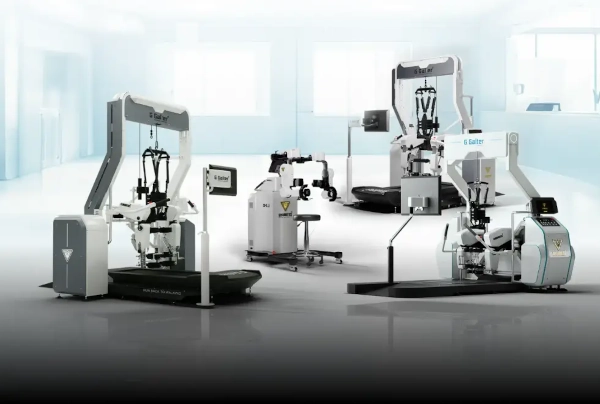
In healthcare, the company has developed G Gaiter, an AI-supported robotic gait-training system intended for rehabilitation following conditions such as stroke, spinal-cord injury, cerebral palsy and Parkinson’s disease.
The system uses a robotic exoskeleton, dynamic body-weight support and programmable therapy modes. Its passive mode guides the patient’s movement, assistive mode responds to the patient’s effort and active mode introduces resistance to support strength development. Sensors monitor movement and patient parameters, while software records rehabilitation progress.
Genrobotics has also developed a paediatric version for children requiring gait rehabilitation.
Its research division is working on bipedal humanoids, wheeled semi-humanoid platforms, autonomous mobility and systems designed for defence and extreme environments. The company’s announced research portfolio includes G Bot, a bipedal general-purpose humanoid, and Genbot, a modular wheeled robotic platform for logistics, security and industrial applications.
These projects share a common engineering foundation with Bandicoot: perception through sensors, controlled mechanical movement, remote supervision, operation in difficult environments and human-assistive design.
The Commercial Model
Genrobotics operates primarily in a business-to-government and business-to-business market. Its likely revenue streams include equipment sales, vehicle-integrated systems, annual maintenance, operator training, spare parts, software monitoring and specialised cleaning projects.
Municipalities represent a major market because urban local bodies are responsible for sewer and drainage maintenance. Public-sector companies, airports, refineries, industrial plants, hotels, hospitals and large commercial campuses may also require confined-space cleaning systems.
Corporate social-responsibility programmes offer another deployment route. A company may finance a robot for a municipality while Genrobotics provides the equipment, training and technical support.
The company’s long-term success will depend on recurring utilisation. A robot that is purchased for a public launch and subsequently remains idle creates limited impact. A robot integrated into ward-level cleaning schedules, supported by trained operators and maintained regularly can produce measurable improvements in safety and sewer maintenance.
Operational Challenges
Bandicoot addresses the dangerous act of entering a manhole, while the wider sanitation system still requires institutional reform.
Municipalities need accurate maps of underground networks, suitable waste-disposal sites, emergency-response protocols and preventive-maintenance schedules. Machines need reliable electricity or generators, transport vehicles, cleaning water and replacement parts. Operators require stable employment, technical training and clear authority to stop unsafe work.
Different manholes may also require different tools. A robotic grabber can remove solid deposits; a jetting machine may be better for pipe blockages; suction equipment may be required for liquid waste; inspection crawlers may be needed inside horizontal sewer lines.
Successful mechanisation therefore depends on choosing equipment according to the infrastructure rather than treating one machine as a universal solution.
Procurement practices present another challenge. Urban bodies frequently focus on the purchase price of machinery while giving less attention to maintenance, training and lifecycle cost. Robotics requires a service ecosystem capable of responding when cameras, seals, hoses, control systems or mechanical joints require repair.
Social Impact and Worker Dignity
The most important measure of Bandicoot’s success is whether it prevents human beings from entering hazardous sewer chambers.
Its social value increases when former manual workers receive sustained technical employment as operators, supervisors and maintenance personnel. The worker gains a safer role while preserving income and becoming part of a modern mechanised workforce.
This transition also changes public perception. Sanitation work becomes associated with technical skill, equipment operation and infrastructure management. The worker is recognised as an operator responsible for complex urban machinery.
Robotics alone cannot erase the historical inequalities surrounding sanitation labour. It can provide a practical instrument through which governments and institutions remove one of the most dangerous physical activities from the occupation.
Genrobotics – A Distinctive Model of Indian Innovation
Genrobotics represents a distinctive model of Indian innovation. The company began with a problem rooted in India’s cities, designed a machine around local infrastructure and developed a product capable of working in conditions ranging from Rajasthan’s heat to Leh’s high-altitude winter.
The company also demonstrates that advanced robotics can pursue commercial scale while addressing human dignity. Its machines combine mechanical design, electronics, sensors, artificial intelligence, pneumatics, waterproofing, computer vision and software interfaces.
Each deployment creates demand for engineers, manufacturing technicians, trainers, service personnel and robotic operators. It also strengthens India’s experience in designing machines for hazardous and unstructured environments—capabilities that can transfer into mining, disaster response, defence, industrial inspection and healthcare.
Bandicoot’s deeper significance lies in the idea behind it. The machine was developed around the question of where technology is most urgently needed rather than where it is easiest to deploy.
A robotic arm descending into a sewer may attract less attention than a humanoid walking across a stage. Its effect can be far more immediate. Every manhole cleaned through remote machinery represents one occasion when a worker can remain safely above ground.
Genrobotics has therefore built more than a manhole-cleaning robot. It has created an indigenous technology platform linking urban sanitation, worker rehabilitation, public policy and advanced engineering. Its continued impact will depend on cities adopting mechanisation as a daily operating standard and ensuring that sanitation workers become trained participants in that technological transition.
REFERENCES
Genrobotics. “Genrobotics: Leading Robotics Company in India.”
https://www.genrobotics.com/
Genrobotics Sanitation. “Bandicoot — Advanced Manhole Cleaning Robot.”
https://sanitation.genrobotics.com/bandicoot
Genrobotics Sanitation. “Who We Are.”
https://sanitation.genrobotics.com/about
Technopark, Government of Kerala. “Genrobotic Innovations Private Limited.”
https://technopark.in/company-details/6006?company=GENROBOTIC+INNOVATIONS+%28P%29+Ltd
Kerala Startup Mission. “Kerala Startup Ecosystem Report — Genrobotics.”
https://startupmission.kerala.gov.in/storage/reports/6a663aff-c316-4a74-af35-092576772b7b.pdf
Startup India. “National Startup Awards 2020 — Campus-Initiated Special Category: Genrobotic Innovations.”
https://www.startupindia.gov.in/nsa/campus.html
Startup India. “National Startup Awards 2020.”
https://www.startupindia.gov.in/content/dam/invest-india/Templates/public/newsletter/StartupIndia_NSA_Newsletter.pdf
Kerala Water Authority. “Bandicoot — Robotising Sewerage Manhole Cleaning.”
https://kwa.kerala.gov.in/en/sewerage-bandicoot-robotising/
Department of Social Justice and Empowerment, Government of India. “National Action for Mechanised Sanitation Ecosystem — NAMASTE.”
https://socialjustice.gov.in/schemes/37
India Code, Government of India. “The Prohibition of Employment as Manual Scavengers and Their Rehabilitation Act, 2013.”
https://www.indiacode.nic.in/bitstream/123456789/2119/1/201325.pdf
Genrobotics Sanitation. “Bandicoot Robot Deployment in Rajasthan.”
https://sanitation.genrobotics.com/case-studies/casestudybandicoot-robot-deployment-rajasthan-manhole-cleaning
Genrobotics Sanitation. “Bandicoot Robot in Leh.”
https://sanitation.genrobotics.com/case-studies/casestudybandicoot-robot-leh-ladakh-manhole-cleaning
Genrobotics Sanitation. “Bandicoot Mobility+ at Chhatrapati Sambhajinagar.”
https://sanitation.genrobotics.com/case-studies/casestudysmart-sewer-cleaning-aurangabad-bandicoot-mobility-plus
Genrobotics Sanitation. “G Mammoth 4-in-1.”
https://sanitation.genrobotics.com/g-mammoth
Genrobotics Sanitation. “Wilboar.”
https://sanitation.genrobotics.com/wilboar
Genrobotics Medical and Mobility. “G Gaiter — Advanced Robotic Gait Trainer.”
https://medical.genrobotics.com/g-gaiter/
Genrobotics Research and Development. “Advanced Robotics Research and Development.”
https://www.research.genrobotics.com/
Image Courtesy: Genrobotics.com
You may also like
-
Indian Scientists Discover How Rapidly Spinning Black Holes Produce High-Frequency X-Ray Oscillations
-
ICAR Scientists Develop Indigenous Protective Gloves for Cotton Farmers, Sign Commercial Manufacturing Agreement
-
India Moves Towards Five-Year Assured Orders for Defence Startups Under New Procurement Reforms
-
BHEL–Coal India Joint Venture Begins Construction of ₹25,016 Crore Indigenous Coal Gasification Project in Odisha
-
Zen Technologies Introduces Indigenous Hyper-Strike Falcon AI-Guided Counter-Drone Interceptor
