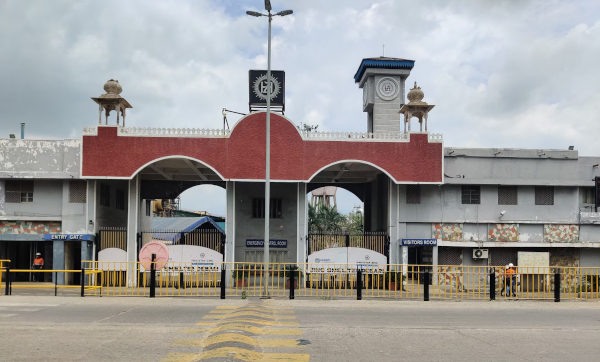
Hindustan Zinc Limited has deployed India’s first 250 metric tonne capacity electric crane at its Zinc Smelter Debari in Rajasthan, marking a major step in the use of clean technology for heavy industrial operations. The deployment strengthens the company’s wider decarbonisation programme and shows how large mining and metals companies are beginning to electrify even high-capacity equipment used in core plant operations.
The new crane is a diesel-electric hybrid all-terrain machine capable of operating on both electric and diesel power. Its introduction at the Debari smelter is significant because cranes of this capacity are normally associated with high diesel consumption due to the heavy lifting requirements of industrial sites. By shifting a large part of such operations to electric power, Hindustan Zinc is reducing fuel dependence while improving the environmental profile of its smelting operations.
The company expects the crane to reduce annual emissions by around 250.8 tonnes of carbon dioxide equivalent and replace nearly 93,600 litres of diesel consumption every year. These savings are important in a sector where heavy equipment, logistics, mining, smelting and material movement all contribute to the overall emissions footprint.
Hindustan Zinc CEO Arun Misra said the deployment reflects the company’s commitment to embedding sustainability into its operations, innovation and growth. SANY India, the technology partner for the project, has described the crane as India’s first 250-tonne diesel-electric hybrid all-terrain crane, developed for cleaner and more efficient industrial use.
The crane forms part of Hindustan Zinc’s expanding green mobility and clean equipment fleet. The company has already introduced India’s first underground battery electric vehicles at the Sindesar Khurd Mine, Rajasthan’s largest electric vehicle bulker fleet with 40 electric bulkers, and the state’s first electric passenger bus as part of a larger green mobility initiative. It has also deployed electric loaders at Rampura Agucha Mine and operates more than 250 LNG trucks, making it one of Rajasthan’s largest LNG fleet operators.
These initiatives are aligned with Hindustan Zinc’s long-term target of achieving Net Zero emissions by 2050 or earlier. The company has also set interim goals to cut Scope 1 and Scope 2 emissions by 50% and Scope 3 emissions by 25% from the 2020 baseline. Its clean energy transition is supported by more than 530 MW of commissioned renewable energy capacity.
The deployment of the 250 MT electric crane highlights the growing role of industrial electrification in India’s energy transition. While electric mobility is often associated with passenger vehicles and urban transport, heavy industry also offers major opportunities for fuel savings and emissions reduction. Electrifying cranes, loaders, bulkers, buses and underground vehicles can directly lower operational emissions in mining and metals production.
Hindustan Zinc has also gained global recognition for its sustainability work. The company has been named the world’s most sustainable metals and mining company for the third consecutive year in the S&P Global Corporate Sustainability Assessment 2025. It has launched EcoZen, Asia’s first low-carbon zinc brand, and became the first Indian producer to receive international Zinc Mark validation.
As the world’s largest integrated zinc producer and one of the leading global silver producers, Hindustan Zinc plays a major role in India’s metals ecosystem. Its latest clean equipment deployment at Debari shows how industrial decarbonisation can move beyond policy targets into practical plant-level transformation.
The introduction of India’s first 250 MT electric crane is therefore more than a single equipment upgrade. It is a signal that India’s mining and metals sector is beginning to adopt cleaner, smarter and more efficient technologies across heavy-duty operations. For Hindustan Zinc, it reinforces a clear direction: lower emissions, stronger operational efficiency and a future-ready industrial model built around sustainability.
You may also like
-
India to Track Challenges Faced by Women Entrepreneurs in New National Business Survey
-
India Updates Vehicle Rules to Strengthen E85 and E100 Flex-Fuel Technology
-
Adani Green Energy Expands Battery Storage to 6.63 GWh at Khavda, Strengthening India’s Renewable Power Infrastructure
-
India Monitors 1,853 Infrastructure Projects Worth ₹37.56 Lakh Crore, ₹17.73 Lakh Crore Already Spent
-
Manastu Space Secures ₹116 Crore Government Support to Develop Indigenous Green Propulsion Systems
