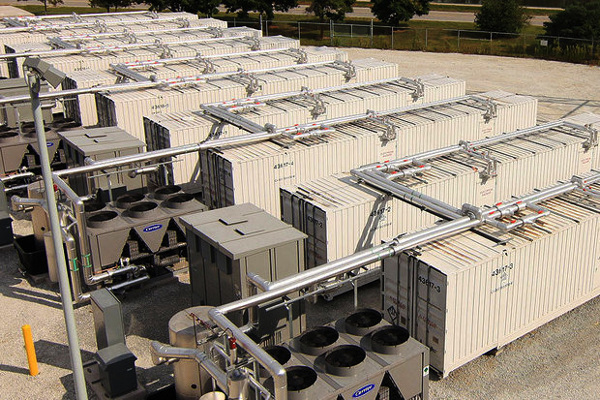
India’s clean energy story is now moving beyond solar panels and wind turbines. The next major layer is storage, and the first quarter of 2026 has shown how quickly that layer is beginning to expand. India added around 4.6 GWh of battery energy storage capacity in Q1 2026, taking cumulative installed battery storage capacity to about 5.9 GWh by March 2026. This was a sharp jump from the previous quarter and marks one of the clearest signs that storage is becoming a central part of India’s power infrastructure.
Battery energy storage systems, or BESS, solve one of the biggest challenges in renewable energy. Solar power is strongest during the day, wind power varies with weather, and electricity demand often peaks in the evening. Storage bridges this gap by saving surplus power when generation is high and releasing it when the grid needs support. For a country adding renewable capacity at record pace, storage is becoming essential for reliability, flexibility and round-the-clock clean electricity.
The scale of India’s storage addition in early 2026 is significant because it shows a shift from pilot projects to grid-level deployment. In earlier years, storage was mostly discussed as a future requirement. Now, large battery systems are being added to support renewable power projects, distribution networks, peak demand management and grid balancing. The Ministry of Power has also stated that 35.8 GWh of BESS capacity was under construction as of March 2026, showing that the current installed base is only the beginning of a much larger build-out.
Rajasthan has emerged as a leading state in cumulative battery storage capacity. This is natural because the state has some of India’s strongest solar resources and large renewable energy parks. As more solar projects come online in Rajasthan, Gujarat, Karnataka, Tamil Nadu and other renewable-rich states, storage will play a bigger role in absorbing excess generation and delivering power during high-demand hours.
The economic logic is strong. India’s electricity demand is rising due to urbanisation, air-conditioning load, industrial growth, electric mobility, data centres and digital infrastructure. At the same time, India is rapidly expanding renewable energy. The country added record renewable capacity in FY26, led by solar power, and total non-fossil capacity has continued to grow as a major share of the national power mix.
This creates a clear requirement for flexible power assets. Earlier, coal plants and gas plants carried much of the burden of grid balancing. In the new power system, batteries can respond within seconds, stabilise frequency, reduce curtailment of renewable power and support distribution companies during peak load. Storage can also help reduce the need for expensive short-term power purchases when demand rises sharply.
The storage push also supports India’s larger energy security agenda. A power system with strong domestic renewable generation and large storage capacity reduces dependence on imported fossil fuels. It helps India manage price shocks in global energy markets and improves long-term planning for states and industries. As green hydrogen, electric vehicles and renewable-powered manufacturing expand, energy storage will become even more valuable.
For industry, the growth of storage opens a new manufacturing opportunity. Battery packs, power conversion systems, thermal management systems, inverters, software controls, grid integration equipment and recycling ecosystems can create a strong domestic value chain. India’s Production Linked Incentive schemes, renewable energy targets and grid modernisation plans can together create demand for local manufacturing if implementation remains steady.
The financial side will be important. Battery storage projects require high upfront capital, long-term revenue certainty and clear market rules. Tariffs, viability gap funding, ancillary services markets and state-level procurement models will decide how quickly storage becomes commercially mainstream. Analysts have already pointed out that tariff viability and financing structures will be key hurdles as India scales storage deployment.
The policy direction is already visible. India has been creating frameworks for standalone storage, renewable energy plus storage tenders, pumped hydro storage, ancillary services and battery-linked grid support. The next stage will require faster project execution, transmission readiness, stronger distribution company participation and bankable contracts for developers.
The broader significance of the Q1 2026 storage addition is clear: India’s clean energy transition is entering a more mature phase. Solar and wind capacity expansion gave the country clean generation at scale. Battery storage now gives that generation stability, timing and dispatchability. This makes renewable energy more useful for homes, factories, cities and the national grid.
India’s 4.6 GWh addition in one quarter is therefore more than a capacity statistic. It is a signal that the country is building the backbone of a future power system where clean electricity can be stored, shifted and supplied when needed. As the project pipeline expands, energy storage could become one of the most important sectors in India’s next decade of infrastructure growth.
You may also like
-
India’s Economic Warfare Challenge: Strategic Autonomy, Energy Security and the Rise of a Global Power
-
India-US Trade Deal Stalemate: Why Washington’s Tariff Pressure Has Failed to Secure an Agreement
-
US Double Standards in Foreign Policy: 16 Recent Cases Involving India, Russia, China and Global Trade
-
India’s Arctic Energy Ambitions: Russian Oil, LNG and a New Sea Route to Indian Ports
-
India and Russia Explore Joint Icebreaker Construction as Maritime Industrial Cooperation Expands
