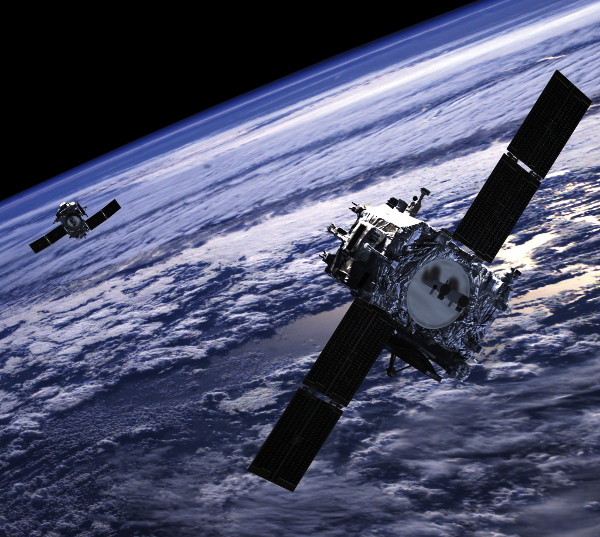
India’s space sector is entering a new phase of growth, with the country’s space economy projected to expand from the present USD 8–9 billion to nearly USD 40–45 billion over the next decade. The projection reflects the impact of policy reforms, private-sector participation, start-up activity and the wider use of space technology in governance, infrastructure and national development.
Union Minister Dr. Jitendra Singh said that India’s scientific progress has now moved beyond laboratories and entered the national mainstream. Space technology, atomic energy, digital systems, deep ocean research, health technology and advanced innovation are becoming part of India’s development story. This shift shows how science is being used directly for public benefit, economic growth and strategic capability.
The rise of India’s space start-up ecosystem is one of the strongest signs of this transformation. A sector that once had only a small number of private players now has more than 400 space start-ups. These companies are working across satellites, launch systems, space applications, data analytics, communication, earth observation, propulsion, robotics and downstream services. Their growth shows that India’s space sector is moving from a government-led model into a wider national innovation ecosystem.
India’s recent space achievements have also strengthened public confidence. Missions such as Chandrayaan-3 have taken space science into the imagination of ordinary citizens. Gaganyaan, India’s human spaceflight mission, has added another layer of ambition to the country’s space programme. Together, these missions have positioned India among the world’s leading space-faring nations.
Dr. Jitendra Singh also highlighted India’s ability to carry out complex space missions with efficiency, innovation and cost-effectiveness. India’s success in missions such as Chandrayaan and Mars Orbiter Mission created global recognition for the country’s scientific capability. This record has helped build trust in Indian technology and strengthened India’s position as a reliable technology partner.
One of India’s unique strengths is the use of space technology for governance and development. Satellite-based systems are now supporting infrastructure planning, urban development, project monitoring, disaster management, agriculture, mapping, transport and public service delivery. Programmes such as PM Gati Shakti and urban development missions show how space-based data can improve planning, execution and transparency.
This is important because space technology is no longer limited to rockets and satellites. It has become a tool for better roads, smarter cities, efficient logistics, improved resource mapping, stronger disaster response and faster infrastructure delivery. By integrating space applications into governance, India is turning scientific capacity into practical development power.
The Minister also referred to the recent PSLV mission anomaly and said that the analysis has been completed, the causes have been identified and corrective measures have been initiated. This reflects the natural learning cycle of every advanced space programme. Each mission adds experience, improves systems and strengthens future preparedness.
The wider message is that India’s scientific ecosystem is becoming a major driver of Viksit Bharat 2047. Start-ups, research institutions, industries, investors and policymakers are now working together to convert scientific research into social and economic outcomes. This collaboration is essential for building a developed India based on innovation, technology and self-reliance.
The remarks were made during the RISE Conclave 2026, held under the theme “Innovation & Entrepreneurship Driven Growth for Viksit Bharat 2047.” The conclave brought together researchers, start-ups, industry leaders, investors and policymakers to strengthen research-industry partnerships and promote innovation-led growth.
More than 125 start-ups and technology innovators participated in the event, showcasing solutions in aerospace technologies, artificial intelligence, deep-tech and agri-food innovation. Their participation showed the increasing diversity of India’s innovation ecosystem. It also showed how science and entrepreneurship are becoming closely linked in India’s development model.
India’s projected rise to a USD 45 billion space economy is therefore more than a sectoral milestone. It represents the emergence of a broader science-led growth model. With more than 400 space start-ups, growing private investment, stronger reforms and wider use of space technology in governance, India is preparing to make space a major pillar of its economic and strategic future.
The next decade will be important for this journey. As space applications expand into agriculture, infrastructure, defence, communication, climate monitoring and disaster response, India’s space economy can become a powerful engine of national development. The combination of ISRO’s legacy, private innovation, start-up energy and policy support gives India a strong foundation for global leadership in the space sector.
You may also like
-
Manastu Space Secures ₹116 Crore Government Support to Develop Indigenous Green Propulsion Systems
-
GeM’s AABHAR Collection Showcases 294 Indigenous Products, Strengthens Market Access for Indian Artisans
-
Balaghat Chinnor Rice of Madhya Pradesh: The Fragrant Heritage Grain with GI Recognition
-
Indian Semiconductor Companies Propose New Manufacturing and Chip Design Investments in Madhya Pradesh
-
CSIR-CRRI Partners with Industry to Develop Advanced Indigenous Airport Runway and Pavement Materials
