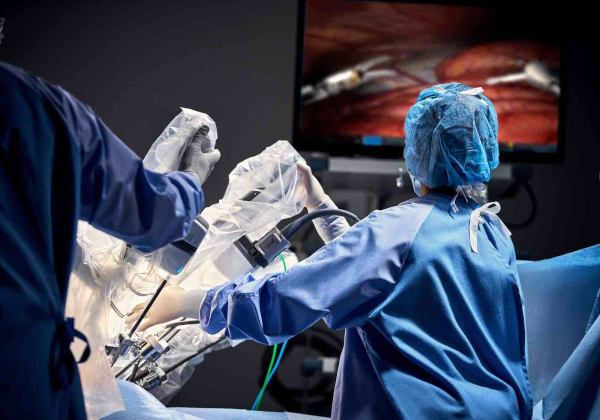
India’s journey toward affordable high-precision healthcare has taken an important step with PGI Chandigarh adopting a home-grown surgical robotic system for kidney transplant procedures. The development marks a powerful moment for Indian medical technology because it brings together advanced surgery, indigenous innovation and public-sector clinical excellence.
Kidney transplantation is among the most delicate and life-changing procedures in modern medicine. It requires surgical precision, careful tissue handling, reliable vascular control and close coordination between donor and recipient teams. When robotic assistance enters this field, it offers surgeons a refined operating platform with improved visibility, better control and minimally invasive access. For patients and donors, this can mean smaller incisions, reduced tissue trauma, faster recovery and greater surgical confidence.
PGI Chandigarh has already completed procedures using the indigenous robotic platform in 10 living-donor cases. The institute now plans to complete 20 cases as part of the validation phase before expanding the protocol. This phased approach is important because transplant surgery demands strict safety, repeatability and clinical discipline. Each case adds valuable data on performance, outcomes, workflow, surgeon comfort and patient recovery.
The biggest importance of this achievement lies in the use of an Indian robotic system. Robotic surgery has often been associated with expensive imported platforms, high operating costs and limited access. A domestically developed system changes this equation. It creates the possibility of advanced robotic surgery at a more affordable scale, especially in public hospitals and high-volume medical institutions.
This is where the PGI achievement becomes larger than one hospital. India has thousands of patients waiting for kidney transplants, and living donors play a central role in giving them a second chance at life. If robotic transplant-related surgery becomes more accessible, it can improve the experience of donors and help transplant programmes become more efficient. Donor safety and comfort are central to any transplant system, and minimally invasive technology can strengthen confidence in the donation process.
For surgeons, robotic assistance offers a major technical advantage. The system provides enhanced three-dimensional vision, fine instrument movement and stable control inside narrow surgical fields. In kidney donor surgery, where blood vessels and surrounding tissues must be handled with extreme care, this level of precision can support safer dissection and better operative planning.
The development also reflects India’s growing strength in medical engineering. A surgical robot is not only a machine; it is a combination of mechanical design, electronics, imaging, software, ergonomics, safety systems and clinical feedback. Building such a platform within India shows that the country is moving from medical device consumption to medical device creation.
The affordability angle is equally important. High-end surgery should not remain limited to a few private centres or elite urban hospitals. Public institutions like PGI have the ability to validate, train and scale medical innovation for wider use. When indigenous technology enters such institutions, it creates a bridge between innovation and social impact.
India’s healthcare system needs this kind of bridge. The country has world-class surgeons, large patient volumes, strong hospital networks and a growing biotechnology ecosystem. Indigenous robotic surgery can connect all these strengths. It can reduce dependence on foreign equipment, lower long-term costs, improve training capacity and support medical exports in the future.
The PGI milestone also carries value for surgical education. Young doctors trained on Indian robotic platforms can become part of a new generation of technology-ready surgeons. As more procedures are performed, India can develop its own operating protocols, training modules, safety standards and clinical evidence base. This will help robotic surgery become a structured part of public healthcare rather than a rare premium service.
The kidney transplant application is especially meaningful because it combines precision with human generosity. A donor gives an organ to save another life, and the medical system carries the responsibility of protecting that donor with the safest possible care. Robotic assistance can make that responsibility stronger by making surgery more controlled and less invasive.
This achievement also fits into the broader Make in India vision for advanced healthcare. India has already become a major global supplier of medicines and vaccines. The next frontier is high-value medical technology. Surgical robots, imaging systems, implants, diagnostics and digital health platforms can place India in a stronger position in the global medical technology market.
PGI Chandigarh’s adoption of an indigenous robotic system shows that Indian innovation is now entering highly complex clinical spaces. The success of the validation phase will be watched closely because it can open the door for wider use in transplant centres across the country.
The larger message is clear. India is building the capacity to perform advanced surgery with its own technology, its own surgeons and its own institutional strength. The Indian surgical robot’s debut in kidney transplant procedures is not only a medical milestone. It is a signal that the future of affordable precision surgery in India is beginning to take shape inside the country itself.
You may also like
-
India Backs Ceramat to Commercialise 3D-Printed Patient-Specific Bone Grafts
-
Dinacharya in Ayurveda: Building a Daily Routine for Better Health
-
Abhyanga: The Ayurvedic Practice of Daily Oil Massage
-
Dr. Reddy’s Launches Made-in-India Nivolumab Biosimilar NIVORZ Across 12 Cancer Indications
-
Centre Proposes Mandatory CCTV at Medical Stores to Curb Unauthorised Sale of Prescription Drugs
