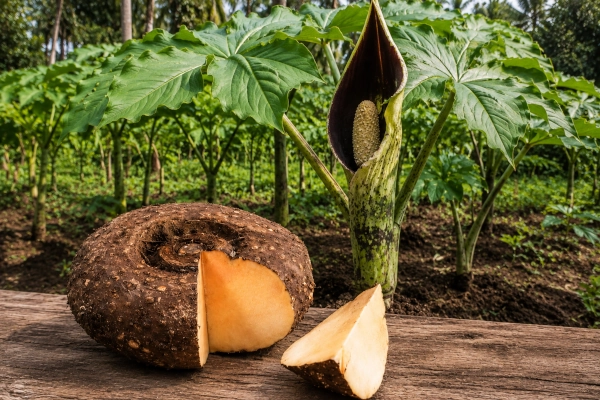
Surana, commonly known as elephant foot yam or Jimikand, is a large underground corm valued in India as both a vegetable and an Ayurvedic dietary ingredient. Its currently accepted botanical name is Amorphophallus paeoniifolius (Dennst.) Nicolson, belonging to the family Araceae. The older name Amorphophallus campanulatus, which appears in several Ayurvedic publications and recipe compilations, is now treated as a botanical synonym.
Surana occupies a distinctive position in Ayurveda because it is regarded as nourishing when properly prepared while also possessing strong digestive and channel-clearing qualities. Classical descriptions particularly associate it with weak digestion, abdominal heaviness, piles and certain Kapha–Vata disorders. Its pungency and occasional irritating effect, however, make correct cooking and judicious use important.
Names of Surana
Sanskrit names: Surana, Kandula
Hindi: Jimikand, Suran
English: Elephant foot yam
Malayalam: Chena
Tamil: Senai Kizhangu
Telugu: Kanda Gadda
Bengali: Ol
Botanical name: Amorphophallus paeoniifolius
Family: Araceae
Part used: Underground corm
Description of the Plant
Surana is a robust tropical herb arising from a large, irregularly rounded underground corm. The rough, dark outer surface of the corm gives it an elephant-foot-like appearance, inspiring its English name.
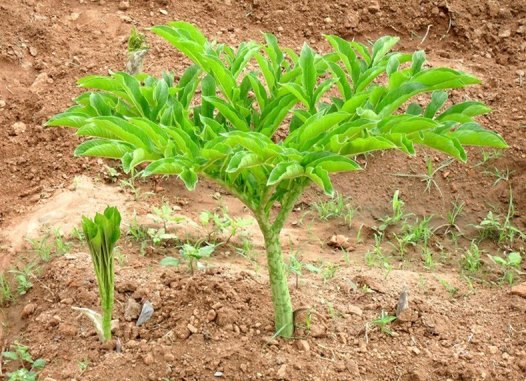
A single tall, mottled stalk generally emerges from the ground and divides into a broad umbrella-like leaf. The plant may also produce a large and unusual inflorescence consisting of a fleshy central spadix enclosed by a broad spathe. The species occurs naturally across India and several parts of tropical and Southeast Asia.
The cultivated corm is harvested, cleaned, peeled and thoroughly cooked before being consumed. Different regional cuisines prepare it as curries, roasted dishes, pickles, fried preparations and spiced mashes.
Ayurvedic Understanding of Surana
Ayurvedic descriptions of Surana vary slightly according to the variety, maturity and method of preparation. In general, properly processed Surana is understood through the following qualities:
Rasa — taste: Predominantly Katu, or pungent, with Kashaya or astringent undertones
Guna — qualities: Laghu, Ruksha and Tikshna; relatively light, drying and penetrating after proper preparation
Virya — potency: Ushna, or heating
Vipaka — post-digestive effect: Katu
Dosha action: Primarily reduces Kapha and supports the regulation of Vata when appropriately cooked and seasoned; excessive or unsuitable use may aggravate Pitta or cause irritation
Principal actions: Deepana, Pachana, Rochana, Anulomana, Arshoghna, Shothahara and Krimighna
Classical vegetable classifications describe Surana as appetising, digestive, relatively light and helpful in reducing Kapha. Ayurvedic reviews also associate it with Deepana, the stimulation of digestive activity; Pachana, the digestion of poorly processed metabolic material; Anulomana, the proper downward movement of Vata; and Arshoghna, usefulness in traditional management of piles.
Surana and Digestive Fire
One of the most important Ayurvedic attributes of Surana is its action on Jatharagni, the digestive fire. Its heating and penetrating nature is traditionally considered useful when digestion is slow and food produces heaviness, bloating or excessive Kapha.
When cooked with ginger, black pepper, cumin, coriander, buttermilk or sour ingredients, Surana becomes more digestible. These accompanying substances are traditionally used to moderate its heaviness, reduce gas formation and strengthen its Deepana–Pachana action.
Its fibre content also makes well-cooked elephant foot yam a substantial food. Contemporary nutritional reviews describe the corm as a source of carbohydrates, fibre, protein and minerals while being naturally low in fat.
Traditional Uses of Surana
Arsha — piles
Surana is especially prominent in Ayurvedic discussions of Arsha, or haemorrhoids. Poor digestion, constipation, impaired movement of Apana Vata and congestion within the lower digestive tract are traditionally regarded as contributing factors.
Properly prepared Surana is used in classical dietary and medicinal formulations intended to improve appetite, promote digestion, regulate bowel movement and reduce Kapha-related obstruction. This traditional reputation explains why Surana frequently appears in formulations containing ginger, black pepper, Chitraka and jaggery.
These preparations belong to professional Ayurvedic practice and should not replace clinical assessment, particularly where there is rectal bleeding, severe pain, anaemia or a change in bowel habits.
Gulma and abdominal distension
The term Gulma covers several classical patterns involving abdominal fullness, palpable or shifting masses, pain and disturbed Vata. Surana’s Ushna and Deepana qualities were traditionally employed where such symptoms were associated with digestive weakness, gas and Kapha–Vata stagnation.
Udara Shoola — abdominal pain
Spiced Surana preparations are traditionally used for certain forms of abdominal discomfort arising from weak digestion and accumulated gas. Persistent or severe abdominal pain requires medical diagnosis because it can arise from many conditions unrelated to digestion.
Krimi — intestinal organisms
Ayurvedic literature describes Surana as Krimighna, traditionally useful in dietary measures for intestinal worms or unhealthy intestinal conditions. Modern laboratory research has explored antimicrobial and related biological activities, although such early findings do not establish Surana as a substitute for clinically approved treatment.
Shotha — swelling
Surana is also described as Shothahara in traditional usage. Its application was generally linked with disorders involving Kapha, sluggish metabolism and localised swelling. Contemporary investigations have reported anti-inflammatory activity in experimental settings, but the quality and clinical relevance of this evidence remain limited.
The Chakradatta Manuscript
The recipe presented below is attributed to Chakradatta, Chapter 5, verses 46–47. Chakradatta, also known as Chikitsa Sangraha, is an influential Ayurvedic compendium compiled by the physician-scholar Chakrapanidatta, generally placed in the eleventh century CE. It is organised mainly around the treatment of diseases and brings together practical formulations drawn from earlier medical traditions, including material associated with Vrinda Madhava. The work contains 79 chapters covering medicine, surgery and the wider branches of Ayurveda, and it remains valued for its concise presentation of clinically oriented formulations.
The formulation in the supplied source is named Swalpa Surana Modaka, meaning a comparatively simple or compact Surana-based bolus. It combines boiled elephant foot yam with three strongly digestive spices and jaggery. The ratio places Surana at the centre of the preparation, while Chitraka, dry ginger and black pepper intensify its Deepana–Pachana character.
Swalpa Surana Modaka
Sweetened Elephant Foot Yam, Ginger and Pepper Balls
Classical reference: Chakradatta, 5/46–47
Category: Ashita — an eatable preparation
Ingredients
| Ingredient | Common identity | Part used | Classical ratio |
|---|---|---|---|
| Guda | Jaggery | — | 15 parts |
| Surana | Elephant foot yam, Amorphophallus paeoniifolius | Corm | 8 parts |
| Chitraka | Leadwort, Plumbago zeylanica | Root | 4 parts |
| Shunthi | Dry ginger, Zingiber officinale | Rhizome | 2 parts |
| Maricha | Black pepper, Piper nigrum | Fruit | 1 part |
Traditional method of preparation
- Clean, peel and thoroughly boil the required quantity of Surana.
- Mash the cooked corm until it becomes smooth.
- Separately prepare fine powders of Chitraka, Shunthi and Maricha.
- Add the powdered ingredients and jaggery to the mashed Surana.
- Mix thoroughly until a uniform mass is formed.
- Shape the mixture into small round Modakas or balls.
The manuscript describes the preparation as Jatharagni Deepaka, meaning that it kindles or supports digestive fire.
Classical indications
The formulation is traditionally mentioned in relation to:
Udara Shoola: abdominal pain associated with disturbed digestion
Gulma: classical abdominal distension or mass-like disorders
Arsha: different types of piles
Shleepada: the classical condition characterised by marked swelling of a limb, commonly interpreted in later medical literature in relation to elephantiasis
These are traditional indications recorded in an Ayurvedic therapeutic context. They should not be understood as proof that the recipe cures the corresponding modern medical diseases.
Why the Ingredients Are Combined
Surana
Surana supplies the principal bulk of the preparation. It is traditionally appetising, digestive, Kapha-reducing and particularly associated with formulations for Arsha.
Guda
Jaggery binds the powdered ingredients and allows the mixture to be rolled into Modakas. Its sweetness moderates the sharpness of Chitraka, ginger and pepper while making the formulation easier to consume.
Chitraka
Chitraka is a potent Deepana–Pachana herb traditionally used where digestive fire is weak. Its root is intensely heating and irritant and must be used only in properly prepared quantities under professional guidance.
Shunthi
Dry ginger supports digestion, reduces Ama-related heaviness and helps regulate Kapha and Vata in the gastrointestinal tract.
Maricha
Black pepper adds a sharp, penetrating quality and traditionally enhances appetite, digestion and the distribution of accompanying substances.
Together, the ingredients form a distinctly heating formulation intended for digestive sluggishness and Kapha–Vata obstruction. This same intensity makes it unsuitable for indiscriminate daily use.
Traditional Culinary Processing
Raw or inadequately prepared elephant foot yam can produce itching, prickling or irritation of the mouth and throat. Plants of the Araceae family commonly contain needle-shaped calcium oxalate crystals that contribute to this sensation.
Traditional kitchens therefore use measures such as:
- peeling the corm carefully;
- boiling it thoroughly;
- discarding the cooking water where appropriate;
- cooking it with souring agents such as tamarind or buttermilk;
- adding digestive spices;
- avoiding undercooked pieces.
The yam should always be fully cooked before consumption.
Precautions
Surana may not suit people experiencing active gastritis, acid reflux, burning sensations, inflammatory bowel symptoms or marked Pitta aggravation. Large portions may cause gas, heaviness or digestive discomfort.
Swalpa Surana Modaka contains a relatively high proportion of Chitraka, a powerful medicinal root. It should not be prepared from ratios alone or consumed as a home remedy without the supervision of a qualified Ayurvedic physician. It may be unsuitable during pregnancy, active ulcers, bleeding disorders, severe acidity and in people taking medicines that affect digestion or blood clotting.
Rectal bleeding, persistent abdominal swelling, suspected filariasis or unexplained abdominal pain requires examination by a medical professional.
Conclusion
Surana demonstrates the Ayurvedic principle that a food can also acquire therapeutic importance through selection, processing and combination. Elephant foot yam is substantial and nourishing as a vegetable, yet its heating, penetrating and digestive nature gives it a specialised role in traditional formulations for weak Agni, Kapha–Vata stagnation, abdominal discomfort and piles.
The Swalpa Surana Modaka of Chakradatta illustrates this approach clearly. Boiled yam is combined with jaggery, Chitraka, dry ginger and black pepper to produce a strongly Deepana preparation. Its historical value is considerable, but its medicinal intensity also calls for careful professional interpretation rather than unsupervised use.
References
- Chakrapanidatta. Chakradatta or Chikitsa Sangraha, Chapter 5, verses 46–47: Swalpa Surana Modaka.
- Royal Botanic Gardens, Kew. Plants of the World Online: Amorphophallus paeoniifolius (Dennst.) Nicolson.
- Saha S, Chowdhury K, Rao MV. “Therapeutic Potential of Surana (Amorphophallus campanulatus): A Systematic Review Integrating Classical Ayurvedic and Contemporary Scientific Evidences.” Journal of Ayurveda and Integrated Medical Sciences. 2025;10(5):154–160.
- Dey YN, Ota S, Srikanth N, Jamal M, Wanjari M. “A Phytopharmacological Review on an Important Medicinal Plant—Amorphophallus paeoniifolius.” Ayu. 2012;33(1):27–32.
- Royal Botanic Gardens, Kew. Medicinal Plant Names Services: Amorphophallus paeoniifolius.
- Bhavaprakasha Nighantu, classical descriptions of Surana and tuberous vegetables.
Health disclaimer: This article describes traditional Ayurvedic knowledge for educational purposes. It is not a diagnosis, prescription or substitute for treatment by a qualified physician.
You may also like
-
Ayurveda on Cold Foods and Iced Drinks: Why Food Temperature Matters for Digestion
-
Serum Institute of India-Manufactured Ebola Vaccine Enters Clinical Trial in Uganda
-
Ayurveda and Hydration: How Much Water Should We Really Drink?
-
Warm Water in Ayurveda: When and Why It Is Recommended
-
Women Make Up 43% of India’s Ayush Workforce as Sector Supports 17.6 Lakh Livelihoods
