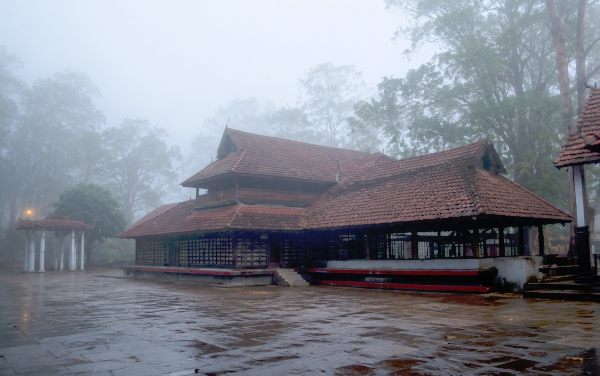
Mullakkal Rajarajeswari Temple, also known as Mullakkal Bhagavathy Temple, is one of the most prominent Devi shrines in Alappuzha town. Located in the heart of Alleppey, the temple stands as a living centre of faith, festival culture and Kerala-style temple architecture. In a town famous for backwaters, canals, coir, boats and old trading streets, Mullakkal Temple gives Alappuzha its sacred centre — a place where the city’s everyday life, devotional rhythm and cultural memory meet.
The presiding deity of the temple is Goddess Rajarajeswari, worshipped here as a powerful form of Bhagavathy/Durga. Kerala Tourism describes the temple as a grand Kerala-style shrine where Goddess Durga is the main deity, with other deities including Hanuman, Ganesha, Krishna, Ayyappa, Nagaraja and the Navagrahas also worshipped within the temple complex. The temple is believed to be around 500 years old, making it one of the important historic temples associated with Alappuzha’s religious landscape.
A Temple Rooted in the Heart of Alappuzha
Unlike many Kerala temples that are located in forested, riverside or old royal settlements, Mullakkal Temple is closely woven into an urban townscape. It is situated in Mullakkal, within Alappuzha Municipality, and is easily accessible from the town centre. The temple’s position gives it a special identity: it is not merely a pilgrimage destination visited once in a while, but a daily spiritual landmark for the people of Alappuzha. Local residents, traders, families, students and travellers pass through this area, and the temple remains one of the most familiar devotional spaces in the town.
The name “Mullakkal” itself is traditionally connected with jasmine. Local legends describe the temple’s origin in a jasmine garden, and the Malayalam word “mulla” refers to jasmine. This association gives the shrine a gentle poetic character: a powerful Bhagavathy seated in a garden of fragrance, later becoming the guardian deity of a growing coastal town.
The Presiding Deity: Rajarajeswari Bhagavathy
The goddess worshipped at Mullakkal is Rajarajeswari, a majestic and compassionate form of the Divine Mother. The name Rajarajeswari means “Queen of Queens” or “Supreme Sovereign Goddess,” suggesting both royal authority and maternal grace. In Kerala’s Bhagavathy tradition, Devi is not seen only as a distant cosmic force; she is the protector of the land, the giver of prosperity, the remover of fear and the guardian of families.
At Mullakkal, devotees approach the goddess with prayers for protection, health, family welfare, prosperity, education and relief from difficulties. The temple’s devotional atmosphere is especially strong during festivals, when the goddess is worshipped with lamps, flowers, music, processions and special offerings. The temple is also closely associated with women’s devotion, especially during festival days when large numbers of women come to light lamps and offer prayers.
Legends and Historical Traditions
Several legends are associated with the origin of Mullakkal Rajarajeswari Temple. One important tradition says that soldiers connected with the Thekkumkur kingdom brought idols to the region and placed them in a jasmine garden. Later, King Devanarayana of Chembakassery is believed to have constructed a temple in that garden. This legend is recorded in Kerala Tourism’s festival documentation, which also notes the temple’s antiquity and its connection with the jasmine-garden setting.
The Chembakassery connection is important because the Alappuzha-Ambalappuzha region has strong historical links with older Kerala principalities, temple patronage and royal religious institutions. Temples in Kerala were often built not only as places of worship but also as centres of social order, art, food distribution, music and local identity. Mullakkal Temple belongs to that older pattern: a shrine around which a town’s cultural life gradually gathered.
Another important aspect of the temple’s tradition is the west-facing idol. Kerala Tourism’s festival document notes that the idol faces west, unlike many temples where the deity faces east. In temple symbolism, the direction of the deity often becomes part of local belief. Devotees consider such unusual features spiritually significant, and at Mullakkal the west-facing presence of Rajarajeswari adds to the shrine’s distinct identity.
Architecture: Traditional Kerala Style with a Unique Open-Roof Feature
Mullakkal Rajarajeswari Temple is built in traditional Kerala style. This means the temple’s appearance is shaped by sloping tiled roofs, wooden elements, open spaces, lamps and a structure suited to Kerala’s climate. Kerala temple architecture is usually practical and sacred at the same time: roofs are designed for heavy monsoon rain, courtyards allow ritual movement, and the use of wood, laterite, tiles and lamps gives the shrine its characteristic atmosphere.
One of the most distinctive features of Mullakkal Temple is the open-roof design above the main shrine. Kerala Tourism’s festival documentation describes it as a unique temple where the main roof is kept open and specially designed for Vana Devi. This gives the shrine a rare architectural and spiritual quality. The open-roof concept creates a powerful symbolic effect: the goddess is not enclosed entirely from the sky, nature and cosmic space. It also connects the temple to Kerala’s older sacred-grove imagination, where Devi worship was often associated with trees, earth, fertility and natural energy.
The temple complex also includes shrines for other deities. DTPC Alappuzha records that the temple has shrines dedicated to Hanuman, Krishna, Ganesha, Ayyappa and Nagaraja, along with the Navagraha representation. This makes the temple a complete devotional space where devotees can offer prayers to multiple deities while keeping Rajarajeswari Bhagavathy as the central divine presence.
Ritual Life and Daily Worship
The spiritual life of Mullakkal Temple is built around daily worship, lamp offerings, flower offerings, special poojas and seasonal rituals. Like most Bhagavathy temples in Kerala, the atmosphere is especially powerful in the evenings when lamps are lit and the temple space fills with the sound of bells, chants and devotional music. The goddess is worshipped not simply as an idol but as a living presence who protects the town and receives the prayers of generations.
The temple is also known for its festive ritual beauty. During major celebrations, the shrine is decorated with plantain, coconut leaves, flowers, traditional lamps and lights. The Kerala Tourism festival document mentions special poojas, Kalabham Charthu — the application of perfumed sandalwood paste on the idol — cultural programmes and annadanam as part of the temple’s festival observances.
Mullakkal Chirappu: The Grand Festival of Alappuzha
The most important festival of Mullakkal Rajarajeswari Temple is Mullakkal Chirappu. Kerala Tourism describes it as the biggest festival of the temple, celebrated during November–December, lasting 41 days, with the final 11 days known as Chirappu. The last two days are considered especially sacred and are marked by grand celebrations, elephant processions, fireworks and cultural programmes.
Mullakkal Chirappu is not just a temple festival; it is one of Alappuzha town’s great cultural events. During the festival season, the streets around the temple become lively with lights, temporary stalls, devotional crowds, music and festive movement. The festival document notes that the annual Chirappu attracts thousands of devotees and visitors, including tourists, and that the temple streets take on a festive appearance with illuminated gopurams and stalls selling various items.
The festival also reflects Kerala’s rich performing arts tradition. Cultural programmes associated with Chirappu include percussion music, musical concerts, classical dance, drama, Kathakali, Ottanthullal, Thiruvathira, Bharatanatyam, Mohiniyattam and Kadhaprasangam. In this way, the temple becomes not only a religious centre but also a cultural stage where classical, folk and devotional art forms continue to be performed before the community.
Annadanam, or the sacred offering of food, is another important part of the festival. In Kerala temple culture, feeding devotees is not merely charity; it is a sacred act linked to the goddess’s grace. During festivals like Mullakkal Chirappu, annadanam strengthens the temple’s role as a community centre where devotion, food, art and social participation come together.
Navarathri and Devi Worship
Navarathri is another major festival celebrated at Mullakkal Temple. Kerala Tourism notes that Navarathri, usually falling around October, is celebrated here in a grand manner. This is natural for a temple dedicated to Rajarajeswari Bhagavathy, because Navarathri is one of the most important periods of Devi worship in the Hindu calendar.
During Navarathri, the goddess is worshipped in her forms of power, knowledge and prosperity. The festival is especially meaningful for students, artists, musicians and families, as the final days of Navarathri are associated with Saraswati worship, Vidyarambham and reverence for learning. In a town like Alappuzha, where temple festivals are also cultural events, Navarathri becomes a time when devotion and art merge beautifully.
Women’s Festival and Lamp Worship
One of the most touching features associated with Mullakkal Chirappu is the women’s festival. Kerala Tourism’s festival documentation states that the first Sunday of December is celebrated as women’s festival, when rituals and worship are performed by women and women from different areas come to light lamps in the temple.
This tradition gives Mullakkal Temple a strong feminine devotional identity. A Bhagavathy temple naturally attracts women devotees, but a festival day centred on women’s worship adds a special layer of meaning. Lamps lit by women before the goddess become symbols of family welfare, inner strength, auspiciousness and continuity of tradition. In Kerala’s sacred culture, the lamp is not simply an object of worship; it is a sign of presence, purity and divine protection.
The Temple as Alappuzha’s Cultural Landmark
Mullakkal Rajarajeswari Temple is important because it represents the devotional heart of Alappuzha town. Alappuzha is often described through its backwaters, houseboats and canals, but its temple culture is equally rich. Mullakkal Temple shows another side of the town: its old streets, Devi worship, festival processions, lamps, elephants, music and community gatherings.
During Mullakkal Chirappu, the temple’s influence spreads beyond the compound walls. Streets become festive, shops remain active, families visit together, artists perform, devotees line up for darshan and the whole locality takes on the atmosphere of a traditional Kerala festival town. This ability to transform an urban space into a sacred festival landscape is one of the temple’s greatest cultural contributions.
How to Reach Mullakkal Rajarajeswari Temple
Mullakkal Rajarajeswari Temple is very easy to reach because it is located within Alappuzha town. DTPC Alappuzha lists the temple as about 900 metres from Alappuzha Bus Stand, about 4 km from Alappuzha Railway Station, and about 83.3 km from Cochin International Airport. Kerala Tourism’s festival document also places the temple within Alappuzha Municipality and notes its proximity to Alappuzha town, bus station and railway station.
Visitors staying near Alappuzha town, the boat jetty area or the beach can reach the temple easily by auto-rickshaw, taxi or local bus. Since the temple is in a busy town area, festival days may bring heavy crowds and traffic diversions, especially during Mullakkal Chirappu. For a peaceful visit, mornings and early evenings on non-festival days are ideal. For those who want to experience the temple’s cultural grandeur, the Chirappu season is the best time.
DTPC Alappuzha lists the temple timings as 5:00 AM to 12:00 PM and 5:00 PM to 9:00 PM on all days, though visitors should check locally during festival periods as timings may vary.
Mullakkal Rajarajeswari Temple is more than a prominent Bhagavathy shrine in Alappuzha. It is a temple of memory, beauty and living tradition. Its legends connect it with kings, soldiers, jasmine gardens and old Kerala principalities. Its architecture preserves the grace of Kerala temple design, especially through its unique open-roof feature. Its festivals turn Alappuzha into a glowing sacred town filled with lamps, music, elephants, food offerings and cultural performances.
At the centre of it all stands Rajarajeswari Bhagavathy — the sovereign mother, the protector of the town, the goddess before whom generations of Alappuzha families have prayed. For pilgrims, the temple offers devotion. For travellers, it offers heritage. For Kerala’s cultural history, it remains one of the important living Devi shrines of the coastal south.
You may also like
-
Kachchha in the Mahabharata: The Ancient Kaccha Region of Gujarat’s Kutch
-
Medieval Temple Relics Unearthed at Saptakoteshwar Site Reveal Forgotten Sacred Complex in Goa
-
Lata and the Mahabharata-Era Geography of Southern Gujarat: The Ancient Region Between the Mahi and Tapi
-
Saurashtra in the Mahabharata: The Ancient Kingdom of Gujarat’s Kathiawar Peninsula
-
From Mahabharata to Santoor: PM Modi’s Gifts Showcase India’s Civilisational Ties with Central Asia
