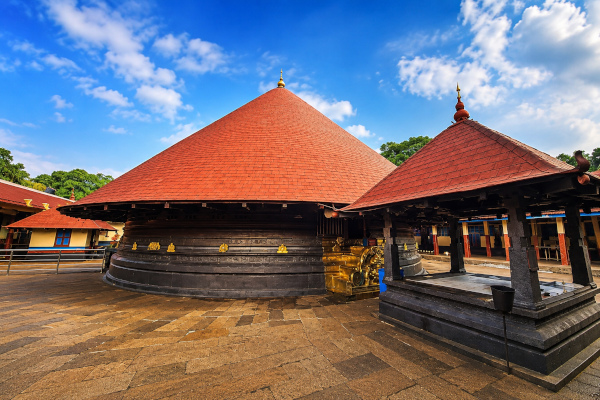
Chengannur Mahadeva Temple, located in Chengannur town in Kerala’s Alappuzha district, is one of the most distinctive Shiva-Parvati temples in the state. Though Chengannur is administratively part of Alappuzha, its cultural geography places it close to the Pathanamthitta–Thiruvalla temple belt, making it a major spiritual landmark for devotees travelling through central Travancore. The temple is dedicated to Lord Shiva as Mahadeva and Goddess Parvati as Bhagavathy, and Kerala Tourism describes it as a shrine believed to be more than 1,500 years old, traditionally associated with the legendary master architect Perunthachan.
What makes Chengannur Mahadeva Temple extraordinary is the equal spiritual importance given to both Shiva and Parvati. In many Shiva temples, the Goddess appears as a subsidiary presence, but here Devi is central to the temple’s identity. The Sabarimala pilgrimage portal describes Chengannur Mahadevar Temple as an old and famous shrine with two principal divine presences: Lord Shiva facing east and Parvati Devi facing west. The main shrine is described as a conical, copper-plated structure, while the Devi idol is made of panchaloha, the traditional five-metal sacred alloy used in many ancient South Indian icons.
The temple’s sacred personality is shaped by this rare duality. Chengannur is not merely a Shiva temple with a Devi shrine attached to it; it is a temple where the divine couple is worshipped in a deeply integrated form. Devotees approach Mahadeva for protection, inner strength, removal of obstacles and spiritual grounding, while Bhagavathy is revered as the living mother, the embodiment of fertility, auspiciousness, feminine power and household welfare. This balance of ascetic Shiva and maternal Parvati gives the temple a unique emotional force among Kerala’s sacred spaces.
According to temple tradition, the shrine is linked to the divine marriage of Shiva and Parvati. One widely repeated belief says that after their wedding in the Himalayas, Parvati came to Chengannur and experienced menstruation here. This legend lies behind the temple’s most famous and unusual ritual tradition, the Thriputharattu or Thripputhu festival. Rather than treating menstruation as something impure in a social sense, the temple tradition frames it within sacred fertility, divine womanhood and the living presence of the Goddess. Kerala Tourism notes that the four-day Thriputharattu festival is observed when the sign of menstruation is seen on the vesture of the Goddess.
Thriputharattu is the temple’s defining ritual and one of the rarest Goddess festivals in India. During this observance, the Devi’s presence is treated with the tenderness and ritual seriousness given to a living mother. The temple’s special-festival page says that on the fourth day, the Devi’s idol is taken to the nearby river for Arattu, or ritual bathing, after which she is brought back to the temple in procession. When the procession returns to the nalambalam near the main entrance, Bhagavan Mahadeva is believed to be waiting there, and the divine pair together circumambulate the temple in procession.
This ritual gives Chengannur a theological depth that is rarely seen elsewhere. The festival is not simply a public celebration; it is a ritual drama of divine companionship. Shiva is not shown as a distant ascetic but as the waiting consort. Parvati is not treated as an abstract goddess but as a living, embodied divine mother. The procession, the Arattu, the return, and the meeting of the deities together create a powerful image of cosmic balance: masculine and feminine, austerity and fertility, stillness and movement, temple and river.
Architecturally, Chengannur Mahadeva Temple follows the classic Kerala temple idiom. The sloping tiled roofs, wooden structural elements, spacious courtyard, nalambalam enclosure and traditional temple gateway reflect the climate-sensitive design of Kerala’s sacred architecture. The shrine is described by the Sabarimala portal as a sprawling temple complex with a circular sanctum, while Kerala Tourism highlights its traditional temple architecture and long association with Kerala’s sacred craft traditions.
The temple’s layout also reflects the ritual grammar of Kerala temples. The outer approach leads the devotee gradually inward from the public world into the sacred centre. The flagstaff, the temple courtyard, the circumambulatory path and the sanctum together create a layered movement from everyday life toward divine presence. Unlike towering Dravidian temples of Tamil Nadu, Kerala temples often emphasise enclosure, proportion, timber craftsmanship and a sense of inward sanctity. Chengannur belongs to this tradition, where the power of the shrine is felt not through monumental height but through ritual atmosphere, age, silence and continuity.
The temple is also important because of its connection with the larger sacred geography of central Kerala. Chengannur lies close to the Pamba river system and is historically significant as a gateway region for pilgrims, especially those travelling toward Sabarimala. The Sabarimala portal identifies Chengannur Mahadevar Temple as one of the old and famous temples of Alappuzha district, and travel references note that the temple is close to Chengannur town, railway station and bus stand.
Daily worship at the temple follows the traditional Kerala tantric pattern, with rituals offered to both Shiva and Devi. The temple’s spiritual rhythm is shaped by pujas, circumambulation, offerings, lamps, bells, percussion and seasonal festivals. Devotees come here for blessings connected with marriage, childbirth, family welfare, relief from difficulties, protection and spiritual discipline. The presence of both Mahadeva and Bhagavathy makes the temple especially meaningful for families, couples and women devotees.
Apart from Thriputharattu, the temple is also associated with major Shiva and Devi observances. Mahashivaratri is important because of the temple’s dedication to Lord Shiva, while the annual festival season brings processions, music, lamps, elephant pageantry and traditional Kerala temple arts. Publicly available temple summaries also mention Varshikotsavam, Shivaratri and Chitrapournami among the temple’s observed festivals.
The Chengannur temple is also culturally significant because it preserves a rare understanding of sacred femininity. In many modern discussions, menstruation is approached either through stigma or medical language. Chengannur’s ritual tradition places it within a sacred, symbolic and community framework. The Goddess is not diminished by bodily symbolism; rather, her fertility and embodied divinity become part of worship. This makes the temple one of Kerala’s most important shrines for understanding how local tradition, Tantra, Devi worship and social symbolism intersect.
The legends surrounding the temple also connect it with Kerala’s deep architectural memory. The belief that Perunthachan built the temple places Chengannur within the wider folklore of Kerala’s master builders. Perunthachan, the legendary carpenter-architect of Kerala tradition, is associated with extraordinary craftsmanship, temple design and structural genius. Whether read as history or sacred memory, this association adds to the temple’s aura as a shrine shaped by divine geometry and traditional artistry. Kerala Tourism specifically records the belief that the temple was built by the legendary Perunthachan over 1,500 years ago.
For devotees, the temple’s greatest appeal lies in its living atmosphere. Chengannur Mahadeva Temple is not merely an archaeological monument or a tourist point; it remains a functioning sacred centre where old rituals continue within an active community. The temple is woven into the town’s identity, seasonal calendar and family traditions. Pilgrims arrive with offerings, prayers and vows, while the festivals draw larger crowds from Alappuzha, Pathanamthitta, Kottayam and other parts of Kerala.
The temple can be reached easily because Chengannur is well connected by road and rail. The temple’s own location page says Chengannur lies on the Main Central Road between Thiruvalla and Pandalam, and on the railway line between Thiruvalla and Mavelikkara. It also states that Chengannur Mahadeva Temple is about 1 km from both Chengannur Railway Station and the KSRTC bus stand. This makes it one of the more accessible historic temples in central Kerala.
For travellers from Thiruvananthapuram, the route follows the MC Road northward toward Chengannur. From Kochi or Kottayam, one can travel through Thiruvalla or Changanassery depending on the route. Chengannur railway station is a major halt on the Thiruvananthapuram–Ernakulam rail corridor, making the temple convenient for visitors coming from southern and central Kerala. The nearest major airport is Thiruvananthapuram International Airport for travellers from the south, while Cochin International Airport is also usable for those coming from northern or central Kerala.
Chengannur Mahadeva Temple stands apart because it combines antiquity, architecture, feminine sacred symbolism and living ritual practice in one place. It is a Shiva temple, a Devi temple, a fertility shrine, a Travancore-era cultural landmark and a pilgrimage halt all at once. Above all, it is a temple where Shiva and Parvati are not worshipped as distant mythological figures, but as a living divine couple whose presence continues to shape the rhythm of Chengannur town. In that sense, the temple is not only a monument of Kerala’s past; it is a living reminder of how deeply the sacred, the natural and the human are bound together in Kerala’s temple tradition.
You may also like
-
Sindhu: The Indus Kingdom of Jayadratha in the Mahabharata
-
Kuninda or Kulinda: The Himalayan Realm of the Mahabharata in Uttarakhand and Himachal Pradesh
-
Durga versus Mahishasura: Weapons, Battlefield Tactics and the Triumph of Shakti
-
Kuluta: The Kullu Valley Kingdom of the Mahabharata
-
Trigarta: The Kangra–Jalandhar Kingdom of the Mahabharata
