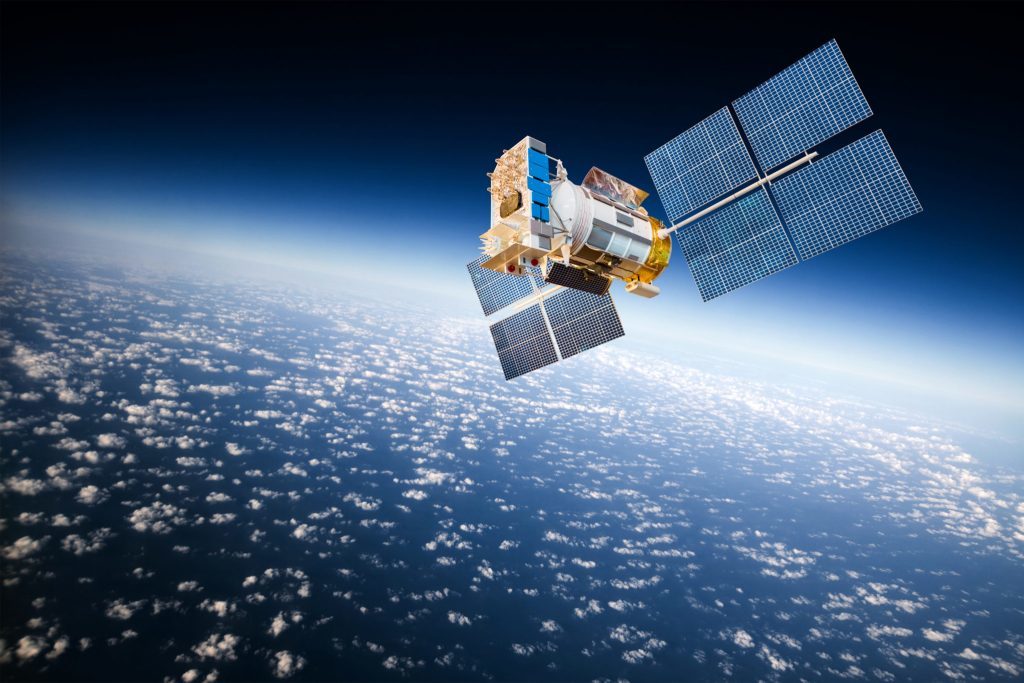
ISRO’s first mission dedicated for astronomy, AstroSat, launched on 28 September 2015 with its design life of five years, on Tuesday completed six years of its operation. “It (AstroSat) is expected to last some more years”, A S Kiran Kumar who as the then Chairman of ISRO led the mission team, and is presently serving as the chair of the apex science committee at the space agency, told PTI. “We can expect some more results to come which will be path-breaking”, he said.
Asked about the possibility of ISRO launching AstroSat-2, he said: “Not AstroSat-2. Next generation…thinking is going on…depending on how planning happens…follow-on to this (AstroSat) in a different manner are being looked at”. “AstroSat has been a very successful mission and it has produced results which are globally acclaimed…”, Kiran Kumar said. “Large number of papers have also got published”.
This team included scientists from India, Switzerland, France, the USA, Japan and the Netherlands. AstroSat has also observed for the very first time rapid variability of high energy (particularly >20keV) X-ray emission from a black hole system, officials noted.
The discovery was made by an international team of astronomers led by Dr Kanak Saha, at the Inter-University Centre for Astronomy and Astrophysics (IUCAA), Pune and reported in ‘Nature Astronomy’. According to ISRO officials, data from AstroSat is widely utilised for the study of various fields of astronomy, from galactic to extra-galactic and from users from all over the world. The multi-wavelength space observatory, which has five unique X-ray and ultraviolet telescopes working in tandem, had detected extreme-UV light from a galaxy, called AUDFs01, 9.3 billion light-years away from Earth.
Source:Bollyinside
You may also like
-
IIT Hyderabad Researchers Develop Zinc-Based Biomolecular Material with Enhanced Strength and Adhesive Properties
-
BITS Pilani Develops ₹2,500 System to Convert Food Waste into Animal Feed
-
IIT Madras and Gauhati University Develop New Climate Network Method to Identify Monsoon Onset Across India
-
India Advances MATSYA-6000 Deep Ocean Mission
-
ISRO Successfully Completes Cryogenic Engine Acceptance Test for GSLV-F19 Mission Carrying NVS-04
