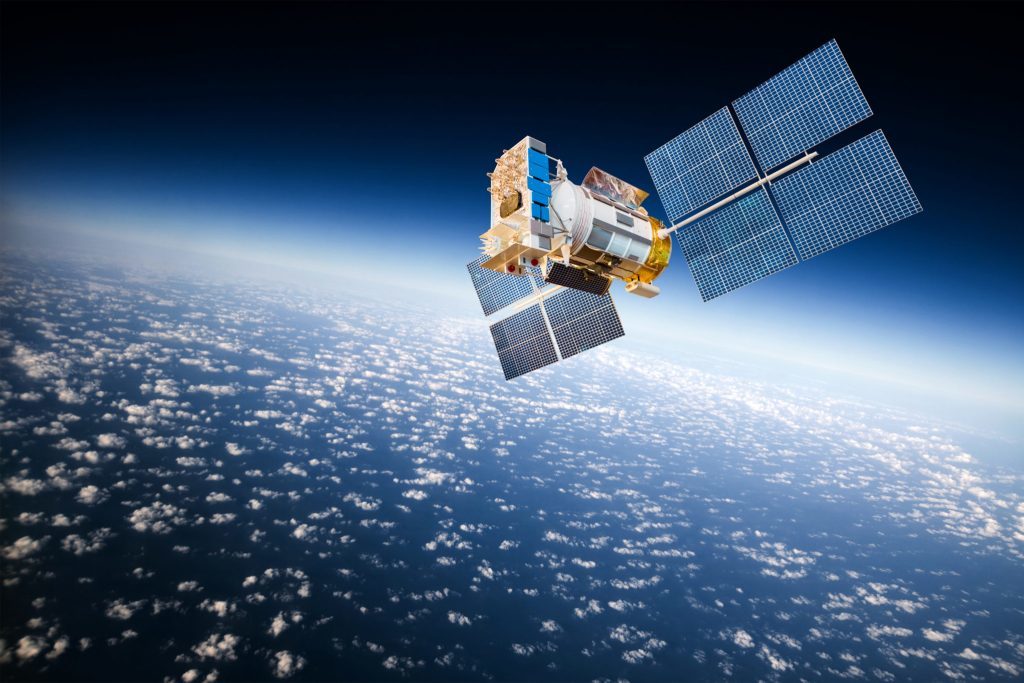
As a landmark achievement in Space missions, Indian Astronomers have discovered one of the farthest Star galaxies in the universe.
Sharing this information here today, Union Minister of State (Independent Charge), Development of North Eastern Region (DoNER), MoS PMO, Personnel, Public Grievances, Pensions, Atomic Energy and Space, Dr Jitendra Singh said, it is a matter of pride that India’s first Multi-Wavelength Space Observatory “AstroSat” has detected extreme-UV light from a galaxy located 9.3 billion light-years away from Earth. The galaxy called AUDFs01 was discovered by a team of Astronomers led by Dr Kanak Saha from the Inter-University Centre for Astronomy and Astrophysics(IUCAA) Pune.
The importance and uniqueness of this original discovery can be made out from the fact that it has been reported in the leading international journal “Nature Astronomy” published from Britain. India’s AstroSat/UVIT was able to achieve this unique feat because the background noise in the UVIT detector is much less than one on the Hubble Space Telescope of US based NASA.
Dr Jitendra Singh has congratulated India’s Space Scientists for once again proving to the world that India’s capability in Space technology has risen to a distinguished level from where our scientists are now offering cues and giving leads to the Space scientists in other parts of the world. According to Professor ShyamTandon, the excellent spatial resolution and high sensitivity is a tribute to the hard work of the UVIT core team of scientists for over a decade.
According to Director of Inter-University Centre for Astronomy and Astrophysics (IUCAA) Dr Somak Ray Chaudhury, this discovery is a very important clue to how the dark ages of the Universe ended and there was light in the Universe. We need to know when this started, but it has been very hard to find the earliest sources of light, he said.
Pertinent to mention that India’s first Space Observatory AstroSat, which has made this discovery, was launched by the Indian Space Research Organization (ISRO) on September 28, 2015 during the first term of the Modi Government. It was developed by a team led by ShyamTandon, Ex Emeritus Professor, IUCAA with the full support of ISRO.
Source: PIB
You may also like
-
IIT Kanpur Scientists Discover Immune-Cell Mechanism That Can Rapidly Suppress Insulin Release
-
A New Recipe to Shape Magnetisation that Could Open New Doors to Storing Quantum Information
-
ICAR Inaugurates Advanced Genome Editing Research Centre for Horticultural Crops in Bengaluru
-
Himalayan marmot droppings could reveal clues about climate change
-
IIT Gandhinagar Develops Seaweed-Based Smart Fertiliser Beads That Release Nutrients When Plants Need Them
