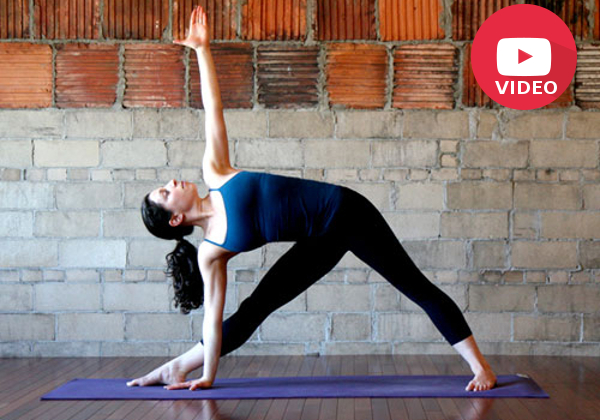
Trikonasana is a standing yoga posture that requires strength, balance and flexibility. In this posture, both arms extend with the legs spread apart and one foot turned at a 90-degree angle. The upper body bends toward the lead foot so that one arm reaches toward, but not necessarily touching, the ground and the other toward the sky.
The term comes from the Sanskrit trikona, meaning “three corners” or “triangle,” and asana, meaning “posture.” The term is often used synonymously with utthita trikonasana (extended triangle pose).
In addition to a range of physical benefits, trikonasana is believed to unblock energy pathways in the body. It is one of the basic poses common to the many styles of yoga.
Trikonasana is commonly referred to as triangle pose in English.
Benefits Of Trikonasana
- It strengthens the knees, ankles, legs, chest, and arms.
- It completely stretches and opens up the groins, hips, hamstrings, and calves and also the chest, spine, and shoulders.
- It increases both physical and mental stability.
- It improves digestion and stimulates all the abdominal organs.
- It helps reduce back pain and sciatica. It also serves as a therapy for flat feet, osteoporosis, neck pain, and infertility.
- It reduces stress and cures anxiety.
Image Courtesy: India A2z
You may also like
-
Ayurveda on Cold Foods and Iced Drinks: Why Food Temperature Matters for Digestion
-
Serum Institute of India-Manufactured Ebola Vaccine Enters Clinical Trial in Uganda
-
Ayurveda and Hydration: How Much Water Should We Really Drink?
-
Warm Water in Ayurveda: When and Why It Is Recommended
-
Women Make Up 43% of India’s Ayush Workforce as Sector Supports 17.6 Lakh Livelihoods
