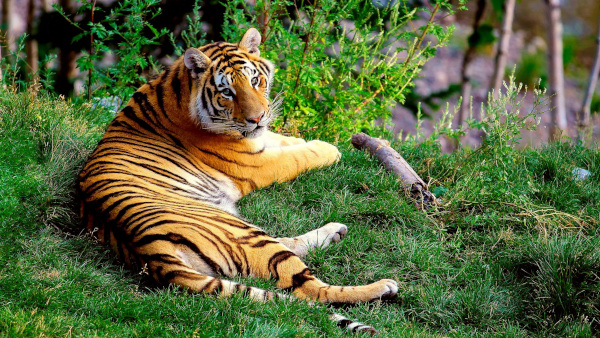
A male tiger has been recorded in Maharashtra’s Beed district after nearly a century, marking a significant development for wildlife conservation in the state’s Marathwada region. The approximately four-year-old tiger, weighing around 200 kilograms, travelled hundreds of kilometres from Tipeshwar Wildlife Sanctuary in Yavatmal before appearing in the forests of Beed.
The tiger’s presence was confirmed through camera-trap photographs captured on 20 August 2026 in the Brahmgaon forest range of Ashti tehsil. Forest officials reported the development on 19 October 2026, highlighting the importance of the sighting for understanding tiger movement across central Maharashtra.
The animal’s remarkable journey demonstrates how tigers can disperse across extensive landscapes in search of suitable territories. It also draws attention to the ecological connections between protected forests, smaller woodland areas and wildlife corridors.
First Confirmed Tiger Presence in Beed in Nearly a Century
According to Range Forest Officer Amol Munde, the tiger’s appearance represents the first documented presence of the species in the Ashti and Patoda forest areas in approximately 100 years.
Historical records in the Beed District Gazetteer indicate that tigers occurred in the region during the early twentieth century, particularly around the 1910s and 1920s. Their subsequent disappearance reflected changes in wildlife populations and the distribution of suitable habitats.
The latest camera-trap photographs provide evidence that a tiger has returned to these landscapes after several generations.
Forest officials initially detected the animal through pugmarks and reports of cattle predation. They subsequently installed camera traps to monitor its movements and confirm its identity.
The photographs recorded on 20 August established the tiger’s presence in the Brahmgaon forest area. Additional monitoring documented movements through the adjoining Ashti and Patoda landscapes.
The sighting is significant because it demonstrates that forests outside established tiger reserves can still form part of the wider geographical range used by dispersing tigers.
Tiger Travels More Than 400 Kilometres from Tipeshwar Sanctuary
The male tiger originated from Tipeshwar Wildlife Sanctuary in Maharashtra’s Yavatmal district, an important habitat for tigers in the Vidarbha region.
Forest officials identified the animal as an offspring of tigress T-22. The tiger reportedly left its original habitat in 2023 and subsequently travelled through several districts in search of a suitable territory.
Its movements have been documented across landscapes associated with Chandrapur, Nanded, Latur, Dharashiv, Solapur and Ahilyanagar before its recorded presence in Beed.
Earlier tracking reports indicate that the animal travelled more than 400 kilometres while exploring forest patches and hilly terrain across central Maharashtra.
The tiger has been referred to locally as Ramling, while earlier wildlife reports have also identified the wide-ranging animal as Avenger.
Unlike animals transported under wildlife relocation programmes, this tiger dispersed naturally through the landscape.
Its movements provide an important opportunity for wildlife authorities to study how large carnivores navigate forests, agricultural areas and human-dominated landscapes while searching for territory.
Why Young Male Tigers Undertake Long Journeys
Long-distance dispersal is a natural behaviour among tigers, particularly young males approaching maturity.
As male tigers grow older, they generally leave their birth territories to establish independent home ranges. This helps reduce competition with adult males and creates opportunities to find suitable habitats and breeding partners.
The distances travelled depend on factors such as prey availability, habitat connectivity, competition from other tigers and human disturbance.
Young males sometimes move through unfamiliar terrain, including forest fragments, agricultural landscapes and regions outside formally designated protected areas.
Such movements are important for maintaining genetic exchange between tiger populations. When animals successfully disperse between habitats, they can contribute to genetic diversity and reduce the isolation of wildlife populations.
However, long-distance journeys also expose tigers to risks from roads, railway tracks, settlements and encounters with people.
The Beed tiger’s movements illustrate both the remarkable dispersal capabilities of the species and the importance of protecting the landscapes through which these animals travel.
Maharashtra’s Wildlife Corridors Support Tiger Movement
The tiger’s journey has drawn attention to the ecological connectivity between the forests of Vidarbha and Marathwada.
Wildlife corridors are areas of habitat that allow animals to move between larger forest landscapes. They may consist of continuous woodland, smaller forest patches, riverine vegetation or other habitats that provide opportunities for movement.
Such corridors are particularly important for large carnivores because individual animals require substantial territories and may travel long distances while dispersing.
The movement of the Beed tiger has been associated with the broader landscape connecting Tipeshwar Wildlife Sanctuary and the Yedshi Ramling Ghat Wildlife Sanctuary region in Dharashiv.
Forest officials have highlighted the importance of this landscape for supporting tiger movement across central Maharashtra.
The animal’s successful passage through several districts demonstrates that some ecological connections remain functional despite the presence of settlements, roads and agricultural activities.
At the same time, a single tiger’s journey does not establish that every part of the landscape provides secure or continuous habitat. Detailed monitoring remains important for identifying movement routes, potential obstacles and areas requiring conservation attention.
Camera Traps Help Track the Tiger Across Districts
Camera-trap monitoring has played an important role in documenting the tiger’s presence and movements.
These remotely operated cameras capture photographs when animals pass through their detection areas, allowing forest officials to monitor wildlife without requiring continuous human presence.
Tigers can often be identified individually through their distinctive stripe patterns, enabling researchers to compare photographs collected at different locations.
In the Beed region, forest personnel installed camera traps after discovering signs of tiger movement and reports of livestock predation.
The photographs obtained on 20 August confirmed the animal’s presence in the Brahmgaon area.
Earlier monitoring had documented tiger activity in the Ashti landscape, including reports from December 2025 and July 2026. Subsequent tracking indicated movements towards neighbouring Dharashiv district.
These observations demonstrate how camera traps, field surveys and local reports can be combined to study wide-ranging wildlife.
Such information helps authorities understand animal movement patterns and develop appropriate conservation and safety measures.
Forest Department Monitors Tiger Movement and Public Safety
The tiger’s presence in areas adjoining villages and agricultural land has prompted forest officials to maintain surveillance and issue precautionary advisories.
Range Forest Officer Amol Munde stated that the animal had not attacked any humans during its documented movements through the region.
However, reports of cattle predation underline the importance of monitoring interactions between wildlife and local communities.
Forest authorities have advised residents to remain cautious, avoid unnecessary approaches towards the tiger and cooperate with wildlife personnel.
Managing large carnivores in landscapes shared with people requires a balance between wildlife protection and public safety.
Rapid communication, monitoring of animal movements and appropriate responses to livestock losses can help reduce the likelihood of conflict.
Public awareness also plays an important role, particularly in regions where residents have little recent experience of living alongside tigers.
Tiger’s Return Highlights the Value of Smaller Forest Habitats
The Beed sighting demonstrates that tiger conservation extends beyond the boundaries of national parks and tiger reserves.
While protected areas provide important breeding habitats, dispersing animals often depend on smaller forests and connecting landscapes during their movements.
These areas may not support permanent breeding populations, but they can serve as temporary refuges and movement routes.
The tiger’s passage through central Maharashtra highlights the ecological value of such habitats, particularly where they connect larger forest ecosystems.
Protecting natural vegetation, reducing habitat fragmentation and maintaining safe movement routes can support the long-term conservation of wide-ranging species.
The presence of a tiger in Beed also creates opportunities for scientific studies of habitat suitability, prey populations and landscape connectivity.
Continued monitoring will help determine whether the animal uses the region temporarily or establishes a more stable territory within the wider landscape.
A Significant Development for Tiger Conservation in Maharashtra
The return of a tiger to Beed’s forests after nearly a century is an important wildlife development for Maharashtra.
Its journey from Tipeshwar Wildlife Sanctuary across hundreds of kilometres demonstrates the ability of tigers to explore landscapes far beyond their original habitats.
The sighting also highlights the value of camera-trap monitoring and coordinated wildlife management across district boundaries.
Most importantly, it draws attention to the need to maintain ecological connections between protected areas and surrounding forests.
The reappearance of a tiger in Beed represents a remarkable chapter in Maharashtra’s wildlife history. It reinforces the importance of protecting forest habitats, maintaining wildlife corridors and supporting the natural movement of India’s national animal across its historic landscapes.
References
- Press Trust of India (PTI) — Maharashtra: Tiger Walks into Beed’s Forests After Nearly a Century, 19 October 2026. Includes statements from Range Forest Officer Amol Munde.
https://theprint.in/india/maharashtra-tiger-walks-into-beeds-forests-after-nearly-a-century/3075916/ - The Indian Express — After Nearly 100 Years, Tiger Spotted in Maharashtra’s Beed District, 19 October 2026.
https://indianexpress.com/article/cities/pune/tiger-sighting-beed-district-maharashtra-100-years-tipeshwar-10928542/ - Press Trust of India (PTI) — Biodiversity Boost: Tiger Travels Over 400 km in Maharashtra, 1 September 2026. Provides information on the animal’s movements, camera-trap records and wildlife corridors.
https://theprint.in/india/biodiversity-boost-tiger-travels-over-400-km-in-maharashtra/3030375/ - The Times of India — Avenger, Marathwada’s Lone Tiger, Prowls Back into Focus After 18 Months, 23 August 2026.
https://timesofindia.indiatimes.com/city/aurangabad/avenger-marathwadas-lone-tiger-prowls-back-into-focus-after-18-months/articleshow/133444085.cms - National Tiger Conservation Authority, Government of India — Official information on tiger conservation, protected habitats and landscape connectivity.
https://ntca.gov.in/
You may also like
-
Himachal Pradesh Achieves Major Success in Rare Cheer Pheasant Conservation
-
Blackbucks to Return to Chhattisgarh’s Gomarda Wildlife Sanctuary After Five Decades
-
Asiatic Lions Return to Barda Wildlife Sanctuary After 144 Years as Scientific Study Confirms Habitat’s Conservation Potential
-
India’s Ramsar Sites Reach 103 as Sukhna Wetland and Sauj Jheel Receive International Recognition
-
India Expands Global Big Cat Conservation as International Big Cat Alliance Opens New Headquarters
