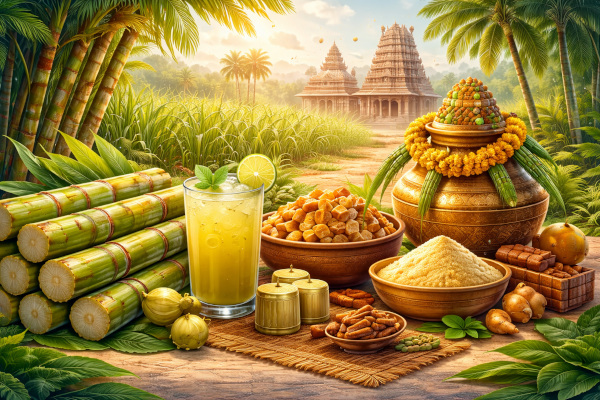
Sugarcane, known in Ayurveda as Ikshu and botanically as Saccharum officinarum, is treated as more than a source of sweetness. Ayurvedic literature regards it as both ahara and aushadha—food as well as support in healing—and review literature on Ikshu notes that classical texts discuss it in its own section, while Ayurvedic terminology also recognizes ikshuvikriti, meaning sugarcane juice and its derived products. Traditional Ayurvedic descriptions characterize it as madhura (sweet), guru (substantial/heavy), snigdha (unctuous), and sheeta (cooling).
That Ayurvedic profile explains why sugarcane and its juice have long been associated with cooling, nourishing, and refreshing functions, especially in hot weather or states of dryness, thirst, and internal heat. Ancient literature also records its traditional use in conditions such as burning sensations, dysuria, anuria, certain bleeding conditions, jaundice, and urinary discomfort, while also noting that the root and stem have been described in traditional practice as useful in supportive formulations. These are traditional and review-based uses, so they should be understood as part of Ayurveda’s knowledge system rather than as a substitute for modern treatment when illness is serious or persistent.
In practical Ayurvedic living, sugarcane occupies an interesting middle ground between nourishment and remedy. Fresh cane juice is seen as energizing and cooling, while jaggery and other cane derivatives are woven into food traditions that are closer to pathya than to harsh medication. The FSSAI’s Ayurveda Aahara Compendium includes ikshu rasa and guda in classical food preparations, showing how deeply sugarcane and its products are embedded in India’s dietetic tradition, not merely in confectionery but in codified Ayurvedic food culture. The National Portal of India also notes that sugarcane juice is valued for its natural sugars and minerals such as iron, magnesium, phosphorus, and calcium.
Sugarcane also carries a visible sacred and seasonal role in Indian tradition. An official Tamil Nadu Tourism account of Pongal describes sugarcane as one of the items offered to God during the harvest festival, alongside vegetables and spices, while the sweet Pongal dish itself is prepared with rice, milk, jaggery, and cardamom as a symbol of prosperity and abundance. This is culturally important because it shows sugarcane in its oldest Indian role: not as refined sugar, but as a sign of fertility, sweetness, agricultural gratitude, and divine blessing at the threshold between field and shrine.
Its temple connection also continues through cane-derived offerings, especially jaggery. On the official Travancore Devaswom Board pages for Sabarimala, Aravana and Sharkara Payasam are listed among offerings, and the Board has also published an official order relating to Aravana preparation. That does not mean every temple uses sugarcane in the same way, but it clearly shows that sugarcane’s sacred afterlife—through jaggery and prasadam—remains active in living temple tradition. In that sense, sugarcane in India is both agricultural and liturgical: it cools in Ayurveda, nourishes in food, and sweetens devotion in ritual life.
Reference:
https://oaji.net/pdf.html?n=2023%2F1791-1698343080.pdf
https://www.fssai.gov.in/upload/uploadfiles/files/Ayurveda%20Aahara%20Compendium.pdf
https://www.tamilnadutourism.tn.gov.in/events/pongal-festival
https://travancoredevaswomboard.org/vazhipadu/
https://www.india.gov.in/explore-india/culinary-delights/details/sugarcane-juice-18202008449041938
You may also like
-
Ayurveda on Fresh Food Versus Reheated Food: Why Freshly Prepared Meals Are Preferred for Healthy Digestion
-
Ayurveda on Cold Foods and Iced Drinks: Why Food Temperature Matters for Digestion
-
Serum Institute of India-Manufactured Ebola Vaccine Enters Clinical Trial in Uganda
-
Ayurveda and Hydration: How Much Water Should We Really Drink?
-
Warm Water in Ayurveda: When and Why It Is Recommended
